Whether in drone warfare, layered air defence, or electronic warfare, ‘Operation Sindoor’ marks a milestone in India’s journey towards technological self-reliance in military operations
New Delhi: ‘Operation Sindoor’ emerged as a calibrated military response to an evolving pattern of asymmetric warfare, one that increasingly targets unarmed civilians along with military personnel. The terrorist attack on tourists in Pahalgam in April 2025 served as a grim reminder of this shift. India’s response was deliberate, precise, and strategic.
Without crossing the Line of Control or international boundary, Indian forces struck terrorist infrastructure and eliminated multiple threats. However, beyond tactical brilliance, what stood out was the seamless integration of indigenous hi-tech systems into national defence.
The Indian Army also released several videos of ‘Operation Sindoor’. It shows how India fired missiles at terrorists in Pakistan and Pakistan-occupied Kashmir (PoK) and air defense systems like the Russian S-400 in action for the first time.
As part of ‘Operation Sindoor’, the following were used: Battle-proven AD (Air Defence) systems like the Pechora, OSA-AK and LLAD guns (Low-level air defence guns) and indigenous systems such as the Akash, which demonstrated stellar performance.
.jpg)
India’s D4 anti-drone system does more than detect -- it destroys. (Photo courtesy: X@DDNewslive)
AKASH is a Short Range Surface to Air Missile system to protect vulnerable areas and vulnerable points from air attacks. The AKASH Weapon System can simultaneously engage Multiple Targets in Group Mode or Autonomous Mode. It has built in Electronic Counter-Counter Measures (ECCM) features. The entire weapon system has been configured on mobile platforms.
India’s Air Defence Systems, combining assets from the Army, Navy, and primarily the Air Force, performed with exceptional synergy. These systems created an impenetrable wall, foiling multiple attempts by Pakistan to retaliate. The Integrated Air Command and Control System (IACCS) of the Indian Air Force brought all these elements together, providing the net-centric operational capability vital for modern warfare.
India’s offensive strikes targeted key Pakistani air bases - Noor Khan and Rahimyar Khan with surgical precision. Loitering munitions were used to devastating effect, each finding and destroying high-value targets, including enemy radar and missile systems.
Loitering munitions also known as "suicide drones" or "kamikaze drones", are weapons systems that can hover or circle a target area, searching for a suitable target before attacking.
All strikes were executed without loss of Indian assets, underscoring the effectiveness of our surveillance, planning, and delivery systems. The use of modern indigenous technology, from long-range drones to guided munitions, made these strikes highly effective and politically calibrated.
The Indian Air Force bypassed and jammed Pakistan’s Chinese-supplied air defence systems, completing the mission in just 23 minutes, demonstrating India’s technological edge.
Operation Sindoor also produced concrete evidence of hostile technologies neutralized by Indian systems: Pieces of PL-15 missiles (of Chinese origin); Turkish-origin UAVs, named "Yiha" or “YEEHAW" Long-range rockets; quadcopters and commercial drones.
These were recovered and identified, showing that despite Pakistan's attempts to exploit advanced foreign-supplied weaponry, India’s indigenous air defence and electronic warfare networks remained superior.
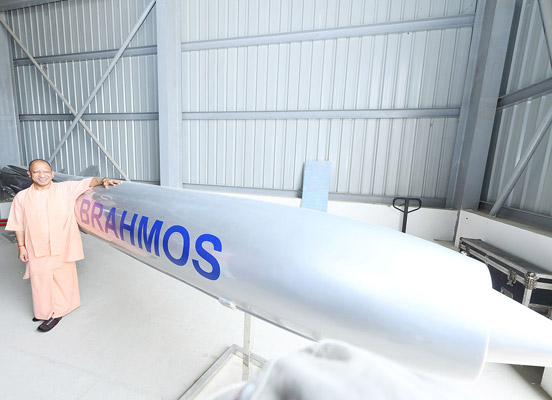
The India-made Brahmos missiles were used to destroy airbases and air defence systems in the heart of Pakistan. In a major milestone for India's defence sector, Kamikaze drones co-developed by Adani Group’s Alpha Design Technologies and Israel’s Elbit Systems were also successfully deployed in Operation Sindoor.
Built in Bengaluru under the ‘Make in India’ initiative, the SkyStriker drones deliver precision strikes with up to two hours of loitering capability. This marks a leap forward in India’s self-reliance in advanced defence technology.
India has emerged as a major defence manufacturing hub, driven by the “Make in India” initiative and a strong push for self-reliance.
|
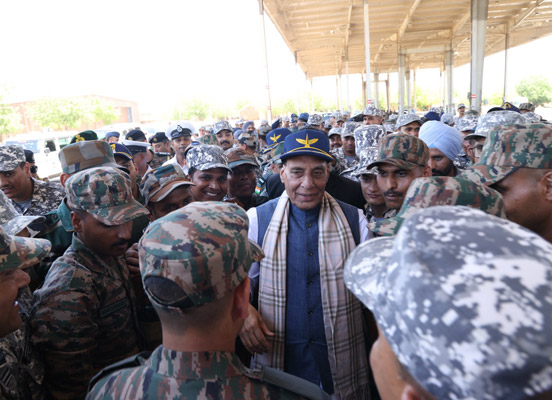
Pak has been put on probation: Rajnath SinghNew Delhi: Defense Minister Rajanth Singh, during his visit to the Indian Air Force (IAF) base in Gujarat’s Bhuj, issued a stern warning to Pakistan and said that it has been given a breather for now and if it resorts to terror tactics again, it will face dire consequences. Addressing the soldiers at the IAF base, Defense Minister Rajnath Singh said, “Just like the way, any habitual offender or a criminal with past antecedents is kept under watch, we have put Pakistan under probation. The ceasefire is not a cessation of action. If Pakistan doesn’t mend its ways and engages in misadventures again, our forces will teach it a firm lesson. Again!” He further said that this is 'New India' and if any entity or nation tries to threaten our sovereignty, they will be made to pay with severe consequences. Prime Minister Narendra Modi has said that despite the ceasefire agreed upon by the two countries, trade with Pakistan and the Indus Water Treaty would continue to remain in abeyance. |