Validating the SIR conducted in Bihar, the apex court says the exercise is necessary for free and fair polls.
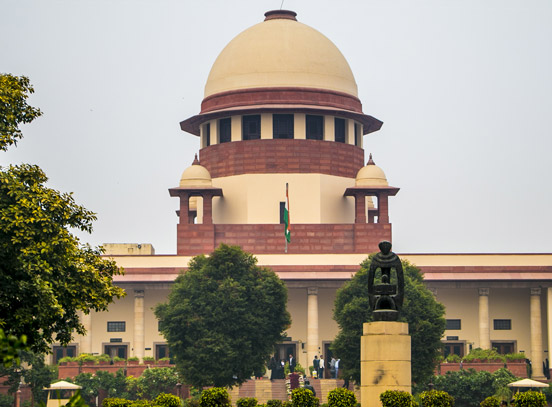
New Delhi: The Supreme Court of India has upheld the authority of the Election Commission of India to conduct a Special Intensive Revision (SIR) of electoral rolls, reaffirming the poll body’s constitutional mandate to ensure free, fair, and accurate elections.
A bench of the apex court ruled that the Election Commission possesses the legal and constitutional power to undertake periodic revisions of voter lists to maintain the integrity of the electoral process. The court observed that accurate electoral rolls are essential for safeguarding democracy and preventing irregularities such as duplicate or ineligible entries.
The ruling came in response to petitions challenging the Election Commission’s exercise of power in carrying out intensive verification and revision of voter rolls in certain states. Petitioners had argued that such exercises could potentially disenfranchise eligible voters if not conducted transparently and fairly.
However, the court held that the Election Commission’s powers under the Constitution and the Representation of the People Act provide sufficient authority to carry out revisions, provided due procedure is followed and voters are given adequate opportunity to raise objections or seek corrections.
The bench emphasized that electoral roll purification exercises must adhere to principles of natural justice and cannot result in the arbitrary deletion of names. It also noted that citizens retain the right to appeal or seek restoration if they are wrongly excluded from voter lists.
The Election Commission of India welcomed the judgment, saying it strengthens institutional mechanisms aimed at improving the credibility and transparency of elections in the country.
Legal experts said the verdict could have significant implications for future electoral verification drives ahead of major state and national elections, while also reinforcing the Election Commission’s autonomy in managing electoral processes.