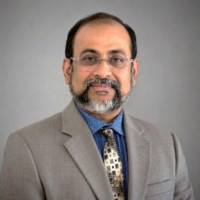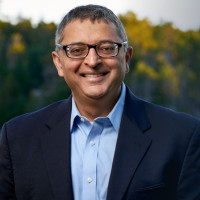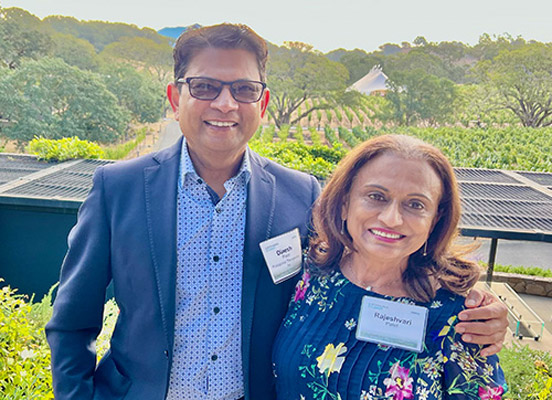
New York: Dinesh Patel, CEO of multibillion dollar biopharmaceutical firm, Protagonist Therapeutics -- developing new treatments for illnesses that include inflammatory bowel disease, psoriasis, and a rare blood cancer -- and his wife Rajeshwari have funded a fellowship that supports the chemistry lab at their alma mater Rutgers’ Department of Chemistry and Chemical Biology (CCB) while also honoring the faculty member who’s contribution has been vital to their own intellectual development.
In the fall of 1979, soon after joining Rutgers, Patel attended a presentation by Spencer Knapp, a relatively new member of the CCB faculty who specialized in organic chemistry and drug design. Knapp was only a few minutes into his talk when Patel was hooked.
“My friends teased me saying, ‘You’re going to work with this guy, right?’’’ Patel recalled. “I was like, ‘Yeah, absolutely.’
“I joined his lab, and that’s probably the best decision I ended up making in college.”
In the Knapp lab, Patel found his calling—medicinal chemistry—and a teacher who was both a leading scholar in the field and a mentor committed to training young scientists in the work of improving human health through organic chemistry.
Knapp, a School of Arts and Sciences professor now in his 48th year at Rutgers, has mentored more than 200 students, often collaborating with them on research and journal articles. His research has expanded the understanding of numerous illnesses, from Alzheimer’s Disease to malaria, to various inflammatory conditions.
Accordingly, the Dinesh and Rajeshvari Patel Endowed Graduate Fellowship provides financial support to CCB students conducting organic chemistry research in the Knapp lab.
It’s a powerful acknowledgment of Knapp’s influence as well as a testament to faculty mentors, says Lawrence Williams, chair of CCB in the School of Arts and Sciences.
“Spencer creates the environment where people like Dinesh can really excel, and that’s why Dinesh did this.” Williams said. “They didn’t give it to the department to hand out to whoever we want.
“They recognized that the success is traceable to being in that environment, and that it’s the relationship that made it work.”
For Knapp, the fellowship is particularly welcome at a time of sweeping federal cuts to science research.
“In the current climate, graduate support on research grants is in danger,” Knapp said. “There are very few fellowships available, especially to immigrant students. Something like Dinesh’s support comes in an era where we have almost nothing.”
(Text courtesy: sas.rutgers.edu)