By Priyangshu Chakraborty
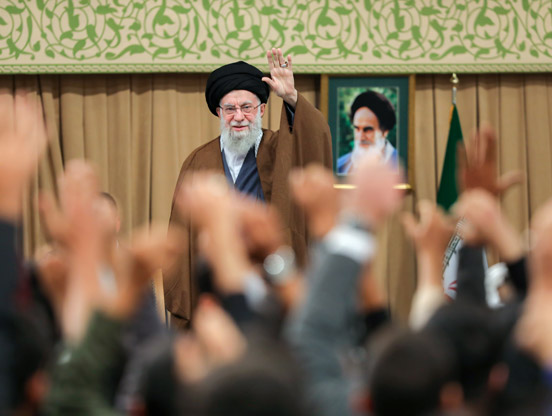
After prolonged tensions, the resurgence of conflict in the Gulf region has pushed realist dynamics back to the door, particularly amid the unfolding turmoil in Tehran. As large-scale air attacks on Iran by the USA and Israel resulted in the death of Supreme Leader Ayatollah Ali Khamenei at the age of 86, the Iranian instability after the US operation may act as a catalyst for geopolitical tensions in the region, potentially igniting new conflicts, while regional actors reposition themselves in response to uncertainty within Iran.
Shia cleric leader Ali Khamenei enhanced his popularity by overthrowing the Shah’s regime in 1979 and gained power under the banner of ‘Islamic revolution and Islamic regime’. Ever since the overthrow of the Mohammed Reza Pahlavi regime in 1979, the US and Israel have been seen as proactive in eliminating Iran’s new leader. Especially after Iran developed nuclear energy, the risk of a new country establishing its own production of nuclear weapons and the possibility of a gradual transition of missile production to nuclear weapons, the US and Israel see Iran as a new rival for control over the Middle East region.
Certain attempts at military destruction, like bombings executed by Israel earlier in 2025, were not successful. The nuclear enrichment and active anti-Israel sentiments in Iran are claimed to be a threat to Israel's civilizational crux, which hinders US interests in the Middle East since the US rests close allies with Israel.
Ali Khamenei held ultimate authority over Iran’s strategic decisions in the internal and external development of the country, including its nuclear program and relations with the West. As Commander-in-Chief of Iran’s army that comprises regular armed forces (“the Artesh”), the Police Command (“Faraja”), and the Islamic Revolutionary Guard Corps (“Sepah”), Khamenei directed the broader “Axis of Resistance” — a regional network (proxy outfits) that includes Hezbollah, Hamas, Palestinian Islamic Jihad, Iraqi Shia militias, the Houthi movement in Yemen, and Bashar al-Assad, back before the toppling of his government in December 2025 — shaping Iran’s regional strategy against Israel and Western influence.
Although the past few months witnessed huge protests against Khamenei, with 30,000 (estimated) people killed. These victims have made the largest death toll in Iranian modern history. The renewed conflict escalated dramatically after the United States, in coordination with Israel, launched a large-scale military operation against Iran on February 28, 2026, entitled 'Operation Epic Fury’.
This assault resulted in the death of Ali Khamenei in a targeted strike in Tehran, with several military officials killed as well. In response, Iran initiated a wave of retaliatory missile and drone attacks targeting Israeli territory, US military installations, and its strategic facilities across the Gulf, including bases and infrastructure in Saudi Arabia, Qatar, Kuwait, the UAE, and Bahrain, thereby widening the conflict and threatening broader regional stability.
For India, this year starts with a challenge in its diplomatic response to the events. Facing geopolitical turbulence in Iran signalled the possibility of a new Gulf conflict. India’s engagement with Iran has historically been guided by a careful balancing strategy that accounts for energy security, connectivity, and broader geopolitical considerations.
The foremost challenge is initiated with a stable succession process among clerical elites through a better consensus to determine Iran’s future or even a democratic establishment. The regional network that was structured under Khamenei’s ideology of “Axis of Resistance” might create ambiguity and hold its members in a series of conflicts, where instability means negative implications for India’s security.
New Delhi asked its citizens to remain indoors on an immediate basis since the outbreak of the conflict. Strategically, with Chabahar Port holding a vital position close to Khamenei's state, Iran has been a key partner to India.
The port is the gateway to Afghanistan and Central Asia, with direct access to the Indian Ocean and to the Strait of Hormuz. A crisis in Tehran might delay the delivery of the infrastructure projects of New Delhi, like Chabahar Port, amid political instability and hinder India’s geostrategic reach to counter China’s BRI in Pakistan.
Likewise, the energy sector remains volatile, as nearly half of India’s crude oil imports, shipments, LPG, and PNG supplies normally follow the Strait of Hormuz. Their disruption may lead to a huge crisis in India’s energy complications. The country’s engagement with the Middle East region accounts for 17% of India’s exports, supplies 55% of its crude oil, and generates 38% of its remittances. Notably, the recent conflict resulted in the death of three Indian sailors in the attacks on three oil tankers near the Strait of Hormuz — MT Skylight, MT Vyom, and LCT ALYH.
India’s long-term investments in regional connectivity and geopolitical outreach may face uncertainty with the ongoing conflict in Iran. Again, the challenge is further compounded by the presence of millions of Indian workers residing in the Gulf region, the stability of which is linked with security dynamics and directly affects India’s domestic economic and humanitarian concerns.
Moreover, three Iranian naval vessels — IRIS Dena, IRIS Lavan, and IRIS Bushehr (participated in the International Fleet Review and MILAN 2026 exercises, which were hosted by the Indian Navy in Visakhapatnam) — are involved in the escalation of the relations between Iran, the United States, and Israel in the Indian Ocean region (beyond EEZ’s).
IRIS Dena was destroyed by a US submarine near Galle, IRIS Lavan docked at Kochi Port, and IRIS Bushehr was taken into custody by Sri Lanka after reporting technical issues. This incident worsened the ongoing regional turbulence as the crisis spread into the Indian Ocean, making it impossible for the littoral states to ignore the seriousness of the Middle Eastern crisis.
To India, the spreading of US and Israeli attacks to the Indo-Pacific region might pose a threat to its maritime safety, commerce, and relations with neighbouring countries. Once the Indian Ocean becomes a military terrain for naval warfare between other regional powers, the credibility of maritime safety in the Indian Ocean is put into question.
Moreover, New Delhi has successfully cultivated strong relations with multiple regional actors like Saudi Arabia, Kuwait, Qatar, Oman, and the United Arab Emirates, while maintaining civilizational and strategic engagement with Iran.
This multi-alignment approach has enabled India to avoid taking sides in regional rivalries. Now, with the recent disruption in the Middle East and the escalation of regional tensions during the succession phase in Iran, India may face pressure from other actors and be pushed to clarify its positions on security alignments and economic cooperation.
Similarly, New Delhi’s deepening engagement with the United States and its growing cooperation with Israel in defense and technological sectors adds to the complexity of its Iranian policy. While India has traditionally opposed the idea of zero-sum alignments in West Asia, changing the geopolitical landscape may narrow the space for strategic response and hinder its ongoing infrastructure projects in the region.
To put it simply, India is in a ‘wait and watch’ phase and has directed its primary attention to the Middle Eastern crisis, trying to keep the role of an observer. The escalation in West Asia may not immediately reshape the regional order, but it is highly likely to test India’s ability to adapt to an increasingly fragmented order, while maintaining constructive relationships with competing powers. In that sense, the reverberations of Iran’s leadership transition will echo far beyond the country itself, reaching Asian security dynamics.
[Priyangshu Chakraborty is a postgraduate in Political Science from Assam (A central) University and is serving as Organisation and Program Coordinator at Hegemoniq, a think tank based in Assam, India.]
The views expressed are not necessarily those of The South Asian Times