By Vipul Tamhane
This article is going to read very haphazard and chaotic, but so is an international order that is not simply transforming but is fracturing along faultlines of debt, technologies, and violence that threaten to completely remake global governance. What we are seeing in 2025 is not the orderly shift of power among nations as political scientists had predicted, but the breaking down of systems that had governed international relations in the self-preservation of the
nation-state.
The evidence is simply overwhelming and irrefutable. Early last week, within 48 hours, three seemingly stable governments unraveled in rapid succession. The Prime Minister of France capitulated to some 225,000 protesters on the streets, demanding accountability for €44 billion in cuts targeting pensions, healthcare, and public holidays. In an unprecedented act, the parliament in Nepal literally burned with angry citizens opposing the Prime Minister Oli and his corruption-riddled tenure. Japan, once the hallmark of political stability, saw Prime Minister Ishiba resign, attempting to manage the stacked-up debt of 150-250% of GDP.
These instances aren't a series of isolated accidents; they are elements of a global system of power that betrays its hidden architecture through these failures. The pattern across continents is somewhat disturbingly similar; nations rack up unmanageable debts under the pretense of development (massively offloading financial responsibility to future generations through debt), governments implement austerity measures which incite popular uprisings, and political systems collapse under the weight of their contradictions. But the better question than why governments are rotting from within is who stands to benefit when all sovereign authority collapses.
The debt trap goes global
The architecture of modern financial control operates through a system that has been implemented for decades in various African countries, but has now gone global. For example, when the USA borrows money from international financiers, loan rates can be as low as 2-3%. When African nations borrow from these same lenders, they face interest rates ranging from 6 to 12%, based on risk assessments and other stability concerns. This is not market economics; this is every debt trap established in and going global; it is systemic expropriation that is now out of the Global South.
Think of the mathematical brutality, that is, South Africa's COVID-19 borrowing exercised a debt service obligation that compounded monthly, quickly exceeded a nation's capacity to pay. In a few years, countries come to a place where they owe more than the total annual GDP or more than the entire economy can produce; thus creating favourable conditions for a perfect sphere of external control. The endgame is evident when states can't service debts, creditors enforce repayment via natural resources, geostrategic assets, or achievable policy change. Sovereignty is surrendered incrementally until it becomes possible to recognize that states exist primarily to service outbound obligations to act on behalf of external creditors, rather than servicing their own citizens.
This lesson was learned by Greece in its debt crisis, when external creditors effectively appointed a technocratic government. Italian political instability is directly related to the spiraling municipal debt obligations. Even the previously stable Japan is ensnared by the same dynamics, compelled into unprecedented defense spending through alliance pressures based on deliverable and strategic provocations from China. A judicious country would not double its debt-to-GDP ratio over a short period out of ignorance; rather, it was maneuvered into the debt position that resulted from structural and unreasonable relations imposed on its territory.
The 2025 crisis cascade
The summer and early fall months of 2025 have illustrated just how fragile this system has become. The Trump administration's promise of an escalation of tariff policies, threatening "reciprocal" or "secondary" tariffs on countries still importing Russian oil, is aimed at large countries like India and Brazil, leading to diplomatic tension and uncertainty for trade in global markets.
The World Bank, exercising its considerable powers to cut the global GDP estimate for 2025 from approximating 4% down to just 2.3% is better than just routine economic cycles. It represents a systematic destruction in confidence, as we can see on Euro-zone investor morale sharply declining, with September showing the largest declines in Germany. In the US, when firms bring out large amounts of bonds, including high yield, this isn't just an exercise in securing funding; it may also mean there is visible angst about what the conditions will be in the future.
Meanwhile, political unrest is erupting on multiple continents at the same time. In Nepal, massive "Gen Z" protests climbed the ranks because of social media bans and were exacerbated because of corruption and nepotism. There ended up being protests whose weight smashed windows, and huge crowds burning government buildings, and the Prime Minister of Nepal was forced to resign. In Turkey, it led to severe declines of the lira and major capital outflow due to their protests, leading to financial woes. In Indonesia, political uncertainty was bad enough to weaken the rupiah and create volatility in stock markets as investors recalibrated how to think about instability.
The geopolitical realignment
Perhaps most interesting is the emergence of alternative power dynamics to thwart the Western world order. The fact that China hosted talks with Russia, North Korea, and India means there is a chance we move outside a strictly US-led paradigm. These are not ceremonial meetings but rather a demonstration of non-Western powers asserting themselves by developing alternative systems.
There are growing calls to stop unfair economic practices and create stable trading regimes at BRICS meetings, all of which are responding directly to turbulence in US tariffs. This is not just about market competition; it is the building block of an alternative world order that could make US leverage as a traditional means obsolete.
The urgency of this all becomes painfully clear when we look at regional crises and how they affect the global marketplace. In response to renewed geopolitical escalation, including Israeli strikes targeting Hamas leaders in Doha, we saw Gulf markets fall, which has increased risk premiums for Middle Eastern assets in energy and finance. In Europe, we are seeing political instability that began with the resignation of Prime Minister François Bayrou in France, which has pushed yields up in French bonds, with possible implications on political solidarity in the EU.
Violence as system breakdown
The sad aspects of this global fracture manifested personally with the September 11, 2025, shooting of Charlie Kirk at Utah Valley University. Kirk was fatally shot sometime around 12:20 pm on September 11 while answering questions about mass violence in America - a predictably tragic moment that summarized the political temperature across the United States.
Kirk's death happened after a number of politically violent occurrences that imply Western societies are no better positioned to experience instability than many of the areas experiencing turmoil around the world, eg, June 2025, the shooting deaths of two Minnesota legislators and their spouses; May 2025, the shooting deaths of two Israeli embassy personnel in Washington DC; or April 2025, an arson attack on Pennsylvania Governor Josh Shapiro's home.
As California Governor Gavin Newsom described such violence as "disgusting, vile and reprehensible", he also explained a reality that is challenging what Westerners might assume there is an immune response for when it comes to resilience to democratic collapse. The same societies lecturing on political transition or distance are experiencing the breakdown of their own civic conversations.
The hidden digital architecture
There is something much more complex at work below these superficial phenomena, rather than merely debt manipulation. It is no accident that Albania's first AI minister is not simply a technological advancement, but an incorporation of algorithmic governance into the existing political order. When human decision-making becomes too erratic or resistant to external pressures, automated systems provide more reliable ways to control decisions.
The timing isn't purely incidental. As populations become more resistant to traditional political messaging and economic coercion, new instruments are required. While Artificial intelligence can improve efficiency in governance, on the other hand, it can centralize decision-making in ways that reduce democratic accountability and facilitate external leverage.
South Asian crossroads
For South Asian countries, many of these global trends are especially relevant. Given its strategic importance, South Asia is becoming a prime target for debt-trap dynamics playing out globally. Nepal's political instability is a microcosm of a regional problem, in which competing external powers are vying for broader influence through economic incentives. The corruption that resulted in protests in Nepal was not only a domestic problem, but a by-product of the influence of external powers, using corrupting practices to gain strategic outcomes.
India’s position is increasingly convoluted as it attempts to balance its relations with traditional Western allies, while being careful to engage with BRICS, while keeping a selected degree of strategic autonomy. US-India relations have entered what is being labelled as "a heightened diplomatic and trade crisis", resulting in a situation for New Delhi to juggle conflicting demands that could involve compromising its sovereign decisions.
The future of sovereignty
What emerges from this diagnostic work is less about conspiracy but machination and the intentional use of financial tools, technocratic systems of governance, and political pressure to reconfigure governance at a global scale. Traditional sovereignty based on territorial control and democratic legitimacy is being systemically undermined by creditors who influence the politics of public debt through service obligations.
The same "China +1" tactic decouples trade and supply chains, and weaponizes economic relationships. When confidence in financial markets and governments erodes, the opportunities for those who understand these forces are to consolidate power, while the vast majority desperately attempts to maintain some semblance of stability.
The rise of youth and civil movements that connect through social media and demand transparency and accountability is a double-edged sword. It creates a sense of optimism yet vulnerability. Youth and civil movements can threaten corrupt systems, but they can also be subverted by external forces that seek to undermine non-compliant governments.
The world order isn't just pivoting, it is fracturing along the dimensions of debt, technology, ideologies, and violence. Those who comprehend these forces will doggedly shape the future. Those who don't will realize their votes, protests, and democratic traditions are worth less than their service obligations.
If the new world isn't waiting on the horizon, it's already upon us. The only question is whether or not countries and people will engage in creating it or simply submit to its requisites. The break pivot we see happening not only calls for analysis but demands action from people who still believe sovereignty ought to benefit people, not creditors.
----------------------------------------------------
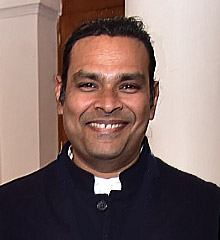
(Vipul Tamhane is a counter-terrorism expert and governance consultant.)
The views expressed are not necessarily those of The South Asian Times