The war behind the war that no one wants to talk about...
By Vipul Tamhane
Behind the missiles and press conferences, a dirtier, deeper conflict is being waged, one built on proxies, covert money, ideology, and deniability. There is the war you read about in the morning, the one with coordinates, casualty counts, and spokesmen standing at podiums. And then there is the other war.
No spokesperson will confirm it. No parliament will debate it openly. No government will fully own it. Yet it is arguably the more consequential of the two. It is older, more patient, and far more ruthless.
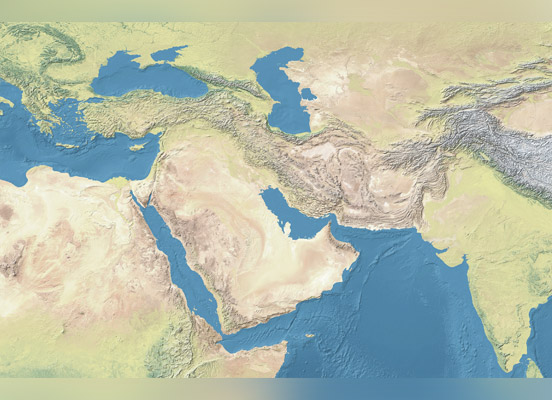
What is unfolding across West Asia today is not simply a military confrontation between Iran and the combined force of Israel and the United States. It is the surface expression of two rival systems that have spent decades building infrastructure for exactly this kind of contest, not through open warfare, but through proxies, covert finance, ideological programming, and the strategic deployment of deniability as a weapon in its own right.
The grey zone is not an accident of warfare. It is the architecture of it. The actors present at this location were specifically created to function as three things, which are useful and usable and disownable.
The establishment of Iran's Axis of Resistance began through multiple decisions which occurred throughout different historical moments until the organization reached its present form. The Iranians developed their front of combat through four decades between 1979 and present times because they believed their only way to protect their nation from warfare was to support their armed partners who conducted military operations against their enemies while pretending to assist liberation movements.
The architectural design exists in a basic but recognizable format which includes Hezbollah and Hamas and Palestinian Islamic Jihad and the Popular Mobilization Forces and Assad's Syria and the Houthis in Yemen. What is less discussed is how these groups were actually built. The answer is not flattering to the concept of clean ideological solidarity.
The IRGC Quds Force channels which supported these movements provided their funding while Iranian military advisors trained their members and the group received weapons through the Iraq-Syria land corridor. The agreement provided Iran with strategic depth and multiple pressure points against Israel and control over critical chokepoints and the capability to escalate or de-
escalate military actions according to Tehran's assumptions.
The late Qassem Soleimani, elevated by Iran into a near-mythological figure, was the principal architect of this network in its modern form. His genius, if it can be called that without moral endorsement, was understanding that ideological alignment alone does not sustain a proxy. Money sustains a proxy. Weapons sustain a proxy. Political legitimacy within local populations sustains a proxy. Soleimani delivered all three, and in doing so, built what is perhaps the most sophisticated non-state military ecosystem in modern history.
But every ecosystem has its vulnerabilities. The current conflict is stress-testing the Axis in ways that expose its internal contradictions. Hezbollah has joined the conflict while sustaining heavy losses from Israeli attacks. After experiencing extremely heavy losses during the Gaza war, Hamas now occupies a position of limited influence.
The Houthis display strong commitment to their allies through their public statements, but they maintain special control over their participation because their military history shows that previous battles resulted in the destruction of weapons storage facilities and the death of high-ranking officials. The Iraqi militias operate drones and rockets against American targets while maintaining enough restraint to prevent their actions from causing a major military reaction. The axis does not develop its strength as one entity. Its primary goal involves achieving existence.
The essential nature of proxy relationships becomes visible through this delay. The Iranian-funded groups which received military support during two decades now decide their level of involvement based on what helps them maintain control over their territory.
The remaining Houthi leaders who survived American airstrikes lack the ability to lead the Houthi organization which controls northern Yemen. An Iraqi militia leadership that engages in actions which trigger a complete American military response faces the danger of losing its established political territory which it has developed through its activities within Iraq's official governmental framework. Their loyalty to Tehran is real, but it has a price ceiling, and that ceiling is their own survival.
The Arc of Containment which analysts describe as the opposing axis conducts its own secret combat operations which remain unknown to the general public even when they differ from other combat operations in organizational structure. The United States and Israel build proxy militias in different ideological patterns because this practice does not reflect their usual approach. What they build instead is an intelligence architecture. The Kurdish SDF in Syria limits Iran's land corridor.
Sunni tribal networks in western Iraq provide intelligence on militia movements. Israeli covert networks which include informants and defectors and sabotage cells have established deep penetration into Iranian infrastructure which enables them to execute assassinations of scientists inside Iran and destroy missile facilities and allegedly implant malware into nuclear centrifuge systems.
The legislature does not see any of this information during their public balance sheet assessments. The funding mechanisms for both sides deserve particular scrutiny. Iran operates its system of financial support for its proxies through three channels which include state budget funding and IRGC-controlled business operations and networks that help them avoid economic sanctions.
The amounts are not trivial, Hezbollah alone is estimated to receive hundreds of millions of dollars annually, channelled through Lebanese financial institutions, front businesses, and cryptocurrency transfers that post-sanctions enforcement has only partially disrupted.
On the other side, Gulf state intelligence agencies, Saudi Arabia and the UAE most prominently, fund counter-Iran networks through mechanisms that are similarly opaque, routed through private foundations, intelligence liaison arrangements, and the kind of cash transactions that never appear in official foreign assistance registers.
Underpinning all of it is an ideological contest that neither side has won and neither side can afford to lose. Iran's resistance ideology, anti-imperialist, religiously inflected, framing every confrontation as a liberation struggle, retains genuine resonance in parts of the region, particularly among populations that have experienced Western military intervention or Israeli operations directly.
The Arc of Containment counter-narrative of stability, modernization, and economic integration has its own appeal, particularly in Gulf cities where young populations are more interested in careers than in revolutionary politics. These are not competing military doctrines. They are competing visions of what the Middle East should be, and they are being fought out through every militia recruitment drive, every social media campaign, every covertly funded religious institution.
What makes the grey zone particularly dangerous at this moment is not any single actor's capability. It is the accumulation of actions without clear red lines. Drone strikes with ambiguous attribution. Cyber operations that disrupt command networks. Maritime harassment that stops just short of a casus belli. Each action is calculated to apply pressure without triggering the response that would turn a manageable shadow war into an unmanageable conventional one. But miscalculation is not theoretical. It is, historically, how most wars actually start, not through deliberate choice, but through a series of grey-zone escalations that outrun the political bandwidth of the actors managing them.
The deeper concern is structural. The groups that have been armed, funded, and ideologically cultivated over four decades do not simply demobilise when their state sponsors decide a conflict has run its course. They have developed their own institutional interests, their own revenue streams, often including taxation, smuggling, and extortion within the territories they control, and their own political identities that are no longer fully subordinate to Tehran or Washington. The grey zone creates actors that are useful right up until the moment they become uncontrollable.
There will be press conferences about this war. There will be official statements, diplomatic communiqués, and carefully worded congressional testimonies. None of them will describe the war that actually matters, the one being fought in the ledgers of intelligence agencies, in the arms caches of militias that officially don't exist, in the servers of cyber units operating under institutional cover, and in the long ideological contest for the political imagination of a region that is younger, more educated, and more restless than any of the powers fighting over it fully appreciate.
That war has no armistice. It has no victory parade. It simply continues, below the threshold of acknowledgement, doing its patient and terrible work.
-----------------------------------------------------
.jpg)
(Vipul Tamhane is a counter-terrorism expert and governance consultant)
The views expressed are not necessarily those of The South Asian Times