In the shadow of the snow-capped Annapurna and the fertile plains of the Terai, a quiet revolution has unfolded—one that feels less like politics and more like poetry etched by destiny.
By K S Tomar
It sounds like a Cinderella tale. A dramatic, almost improbable ascent of Balendra Shah, Balen, with a touch of narrative elegance. A land once ruled for centuries by hill dynasties and the iron-fisted Ranas, a Himalayan kingdom that shed its monarchy in 2008 only to see its 2015 Constitution ignite protests from the Madhesh heartland, where equal rights remained a distant dream for communities tied by blood, language, and faith to the plains of Bihar and Uttar Pradesh.
Balen’s journey from Kathmandu’s streets—where, as a Mayor, he presided over the city’s system of cleaning up garbage, challenged corruption, and became the torchbearer for Gen Z—to Singha Durbar on the auspicious religious festival of Ram Navami on March 27, is the stuff of legend: a youthful revolt that toppled K P Sharma Oli’s government amid 2025 protests, now propelling a fresh face to power. This is not just a change; it is the Terai rising to lead the Himalayas.
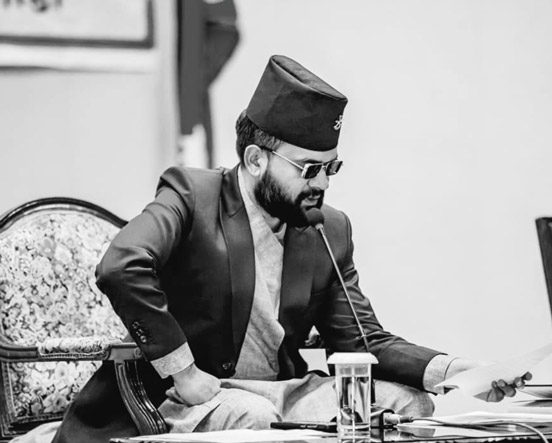
Against this backdrop and the serene tranquility of hills in the lap of Mount Everest, history has scripted its most improbable chapter in March 2026. Balendra Shah, the 35-year-old former rapper, structural engineer, and trailblazing Mayor of Kathmandu, was sworn in as Nepal's Prime Minister last week following his Rashtriya Swatantra Party’s (RSP) landslide victory in the March 5, 2026, general election. A son of Mahottari in the Madhesh Province, Balen marks the first Madheshi to helm the nation. It is no mere electoral triumph; it is a generational wave that swept aside entrenched communists and the Nepali Congress.
Opportunities under Trump’s China counter-policy
Previous communist governments in Kathmandu, seen as overly accommodating to Beijing, kept Washington at arm’s length—evident from the lukewarm response of the communist government to the Millennium Challenge Corporation Compact Nepal (MCC Compact) sanctioned by the United States for Nepal.
It was valued at $500 million (approximately ₹4,100 crore) as a grant. MCC compact implementation and minimal strategic engagement was ratified in 2022, but needs to be taken forward by Balen. The new RSP dispensation, with its youth-driven, anti-establishment ethos, aligns better with American goals of promoting democratic governance, anti-corruption, and economic self-reliance.
Trump’s team may extend overtures—aid for infrastructure, tech partnerships, or soft-power initiatives—to a balanced Nepal that distances itself from BRI debt traps. For Shah, this opens avenues for diversified funding, reducing over-reliance on either neighbor. Yet, it demands deft navigation: Nepal cannot afford to become a theatre for great-power rivalry.
Daunting challenges ahead for the new Prime Minister
Balendra Shah inherits a nation at a crossroads, confronting a horde of formidable challenges that will test his inexperience and the RSP’s raw mandate. With only three years as Kathmandu mayor under his belt—and the party lacking a deep governance pedigree—the new government faces an economic slowdown (projected growth under 5%), rampant youth unemployment driving mass migration to the Gulf and India, and a tourism sector still reeling from post-pandemic scars and climate disasters.
Corruption scandals that fueled the Gen Z uprising linger like ghosts; federal restructuring, especially Madhesh’s long-standing grievances over provincial autonomy and resource sharing, demands urgent healing.
Infrastructure bottlenecks—from crumbling roads to unreliable power—compound the crisis, while natural calamities (floods in the Terai, earthquakes in the hills) expose systemic vulnerabilities. Balancing coalition dynamics (even with a near-supermajority, alliances may be needed) and delivering on ambitious promises of jobs and transformation will require surgical precision.
Shah’s pugnacious social media style, once viral for its raw defiance, must now evolve into statesmanlike restraint. Failure here risks disillusioning the very youth who propelled him, turning hope into cynicism in a country where political instability has been the norm for decades.
A potential reset in Nepal-India relations
For India, this shift carries profound implications, especially after years of rough terrain under K P Sharma Oli’s communist-led governments. Oli will be remembered as the architect of a sharp departure from Nepal’s traditional “roti-beti” (bread and daughter) bonds with its southern neighbor.
His 2020 unilateral publication of a new political map incorporated Kalapani, Lipulekh, and Limpiyadhura—territories India considers its own—as Nepali land, escalating a border dispute that soured centuries-old ties. Further steps deepened the rift: Oli raised the Lipulekh Pass issue directly with Chinese President Xi Jinping during the SCO meetings, objected to India-China border trade agreements bypassing Nepali claims, and faced accusations of tilting Kathmandu toward Beijing amid perceived Indian interference in domestic politics.
Trade routes strained, cultural sensitivities flared, and Nepal’s strategic hedging appeared to favour China’s infrastructure overtures over India’s historical goodwill. The 2015 Constitution protests and subsequent blockades (perceived in Nepal as Indian pressure) only hardened positions.
Now, Balen Shah’s ascendancy signals a potential reset. A Madheshi leader with deep cultural and linguistic affinities to Bihar and Uttar Pradesh—regions sharing the open border’s heartbeat—brings instinctive warmth. His post-victory response to Prime Minister Narendra Modi’s congratulations was conciliatory: pledging to “strengthen, deepen, and make more result-oriented” ties through connectivity, energy, trade, and cultural tourism. Having studied engineering in India and positioning RSP for “balanced and dynamic diplomacy,” Shah has hinted at a pragmatic “Nepal First” approach that avoids past pro-China tilts.
For New Delhi, this departure from hill-dominated, communist-leaning leadership offers an opportunity to rebuild trust, revive people-to-people links, and counter any residual Chinese influence—potentially through enhanced high-impact projects and energy cooperation. It is a departure that could transform the “special relationship” into a strategic partnership, especially as Nepal bridges two giants.
China’s recalibration strategy in a post-Communist Nepal
With the once-dominant communists (UML and Maoists) relegated to the ineffective opposition benches in a most humiliating manner after their rout in the Gen Z-driven polls, Beijing will have to pivot from ideological allies to pragmatic engagement with a youthful, centrist RSP government.
Past overtures—via the Belt and Road Initiative (BRI)—have stalled amid debt concerns, geographic hurdles, and local skepticism. Iconic projects like the Kerung-Kathmandu railway remain aspirational, while contentious ones, such as the Damak Industrial Park (a “Nepal-China Friendship” venture near the sensitive Siliguri Corridor), were conspicuously dropped from Balen’s manifesto over strategic sensitivities.
China’s strategy to win confidence will likely blend economic incentives with subtle diplomacy: offering concessional financing for infrastructure without overt strings, positioning Nepal as a “vibrant bridge” in its global connectivity vision, and leveraging cultural exchanges or hydropower deals. Yet, RSP’s manifesto emphasizes “development diplomacy” over alignment—learning from China’s models, especially “Debt Trap Policy” while mobilizing funds transparently.
The fate of BRI hangs in the balance: selective revival for high-visibility wins (roads, tunnels) is probable, but full-throated embrace unlikely under a leader who once criticized Beijing publicly and prioritizes national sovereignty. Beijing will watch closely, perhaps dangling tourism revival or post-disaster aid, to prevent a westward drift—but Shah’s Madheshi roots and Gen Z mandate tilt toward balanced equidistance, not subservience.
In the end, Balendra Shah’s miracle is more than a personal triumph—it is Nepal’s declaration of agency. A Madheshi at the helm, born of Sita’s sacred soil, steering away from hill-centric legacies and communist-era tilts toward pragmatic balance. People of Nepal and India stand to gain immensely from restored warmth and shared prosperity; challenges abound, but so does hope.
As the Himalayas watch, this Gen Z-led dawn could redefine not just Nepal’s destiny, but the delicate equilibrium of an entire subcontinent. The coming months will reveal whether poetry translates into policy—but for now, the Terai’s ascent feels like history reclaiming its rightful rhythm.
--------------------------------------------------

(K S Tomar is a senior political analyst who spent six formative years in Nepal from 1992 to 1998, closely covering the intricate Sino-India-Nepal relationship and witnessing, from a ringside vantage point, the Himalayan kingdom’s historic transition to democracy.)
The views expressed are not necessarily those of The South Asian Times