The visit represents an attempt to walk the tightrope between safeguarding India’s strategic interests and exploring pathways for coexistence with its most formidable neighbor.
By K S Tomar
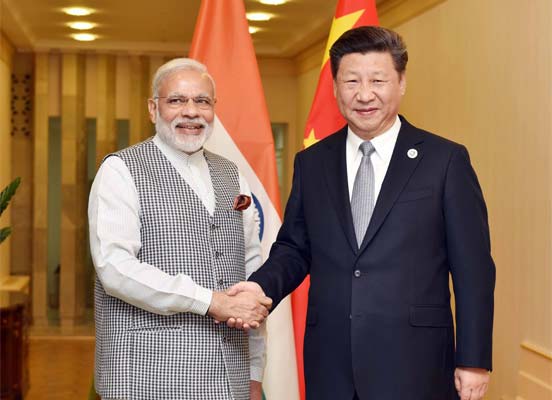
Prime Minister Narendra Modi’s upcoming visit to China to attend the Shanghai Cooperation Organisation (SCO) Summit is being viewed as much more than a routine multilateral engagement. It carries the weight of a possible turning point in India–China relations, which have been strained since the 2020 Line of Actual Control (LAC) standoff. With the invitation personally conveyed by Chinese Foreign Minister, Wang Yi on behalf of President Xi Jinping and Modi accepting it with a note of support for China’s SCO presidency, the stage is being set for a high-stakes diplomatic test. This is not only about strengthening India’s position in Eurasian geopolitics but also about exploring whether Modi and Xi can find a formula to thaw frozen ties without either side losing face.
Expectations from the SCO Summit
At the SCO, India will be engaging not only China but also Russia, Central Asian states, Pakistan, and new members like Iran. Modi’s presence will underline India’s strategic calculus that Eurasia cannot be left to a Sino-Russian condominium. India has been cautious within the SCO, often using the platform more for connectivity and counterterrorism dialogue than as a forum for grand alignments. Yet, given the Ukraine war, the Taliban takeover in Afghanistan, and shifting power equations in Central Asia, Modi’s interventions will be closely watched.
New Delhi will likely emphasize the need for counterterrorism cooperation, connectivity projects that respect sovereignty, and rules-based engagement in the Eurasian heartland. India remains wary of the China–Pakistan nexus being advanced within the SCO but sees value in retaining a seat at the table. Modi’s speech could articulate India’s vision of a multipolar Eurasia, where no single power dictates terms—a subtle signal to Beijing that India will not play second fiddle.
Possible bilateral outcomes
The real drama, however, lies outside the SCO plenary—in the potential Modi–Xi bilateral. While expectations of a breakthrough on the border dispute may be unrealistic, the following outcomes are possible:
>> Border talks roadmap: A joint agreement in principle could signal acceleration of disengagement and de-escalation in remaining friction points along the LAC. If both leaders endorse the SR mechanism’s progress, it could pave the way for military commanders to finalize phased troop pullbacks.
>> Economic concessions: China may plead on targeted concessions to ease trade irritants, such as relaxing export curbs on critical minerals, which India needs for renewable energy and infrastructure. Beijing could also push for India to ease restrictions on Chinese investment in high-tech and manufacturing.
>> People-to-people engagements: Resumption of stalled cultural exchanges, academic programs, and expanded pilgrimages could be announced as confidence-building measures.
>> Multilateral cooperation: Modi and Xi might identify convergences in climate negotiations, WTO reform, and Global South representation in international financial institutions.
Though cautious, these steps could signal that both sides are prepared to prevent another downward spiral, even if they cannot achieve a grand reconciliation immediately.
Can Modi cement strained ties with Xi?
Repairing trust with China is not easy. The LAC standoff created scars at both the military and political levels. Public opinion in India turned sharply negative against Beijing, and Xi himself has been unwilling to show flexibility, given his own domestic nationalist pressures. Still, a Modi–Xi reset could rest on pragmatic grounds rather than emotional reconciliation:
>> Economic interdependence: Despite restrictions, bilateral trade crossed $135 billion in 2024, making China one of India’s largest partners. For India’s manufacturing ambitions, selective Chinese technology and components remain unavoidable.
>> Geopolitical pressures: Both India and China face challenges from a volatile Afghanistan, instability in West Asia, and dependence on energy supplies. Coordinated approaches could reduce vulnerabilities.
>> Multipolar aspirations: Both nations see themselves as leaders of the Global South, but competition often trumps cooperation. Modi’s pitch could be that limited alignment in multilateral forums strengthens their bargaining power against Western dominance.
If Modi can frame engagement as a practical necessity rather than a compromise, it could create political space at home and abroad to pursue limited détente.
Other dimensions of the visit
>> Russia factor: With Russia–China ties deepening in the wake of Ukraine, Moscow will quietly welcome Modi’s presence as a balancer. India–Russia relations are at stake due to the hostile attitude of America, but Modi’s China trip could reassure Putin that India still values Eurasian connectivity.
>> Pakistan angle: The SCO will inevitably bring Modi and the Pakistani Prime Minister together, at least under the same roof. Even if a formal handshake is uncertain, India’s participation underlines that it will not allow Pakistan to dominate the regional security discourse.
>> Central Asian outreach: Modi could use the SCO sidelines to strengthen ties with Kazakhstan, Uzbekistan, and others, ensuring India is not overshadowed by Beijing’s Belt and Road push.
>> Domestic political messaging: Modi’s China visit, coming in his third term, allows him to showcase statesmanship. If he secures even a modest outcome, it could blunt criticism that his hard-line stance post-Galwan had foreclosed dialogue options.
If sustained, this pragmatic convergence could signal that economic self-interest, sharpened by US protectionism, is nudging the two Asian giants closer—at least on trade. For Modi, demonstrating that India can diversify its external options strengthens his hand in dealing with an unpredictable Trump administration. For Xi, it showcases that China still retains regional partners willing to defy US economic coercion.
A historic context
This will be Modi’s first visit to China since the Galwan clash in June 2020, which brought bilateral relations to their lowest ebb since the 1962 war. The four years since then have seen not just military standoffs but also a breakdown of political trust, with India restricting Chinese investments, banning apps, and hardening its posture on border infrastructure.
For Xi, who has been facing headwinds due to a slowing economy, tensions with the US, and pushback from neighbors, the optics of hosting Modi could signal China’s willingness to restore regional balance. For Modi, the visit could demonstrate his ability to engage Beijing without compromising on national security interests, a message that resonates strongly in India’s domestic politics.
It is worth noting that the last substantive engagement between Modi and Xi was the 2018 informal summit in Wuhan and subsequent meetings at multilateral forums. Since then, the dialogue mechanism has been revived following the recent visit of Chinese foreign minister Wang Yi’s talks with National Security Adviser (NSA) Ajit Doval under the Special Representatives mechanism and his meeting with external affairs minister S Jaishankar.
The resumption of the Kailash Mansarovar Yatra, reissuance of Chinese tourist visas, and signs of movement on trade irritants and progress in bilateral talks between Doval and Wang Yi. These are small but symbolically important signals that a reset, if pursued seriously, is not impossible.
Conclusion
Prime Minister Modi's visit to China for the SCO Summit is laden with symbolism and substance. It represents an attempt to walk the tightrope between safeguarding India’s strategic interests and exploring pathways for coexistence with its most formidable neighbor. Expectations should remain realistic: no dramatic breakthrough is imminent. Yet, the possibility of incremental gains—whether on the border, in trade, or through revived dialogue—should not be underestimated.
For India, this visit is about ensuring it is not locked in permanent hostility with China while maintaining strong ties with the US and Russia. For China, it is about showing the world that it can still engage constructively with India despite differences. And for the world, it is a reminder that the India–China relationship remains one of the most consequential for global stability in the 21st century.

(K S Tomar is strategic affairs columnist and senior political analyst based in Shimla)
The views expressed are not necessarily those of The South Asian Times