By K S Tomar
The assassination of Ayatollah Ali Khamenei signals the most dramatic rupture in Iran’s power structure since the upheaval of 1979. Yet for New Delhi, the tremor is not ideological—it is logistical, economic, and strategic. India’s response is shaped less by rhetoric and more by arithmetic: oil cargoes in transit, the safety of millions of expatriates, the durability of trade routes, and the shifting geometry of West Asian power equations. In moments of global convulsion, India instinctively measures exposure before emotion.
Despite dramatic headlines, India is not staring at an immediate energy breakdown. The country’s strategic petroleum reserves—located at Visakhapatnam, Mangaluru, and Padur—stand at roughly 5.3 million metric tonnes, while commercial inventories held by refiners typically cushion nearly two months of demand.
With consumption projected to touch 252.9 million metric tonnes in FY26, vigilance is mandatory, but panic is unwarranted. India’s refiners have, over the past decade, demonstrated remarkable agility—adjusting crude slates during sanctions on Iran and later amid the reconfiguration of Russian supplies. The system has buffers; what it requires is disciplined management rather than an alarm.
Tehran’s power shift: From turban to uniform
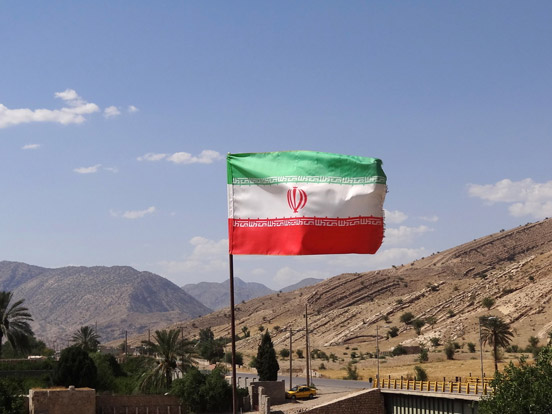
With Khamenei gone, Iran’s internal equilibrium tilts decisively toward the Islamic Revolutionary Guard Corps. Even during the Supreme Leader’s lifetime, the Guards operated as the state’s ultimate guarantor—commanding missile arsenals, overseeing strategic industries, and directing regional operations through the Quds Force. The clerical hierarchy conferred ideological legitimacy; the Guards exercised decisive control. That distinction is now fading.
This transition does not necessarily herald institutional decay. Comparisons with Nicolas Maduro’s Venezuela overlook a fundamental difference: Iran’s state apparatus remains cohesive, militarily entrenched and economically diversified. The Guards’ footprint spans energy, construction, telecommunications, and port management.
Rather than implode, Iran is more likely to consolidate—evolving into a securitized republic where uniformed authority eclipses clerical symbolism. The danger lies not in collapse but in a more centralised and potentially more assertive strategic doctrine.
A Guard-dominated Iran could harden its deterrence posture—leaning further into missile capabilities, proxy networks and asymmetric warfare. Decision-making may become streamlined, even predictable in the chain of command, yet sharper in regional projection. For neighbouring states and external stakeholders, this means recalibrating expectations from ideological unpredictability to institutional assertiveness.
The strait factor and India’s energy arithmetic
Tehran’s unprecedented declaration regarding the Strait of Hormuz injected volatility into global markets. Nearly one-fifth of global oil trade moves through that narrow maritime artery. For India—import-dependent to the extent of nearly 90 percent—any sustained disruption would reverberate through fiscal calculations, currency stability and inflation management. Last fiscal year alone, India’s crude import bill hovered around $161 billion.
Yet the response from New Delhi has been calibrated. The petroleum ministry initiated consultations with refiners, assessing inventory strength and diversifying sourcing strategies toward Africa and Latin America. Production adjustments by OPEC+ offer limited relief, but they provide psychological assurance to markets. India’s strength lies in diversification—its crude basket now spans multiple geographies, reducing single-point vulnerability.
Liquefied natural gas contracts further cushion exposure. Long-term supply arrangements with Qatar and the UAE reduce the immediate risk of cargo disruption, though insurance premiums and freight costs could spike. The larger challenge is price volatility rather than physical scarcity. Inflationary pressures, if sustained, could complicate domestic economic management at a time when growth momentum remains a policy priority.
Chabahar, trade and strategic patience
India’s engagement with Iran has always transcended hydrocarbons. The Chabahar port project—conceived as India’s access corridor to Afghanistan and Central Asia—remains a strategic investment insulated from episodic tensions. A Guard-led dispensation in Tehran may prefer firmer security oversight, but it also recognises the value of diversified partnerships. Pragmatism, not ideology, has historically guided Indo-Iranian ties.
Bilateral trade, once above $17 billion before sanctions tightened, may face renewed stress. Rice exports to West Asia—averaging 8–9 million tonnes annually—could suffer if maritime insurance rates surge or payment channels constrict. For agricultural states dependent on Gulf markets, the impact could be immediate. New Delhi’s task will be to preserve shipping assurances and credit mechanisms without provoking secondary sanctions or diplomatic friction.
India’s diplomatic posture is thus defined by equilibrium. Prime Minister Narendra Modi convened the Cabinet Committee on Security after the escalation, emphasizing de-escalation and regional stability. In conversations with Mohamed bin Zayed Al Nahyan and Benjamin Netanyahu, the emphasis remained consistent: restraint, dialogue and protection of civilian lives. The outreach illustrates India’s multi-vector diplomacy—maintaining communication with competing actors without sliding into overt alignment.
The expatriate dimension is equally critical. Indians constitute the largest foreign community in the Gulf, and remittances from the region exceed $40 billion annually. Any prolonged instability would not only endanger livelihoods but also ripple into India’s domestic consumption patterns. Preparedness—both diplomatic and logistical—remains central to crisis management.
Wider geopolitical ripples
China will watch events with cautious pragmatism. Its long-term cooperation pact with Tehran and energy interests make stability imperative. Yet Beijing is unlikely to risk direct confrontation with Western coalitions; it will seek equilibrium while safeguarding supply chains.
Russia’s calculus is layered. While Moscow and Tehran have deepened defence cooperation under the weight of Western sanctions, elevated oil prices serve Russia’s fiscal interests. Diplomatic backing for Iran in multilateral forums may coexist with quiet appreciation of market gains.
Pakistan, sharing a sensitive border with Iran, confronts immediate anxieties. Instability in Balochistan or sectarian spill over could strain Islamabad’s fragile security environment. At the same time, regional flux often opens tactical opportunities in great-power manoeuvring—an equation Islamabad may seek to exploit.
A test of strategic autonomy
The post-Khamenei landscape is unlikely to mirror economic disintegration; it is more plausibly a transition toward militarized consolidation. For India, this is a manageable, though delicate, test. Energy reserves, diversified sourcing, and calibrated diplomacy provide structural resilience. The deeper challenge lies in navigating prolonged uncertainty without overextension.
India’s foreign policy doctrine—strategic autonomy anchored in economic realism—faces examination in this unfolding chapter. If managed with composure, New Delhi can preserve its equities while reinforcing its reputation as a stabilising presence in a fractured West Asian order. In times of upheaval, restraint often proves the most strategic assertion of power.
-------------------------------------
(K S Tomar is a strategic affairs columnist and senior political analyst based in Shimla.)
The views expressed are not necessarily those of The South Asian Times