The Middle East’s stability will depend not only on the resolution of ongoing conflicts but also on how these three nations navigate their complex relationships with other global powers.
By Vipul Tamhane
The Middle East, a region steeped in a rich tapestry of history, culture, and religion, has also been a focal point for decades of continuous conflict. From the Israel-Palestine dispute to broader regional rivalries involving Iran, Saudi Arabia, and extremist groups, the area’s complex geopolitical landscape has repeatedly drawn in global powers, impacting regional and international stability.
Recent events have heightened tensions in the Middle East, drawing in global players like India, Israel, and the US Iran’s missile attack on Israel, in retaliation for the killing of Hamas and Hezbollah leaders, has escalated fears of a broader regional conflict. Israel responded with ground incursions into Lebanon, targeting Hezbollah.
The US is working to mediate, while India’s strategic alignment with Israel adds to the complexity of the evolving geopolitical situation. Among the numerous players involved, the evolving relationship between India, Israel, and the United States forms a crucial geopolitical triangle. This strategic alignment reflects shared interests in defense, technology, and counterterrorism, creating a partnership that profoundly influences global politics.
The significance of the Middle East in global geopolitics is undeniable due to its vast oil and natural gas reserves, which are essential for powering economies worldwide. Control over these resources has sparked intense competition, often leading to military interventions and proxy wars. Conflicts such as those in Israel-Palestine, Syria, and Yemen, along with the Iran-Saudi rivalry, highlight the region's instability. These conflicts not only threaten local peace but also disrupt global trade, energy security, and the balance of power, making the Middle East a focal point for international diplomatic efforts and a critical arena for global powers.
India’s relationship with the Middle East is heavily influenced by its reliance on the region's energy resources. As one of the world’s fastest-growing economies, India requires stable and secure access to oil and gas supplies to sustain its growth. The Persian Gulf region, particularly, is vital to India's energy security, with over 60 per cent of its crude oil imports coming from this area.
In addition to energy, India's significant diaspora in the Gulf numbering over nine million people plays a crucial role in fostering economic and cultural ties. This population serves as a bridge, strengthening relations between India and several Gulf states.
Prime Minister Narendra Modi’s inauguration of the first Hindu temple in Abu Dhabi in 2019 symbolized India's growing cultural and economic ties with the Middle East, particularly the Gulf Cooperation Council (GCC) countries. This milestone reflects India's strategic use of soft diplomacy, leveraging cultural and religious connections to strengthen relationships with nations like the UAE, where millions of Indian expatriates reside.
However, India faces challenges in balancing its ties with Iran, a key oil supplier, and its partnerships with Israel and the US, both of which view Iran as a strategic adversary. Navigating these complexities is critical for India's regional diplomacy. Israel’s importance in this triangle cannot be overstated. As a dominant military power in the Middle East, Israel’s primary focus has long been countering Iranian influence. Iran's pursuit of nuclear capabilities and its support for militant groups across the region pose significant security threats to Israel.
To counter these threats, Israel relies heavily on its strategic alliance with the United States, which provides military aid and diplomatic backing. The US-Israel relationship is built on a foundation of shared democratic values and mutual security interests, with the United States acting as a guarantor of Israel’s security in a hostile region.
India, too, has forged a strong partnership with Israel over the years. While diplomatic ties between the two countries were formalized in 1992, it is only in the last two decades that their relationship has grown exponentially. Today, Israel is one of India’s leading arms suppliers, providing advanced military technology and intelligence-sharing capabilities. In addition to defense, the two countries collaborate on various sectors, including agriculture, water management, and cybersecurity, further solidifying their strategic partnership.
The Abraham Accords, signed in 2020-21 between Israel and several Arab states, marked a significant turning point in Middle Eastern geopolitics. By normalizing relations with the UAE, Bahrain, and others, Israel has shifted from being an isolated power in the region to one that is gradually integrating into broader diplomatic and economic frameworks. This newfound cooperation has the potential to reshape regional alliances and create opportunities for peace and development. For India, this development opens new avenues for collaboration, as the normalization of ties between Israel and the Gulf states could pave the way for deeper trilateral partnerships involving trade, technology, and defense.
The United States remains a pivotal actor in Middle Eastern geopolitics, although its role is evolving. Historically, the US has maintained a strong military presence in the region, primarily through bases in the Persian Gulf and partnerships with key allies such as Israel and Saudi Arabia. However, with the US pivoting its strategic focus towards the Asia-Pacific and the growing influence of China, there are questions about its long-term commitment to the Middle East. Nonetheless, the US continues to play a vital role in mediating conflicts, maintaining security, and countering terrorism in the region.
The geopolitical triangle between India, Israel, and the United States represents a convergence of strategic interests, particularly in the areas of defense, counterterrorism, and technology. The partnership is built on shared concerns about extremism, the proliferation of weapons of mass destruction, and ensuring regional security. Enhanced cooperation between these nations, such as joint military exercises, intelligence sharing, and defense technology transfers, has the potential to strengthen global security.
However, this evolving triangle has the potential to reshape global alliances and rivalries. As India rises as a global power and deepens ties with Israel and the United States, this partnership could impact other global players, including Russia, China, and the European Union. Russia’s alliance with Iran and its involvement in Syria counterbalances the India-Israel-US axis.
Meanwhile, China’s expanding influence in the Middle East, particularly through the Belt and Road Initiative, may introduce new tensions or cooperation opportunities, further complicating the global geopolitical landscape.
In conclusion, the geopolitical triangle formed by India, Israel, and the United States has significant implications for both regional and global stability. As these three nations continue to deepen their partnerships, their influence on the Middle East’s future will grow. The region’s stability will depend not only on the resolution of ongoing conflicts but also on how these nations navigate their complex relationships with other global powers. Understanding the dynamics of this triangle is essential to comprehending the broader shifts in global geopolitics and the balance of power.
------------------------
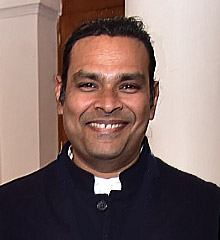
(The writer is a counter-terrorism expert and a visiting faculty with Pune University (SPPU) at the Department of Defense and Strategic Studies. He is also the founder & editor-in-chief at Diplomacy Direct, a public interest think-tank.)