Love him or criticize him, one cannot deny that he has changed the grammar of Indian politics.
By K S Tomar
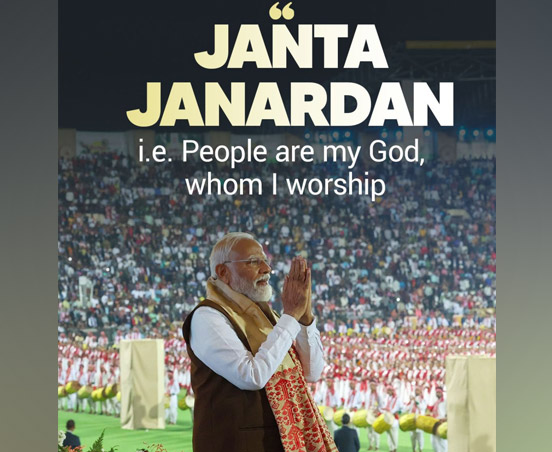
It was not easy to pen a different profile for a unique leader, Narendra Modi’s profile on his recent birthday. Too many columns have been written in clichés, but his persona demands something different. He remains a man largely to himself, shattering the decades-old dominance of Delhi’s entrenched journalistic elite who once prided themselves on inside knowledge of the Cabinet. Modi has dismantled that myth with ruthless clarity. He embodies a leader who keeps his counsel, protects information with secrecy, and steers India towards his declared goal of becoming a developed nation by 2047. His style is unconventional, his methods polarizing, but his intent transformative.
The re-engineered PMO
One of the least discussed revolutions under Modi has been the transformation of the Prime Minister’s Office. Unlike the UPA (United Progressive Alliance) years, when the PMO was often seen as subordinated to 10 Janpath, Modi has centralized both authority and accountability. Sanjaya Baru, in 'The Accidental Prime Minister', offered an insider’s view of how Manmohan Singh’s PMO was hemmed in by dual power centres. Modi has replaced this with a single point of command. Every file and initiative is now anchored directly to him. Far from being ceremonial, the PMO under Modi functions as a nerve centre that constantly monitors and drives governance. This reflects an executive decisiveness that India’s bureaucracy had rarely experienced.
Balancing the Sangh equation
Modi’s journey has also been defined by his calibrated management of ties with the Rashtriya Swayamsevak Sangh (RSS). Unlike many BJP leaders who leaned on Nagpur for legitimacy, Modi carved his own space, often resisting interference in appointments or policy. This created moments of unease, but he never snapped the ideological cord. He invoked the RSS’s discipline while expanding authority beyond its shadow. That balance was visible when RSS chief Mohan Bhagwat recently signalled that age caps should not constrain Modi, effectively clearing the way for him to remain at the helm beyond 75.
The media equation: A calculated distance
Modi’s fraught relationship with the national media has deep roots in his tenure as Gujarat Chief Minister. The Delhi press corps, used to proximity with earlier prime ministers, found in him a leader who denied them privileged access. The tradition of journalists accompanying PMs on foreign trips ended; Cabinet lists are now kept secret until the last minute. To critics, this secrecy is suffocating; to admirers, it ends the cosy nexus between power and press. Modi has inverted the hierarchy: rather than prime ministers depending on media barons, editors now depend on his popularity for relevance.
Forcing his way into the national scene
It is often forgotten how precarious Modi’s rise was in the early 2000s. Within the BJP, there was pressure for his resignation, with Atal Bihari Vajpayee reportedly uncomfortable. But L K Advani’s backing preserved his future. The man who emerged was not just a survivor but a strategist who later shaped the BJP’s emphatic victories in 2014, 2019, and 2024. Ruthlessness became a hallmark: no dissenter, however senior, is indispensable. Even powerful figures like Nitin Gadkari or Rajnath Singh are acutely aware of their limits in the Modi era. What keeps them aligned is his unparalleled pan-India appeal.
Hindutva with governance
Modi’s ability to weave Hindutva sentiment into governance is distinctive. He adopted this path not as a fringe slogan but as a mainstream mobiliser of Hindu identity. Yet unlike many, he interlaced rhetoric with tangible schemes. From Ujjwala Yojana to digitalization, achievements are framed not just as policy successes but as civilizational milestones. His pioneering use of social media in 2014 disrupted the Congress playbook and has remained central to his strategy. By merging religious sentiment with modern political technology, Modi created a durable template opponents struggle to match.
Flattery, discipline, and grassroots connect
Unlike many leaders who bask in sycophancy, Modi’s style is more nuanced. He relishes choreographed imagery in which state leaders appear as supporting cast but simultaneously demand results. CMs who fail can be replaced overnight. He does not berate ministers publicly but quietly sidelines them. His real affection lies with grassroots workers, whom he sees as the BJP’s backbone. In his universe, flattery is tolerated, but only performance secures permanence. The anti-corruption vigilance he demands reflects both his allergy to extravagance and his obsession with control, though sceptics question its consistency.
A lone walker, a persistent traveller
Modi’s years as the BJP in-charge of Himachal Pradesh in the 1990s revealed his overlooked grassroots style. He trekked tirelessly into remote valleys, meeting workers at their homes. That intimacy still defines him. He loves being seen alone at grand inaugurations—including the Atal Tunnel in Himachal—ensuring the limelight rests on him. This micro-management of image reflects his conviction that leadership must be direct and indivisible. He has mastered resilience, often bouncing back stronger from adversity.
The foreign policy instinct
Among Modi’s weaknesses, critics often cite foreign affairs, but his style is not of bureaucratic subtlety; it is of personal chemistry. He invests heavily in friendships with global leaders—Barack Obama, Shinzo Abe, Vladimir Putin, and Donald Trump. His bear hugs have become memes, but behind them lies a conscious attempt to humanise India’s presence. While traditionalists argue this risks over-personalization, it has undeniably raised India’s visibility, aligning with his belief that spectacle can accelerate strategic outcomes.
Cards close to the chest
Perhaps Modi’s most enigmatic trait is secrecy. He rarely reveals his inner thoughts, even to confidants. Amit Shah, his closest lieutenant, implements strategy with precision, but the ideas originate from Modi. The story of Jagat Prakash Nadda is instructive: despite his credentials, Modi overlooked him for Himachal chief ministership in 2017, instead elevating him later as national president. Such moves underscore his long game—often invisible until unveiled. He is not impulsive; he is a chess player, always several moves ahead.
The crucible of new challenges
As Narendra Modi steps into his 76th year, the aura of invincibility that has defined his political journey will be tested by a new constellation of challenges—managing the temperament of Donald Trump in Washington, navigating an unpredictable and assertive China, re-anchoring drifting neighbors in South Asia, and addressing the domestic spectres of unemployment and economic uncertainty that no slogan alone can dispel. The very skills of secrecy, resilience, and centralised command that have carried him thus far will now need to be re-engineered into instruments of accommodation, consensus, and long-term structural reform, for it is in this crucible of volatility that Modi’s claim to statesmanship will be truly measured.
The final word
Narendra Modi is neither a product of Lutyens’ Delhi nor a prisoner of its narratives. He is a leader who has rewritten the codes of power, unsettling old habits and privileges. His journey from the bylanes of Gujarat to Raisina Hill has been marked by secrecy, resilience, audacity, and a fierce connection with the masses. Love him or criticize him, one cannot deny that he has changed the grammar of Indian politics. On his 75th birthday, the profile that emerges is not of a conventional politician but of an enigmatic architect charting India’s path to 2047—with himself firmly at the centre of that story.
-----------------------------------------------
(The writer is a senior political analyst and strategic affairs columnist based in Shimla)
The views expressed are not necessarily those of The South Asian Times