By Mandar Joshi & Vipul Tamhane
Democracy does not run on autopilot. It demands effort, vigilance, education, and participation. And it begins with us, the people.
“Of the people, For the people, By the people”, we’ve all heard this familiar definition of democracy in our school textbooks. But for most of us, our involvement with democracy stops in the classroom or, at best, at the polling booth when we reach the age of eighteen. Democracy, a system designed to be shaped and guided by its people; has gradually turned into a passive ritual instead of an active civic duty. This increasing disconnect between democratic ideals and democratic engagement is at the core of most of India's problems today.
At just more than seventy-five years of independence, Indian democracy remains in its adolescence in terms of nation-building, as against the US democracy, with the oldest written constitution in the world. Although the nation has taken incredible leaps, managing the world's biggest elections every four years with over 347 million people, the institutional deepening of democracy has remained behind. Voting alone has become participation in its authentic sense, with educated citizenship being mostly out of reach.
The majority of the voters still choose their candidates based on party lines, ideological inclination, emotional appeals, and personal charm and not on a rational assessment of a candidate's merit. Election results are determined more by identity politics than by policy or performance. Worse is the increasing trend of ideologically diverse political parties coming together after elections only to constitute a government, an act which goes against the belief of the people.
Compounding the issue is the apparent abuse of constitutional provisions for political purposes, with minimal to no sincere attempt to reform or amend these loopholes. The silence of political players on such issues raises a basic question: Are they intentionally refraining from making citizens fully aware of democratic ideals?
One of the most important components of the solution starts with education, not academic education, but civic literacy. Civics has to be taught in schools and colleges as a core subject, highlighting the Constitution, the functions of the Senate, the Congress, state government, and the judiciary. These subjects are now usually relegated to the fringes of the curriculum, graded lightly, and ignored by students and teachers as well. The ensuing gap in democratic knowledge is revealed as young citizens mature to vote without necessarily understanding the duties that accompany that right.
It is important that civic education goes beyond textbooks and memorization. Students need to be actively involved through simulations of real life, debates, and interactive programs. Issues such as how a budget is drawn up, how policy impacts daily life, and the role of different administrative bodies need to be imparted with practical application. The story needs to change from seeing elected representatives as rulers to seeing them as public servants who are answerable to the people.
With millions of new voters entering the democratic process every year, arming them with this basic knowledge can profoundly change the course of politics. But even education by itself is not sufficient. Without robust civic education, another dominant institution must step in to take its place: the media.
Historically, right from the political commentators to today's online content producers, media has been instrumental in influencing public opinion. But much of today's media; print, electronic, and digital, have succumbed to sensationalism and ideological bias. Respectful debate has degenerated into cacophonous arguments, and hard issues of civic relevance are usually drowned out by divisive rhetoric. Emotional manipulation has now become a method of viewership and influence, leaving the masses more bewildered than enlightened.
The media's role should be to raise awareness, inform voters, and question all of the pillars of democracy, the legislature, the executive, and the judiciary. It should provide forums for issue-based discussion, fact-based journalism, and civic education. It has become an amplifier of distraction instead of a catalyst for awareness in many instances.
This leads to a greater concern: who holds the system responsible? Who protects democracy in so far as its functioning?
One such solution is the formation of non-political pressure groups consisting of educated, well-informed citizens. These would serve as governance watchdogs; tracking elected representatives, examining administrative performance, and demanding accountability without taking a political initiative themselves. Their neutrality would be ensured by a resolve to stay apolitical and impartial.
Such pressure groups would be able to function at all levels, from county office to the senate, judging public servants against clear performance standards. Their reports would be publicly displayed and widely circulated, so that voters could make fact-based choices in elections. This system would neutralize the common habit of emotional and identity-based voting and assist in reorienting attention towards performance, integrity, and vision.
Additionally, these associations could organize civic education campaigns, conduct community forums, and mobilize social media and online mediums to engage youth generations. With podcasting, blogging, to conducting school and college workshops, they would emerge as democracy's champions in practice, taking it out of text books and making it a reality in people's lives.
Technology can be at the center of this civic rebirth. Free online courses describing the workings of democracy, citizens' rights, bureaucratic hierarchies, and jurisprudence could be available. Sites to grade and review government ministries and members of parliament on real-life measures could be constructed. Transparency and performance can be made real and accessible in the data age.
The taxpaying citizens, both direct and indirect, constitute a major stakeholder group in this exercise. Even though they contribute to the revenues of the government, many are disconnected from governance. Civic consciousness needs to extend to knowing where tax money is spent, how it is spent, and how value is delivered to citizens. If even a fraction of India's enormous voter base decides to participate in an informed manner, the collective effect on democracy could be revolutionary.
During elections, pseudo-issues such as caste, communal history, and shallow grievances get exaggerated, eclipsing substantive discussion. Voter information campaigns, championed by civil society and independent media, must counter these distortions with cogency, fact, and informed discussion.
This movement would have to be comprised of honest bureaucrats, ethical business executives, educators, and youth leaders; those who believe in democratic values and possess the clout to lead others. Their shared mission would be to put democracy back where it belongs: in the hands of the people.
In the end, we have to ask ourselves: are we satisfied to allow democracy to continue as a four-year ritual? Or will we accept the challenge of building and defending it each and every day? The solution is our shared willingness to act. We should not only wish for a better future, but we need to create it. Let us create citizens who behave with the same audacity of American patriots, the same conviction and dedication to the common good. It's time to release our democracy from political expediency and take it back as a sacred cause of national rebirth. Democracy does not run on autopilot. It demands effort, vigilance, education, and participation. And it begins with us, the people.
------------------------------
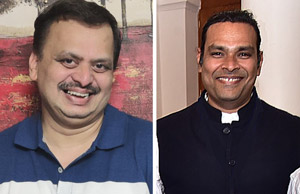
Mandar Joshi, is a political strategist and consultant. Vipul Tamhane is a counter-terrorism expert and governance consultant.
The views expressed are not necessarily those of The South Asian Times