By Angad Singh Minhas
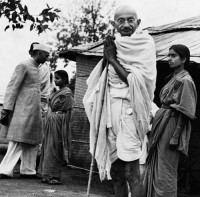
Historical Non-Alignment, as a concept of strategic autonomy for India, has evolved into a proactive 'choice of action,’ enabling India to pursue its national interests independently without any external pressure. These require fostering bilateral relations with multiple countries in a complex geopolitical contradiction.
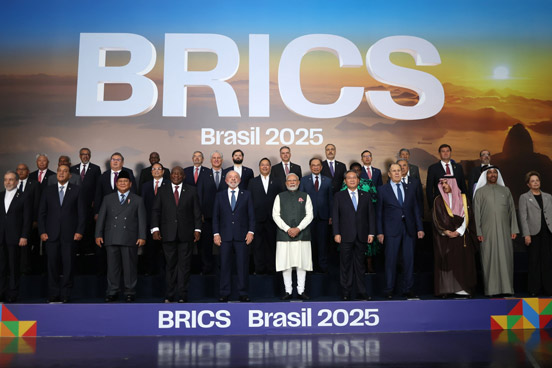
India desires to promote its role as a leader of the Global South, which is amply represented by BRICS or now BRICS+ with the addition of new members. China’s influence, internal cohesion, and the delicate balancing act by India while maintaining its western affiliations too, like the Quadrilateral Security Dialogue (QUAD), are few of the hurdles that India has to navigate while climbing the ladder of its rising role in shaping a more equitable and multipolar international order. This has to be without compromising its strategic independence in an increasingly fragmented world order.
India’s strategic autonomy in a multipolar world
>> Beyond non-alignment to “choice of action” | India has maintained an independent foreign policy guided by national interest. Earlier, Non-Alignment (NAM) kept it out of Cold War rivalries. Now, “Choice of Action” emphasizes proactive engagement and strategic autonomy through flexible ties with multiple powers.
>> Evolution of foreign policy post-independence | Since 1961, NAM has voiced the concerns of developing nations. Key milestones include Bangladesh’s liberation, 1990s economic reforms, 1998 nuclear tests, and the 2008 Indo-US nuclear deal. Though termed the “Modi Doctrine” today, the core of Indian foreign policy remains its independent character, pursued even amid external pressures.
>> Navigating global contradictions | India practices multi-alignment to manage a multipolar world, balancing diverse partnerships despite conflicting interests. By avoiding dependence on any single power, it diversifies strategies, turning constraints into opportunities and enhancing global autonomy and influence.
BRICS: Foundation, aspiration, and call for a new order
>> Genesis and core objectives | Coined in 2001 by Jim O’Neill (Goldman Sachs), BRICS evolved from economic collaboration to a political-diplomatic platform. It seeks to democratize and balance the global order and institutions like the UN, IMF, World Bank, and WTO—not by dismantling but by ensuring equitable representation.
>> Economic and geopolitical ambitions | BRICS challenges Western dominance in financial institutions, evident in creating the New Development Bank (2014). Beyond more IMF voting rights, it demands broader UN reforms to reflect contemporary power dynamics. Its dual strategy—reform existing bodies while building alternatives—acts as a hedge against reform failures.
>> De-dollarization discourse | Dissatisfied with US dollar dominance and sanctions, BRICS promotes local currency trade. Russia has strongly advocated this since 2023, but India, wary of replacing the dollar with the renminbi, maintains an independent stance even within BRICS.
The expanded BRICS: Reshaping global power dynamics
>> The 2024 expansion: Strategic significance | After 13 years, BRICS admitted six new members, with 40 more seeking entry—reflecting its ambition to become a global platform for the Global South.
>> Quantifying the shift | BRICS+ now accounts for 37.3% of world GDP, 46% of population, 40% of oil, and 36% of gas production, giving it major influence over supply chains, energy markets, and financial flows.
>> Geopolitical implications | Expansion enhances BRICS+ bargaining power in bodies like the UN, aiming for a rebalanced world order where the Global South has a stronger voice.
>> Internal cohesion challenges | Diverse interests—India-China, Egypt-Ethiopia, Saudi-Iran tensions—pose risks to unity. With decisions by consensus, expansion may dilute coherence and complicate future functioning.
India’s strategic calculus
>> Advancing global leadership | As a member of both Quad and BRICS+, India acts as a connector, maintaining dialogue and shaping outcomes with strategic autonomy, reinforcing its role as a key pivot in a multipolar system.
>> Economic opportunities | BRICS+ boosts trade, investment, and development projects like renewable energy and urban growth. For India, it diversifies dependencies, secures resources, and offers alternative financial mechanisms, enhancing autonomy.
>> Global governance and South-South cooperation | India’s goal is not just representation but restructuring global decision-making to reduce Western dominance and reflect 21st-century economic and demographic realities.
>> Addressing global challenges | India emphasizes development-oriented agendas that serve domestic needs while projecting it as a responsible leader. A prime example is the Indo-Brazil collaboration on sustainable biofuels.
Challenges and contradictions for India
>> The China conundrum | India is wary of China’s initiatives like BRI and GDI, viewing them as tools of influence. While India and Brazil mainly see BRICS economically, China and Russia push geopolitical agendas, like de-dollarization, which India avoids due to US economic ties.
>> Balancing BRICS+ and the West | India depends on the US/EU for markets, technology, and defense, while relying on Russia for energy. It continues Russian oil purchases despite Western pressure, stressing economic independence and non-alignment.
>> Preserving strategic autonomy | India’s neutral stance on the Ukraine war drew US tariff pressure, which it countered by accusing Washington of coercion and hypocrisy, asserting that its bilateral ties are independent of third-country considerations.
>> Internal fissures | India opposed rapid BRICS expansion, fearing China’s dominance and dilution of focus. Russia and China’s push may reduce India’s influence, while member rivalries complicate consensus-based decisions.
India’s role as a bridge and champion of the Global South
>> Mediating between developed and developing nations | India positions itself as a mediator on fair trade, debt relief, and equitable governance for the Global South. Its engagement with both Western and non-Western blocs enhances negotiating power and strategic autonomy, allowing it to shape global narratives.
>> Championing equitable growth and reforms | India consistently advocates reforms in global governance to dismantle Western dominance and institutionalize multipolarity. This aligns with BRICS goals while advancing India’s national interest in a more just and representative order.
>> Pragmatic diplomacy and issue-based cooperation | India pursues pragmatic, issue-based cooperation rather than rigid alignments. By avoiding anti-US rhetoric pushed by Russia and China, it balances partners, maintains credibility, and prioritizes self-interest and development.
Future trajectory for India
>> Diversifying partnerships and strengthening economy | By expanding economic ties and boosting domestic production, India seeks strategic autonomy in a volatile global economy. Reducing dependence on China and engaging emerging markets (Africa, Latin America, Southeast Asia) are key, along with initiatives like the ₹20,000 crore export promotion mission. True autonomy requires a strong economic base.
>> Deepening partnerships with like-minded nations | India adopts a selective, capability-driven approach—strengthening defense ties with Quad members, cooperating with France on arms, and retaining energy and defense links with Russia. This diversification secures strategic depth without exclusive blocs.
>> Shaping a multipolar world | India advocates democratic reforms in global governance for equity rather than dismantling existing systems. Its resistance to de-dollarization highlights its balanced approach, navigating BRICS and Western ties, with a long-term strategic vision.
Conclusion
India’s foreign policy, rooted in strategic autonomy, has evolved from non-alignment to a proactive “choice of action.” In a multipolar world, it fosters diverse ties to advance national interests. The BRICS expansion both strengthens and complicates India’s strategy, pushing it to pursue leadership, multipolarity, and economic gains through diversified trade, investment, and financial mechanisms.
To counter China’s influence, India must engage constructively while deepening security and technology ties with the West and retaining energy-defense links with Russia. With the US, tariff disputes should be managed through pragmatic trade deals. Sustaining this strategic middle ground will be vital for India to shape global dynamics in the decades ahead.
----------------------------------
Angad Singh Minhas is a student of Political Science and Economics at CHRIST (Deemed to be University), Delhi NCR.
The views expressed are not necessarily those of The South Asian Times