By Bhuvan Lall
Cannes and India remain intertwined in a grand, flamboyant waltz of soft power and silver-screen glory.
It was a night of pure cinematic bliss, an unforgettable symphony of hope and rebirth on the sun-kissed shores of Cannes. As the sun dipped into the shimmering azure embrace of the Mediterranean on September 19, 1946, American soprano and actress Grace Moore glided forward like a vision from the silver screen itself.
With regal poise, she unleashed the stirring strains of ‘La Marseillaise’, France’s eternal anthem of liberty, defiance, and unyielding spirit. Her voice soared, piercing the twilight and igniting an emotional wildfire among the assembly of celebrities, diplomats, visionaries, and starry-eyed delegates gathered at the opulent Grand Hotel for the reborn International Film Festival.
Just seven years earlier, on that dark September 1, 1939, the inaugural Cannes extravaganza had been rudely aborted as Hitler’s Wehrmacht thundered into Poland on opening night, plunging the world into the abyss of war and devastation. But now, in 1946, a war-weary France, still scarred by political turmoil and the haunting ghosts of Nazi occupation, rose like a phoenix in a dazzling celebration of peace, resilience, and artistic triumph. Applauded by the heroic French Resistance, this first post-World War II edition of film extravaganza positioned Cannes not merely as a festival, but as a defiant counter-bastion, a radiant beacon of the ‘free world’ where creativity could flourish unbound.
Special trains chugged in with waves of producers, filmmakers, cineastes, and dream-weavers from every corner of the globe into the glamorous embrace of the Côte d’Azur. The municipal casino was magically transformed into a majestic cinema hall seating 850, hosting nearly 1,000 international delegates, including a voracious contingent of 360 journalists hungry for stories of renewal.
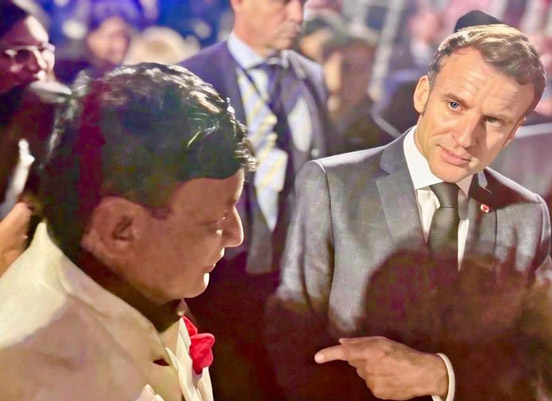
Author Bhuvan Lall with French President Emmanuel Macron.
From September 20 to October 5, twenty-one nations converged in this glittering festival, their films and stars igniting the Mediterranean nights. Hollywood royalty like Errol Flynn, Tyrone Power, and Edward G Robinson strolled the Croisette, turning heads and setting pulses racing. The famed seaside resort witnessed the explosive birth of Italian neorealism as Roberto Rossellini’s raw masterpiece Rome, Open City, unspooled like a thunderclap of truth.
Masterworks of Jean Cocteau, David Lean, Alfred Hitchcock, and Charles Vidor, set screens ablaze. As the fireworks exploded across the velvet sky, the Côte d’Azur morphed into the dazzling Hollywood of Europe, a whirlwind of razzle-dazzle that forever set the glittering template for every global film festival to come. France, through this cinematic resurrection, reclaimed her mantle as a towering world power, her spirit unbowed and eternally vibrant.
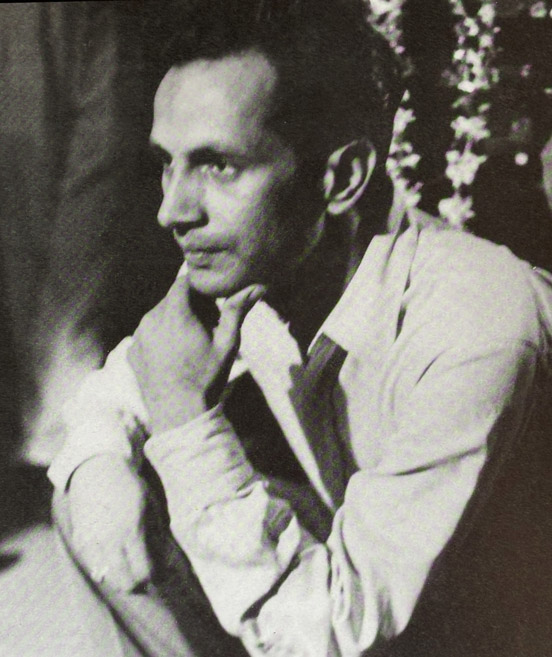
Amid this feast of genius with a thousand delegates pulsing with excitement, strode a quiet filmmaker from distant Gurdaspur in India, a young visionary named Chetan Anand. The highly educated son of a respected lawyer and the former teacher at Doon School, with no prior brush of cinema’s magic nor familial ties to the tinsel world, Anand arrived as an outsider. His directorial debut, 'Neecha Nagar', was poised to etch India’s name in eternal gold.
Penned by Hayatullah Ansari and laced with razor-sharp dialogues by the legendary K A Abbas, the film starred Anand’s own wife, Uma, alongside Kamini Kaushal, Rafiq Anwar, Rafi Peer, and a youthful Zohra Sehgal. The haunting score, composed by sitar maestro Pandit Ravi Shankar, wove threads of melancholy. Employing bold expressionist montage techniques, 'Neecha Nagar' laid bare the yawning chasm between the opulent rich and the struggling poor, a visceral, socialist roar that captivated the jury.
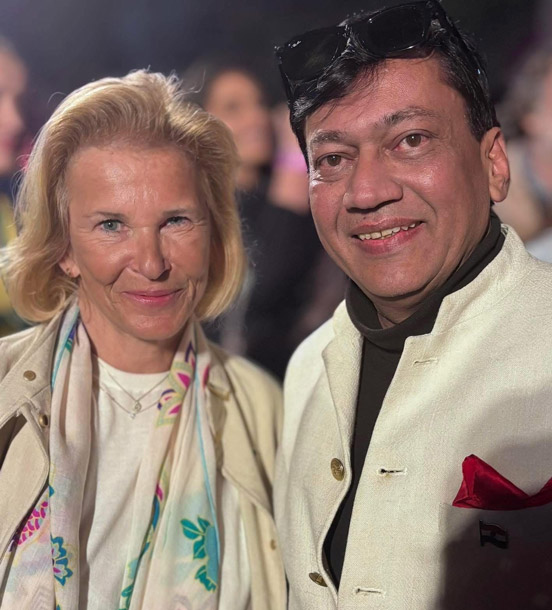
Bhuvan Lall with Iris Knobloch, President, Festival International du Film de Cannes.
In a historic thunderbolt, Chetan Anand’s masterpiece shared the coveted top honor, the Grand Prix du Festival International du Film, becoming the very first Indian film to conquer Cannes. That victory and triumphant declaration of India’s cinematic soul on the world stage ignited sparks across the subcontinent. A young advertising executive in Calcutta, Satyajit Ray, penned an inspired letter to Anand, confessing his own dreams of forging a debut film that would echo such glory. Another aspiring maestro, Mrinal Sen, caught a rare screening of 'Neecha Nagar' in India and felt the flames of ambition roar within.
Since that epochal 1946 rebirth and second edition, Cannes continued to reign as the pulsating heart of international cinematic renaissance, a dazzling arena for artistic audacity and bold exploration year after glittering year. It birthed the Italian neo-realists, cradled the French Nouvelle Vague, and welcomed the gritty soul of Hollywood. Legendary premieres electrified its screens as Cannes discovered and feted the masters, Hitchcock, Fellini, Godard, Schlöndorff, Truffaut, Scorsese, Coppola, Tarantino, turning the Croisette into a global cathedral of film.
India’s saga at Cannes shimmers with equal pride and poetry. In 1956, Satyajit Ray’s labor of love, 'Pather Panchali', claimed the improvised Best Human Document award, accepted in absentia with quiet dignity. Though denied the Palme d’Or, it soared higher in critical esteem. Bimal Roy’s 'Do Bigha Zameen' had claimed the International Prize in 1954, its tale of land and longing resonating deeply.
Rajbans Khanna’s documentary 'Gotoma the Buddha' won a ‘Mention Exceptionnelle’ in 1957. V Shantaram’s 'Amar Bhoopali' (1952), Raj Kapoor’s timeless 'Awaara' (1953), Ray’s 'Parash Pathar' (1958), and M S Sathyu’s searing 'Garm Hava' (1974) all graced the Competition segment, weaving India’s vibrant narratives into the festival’s tapestry.
Mrinal Sen, a Cannes stalwart with multiple competition entries and a 1982 jury stint, triumphed with the Jury Prize in 1983 for 'Kharij' (The Case is Closed), his incisive social commentary. The Camera d’Or for best first film twice honored Indian brilliance: Mira Nair’s raw 'Salaam Bombay!' in 1988 and Murali Nair’s haunting 'Marana Simhasanam' (Throne of Death) in 1999.
In April 1994, the editor of Screen International rang me excitedly from London, inquiring about Shaji N Karun’s 'Swaham' (My Own), selected for Competition. Through a flurry of pre-cellphone long-distance calls to ‘God’s own country,’ I tracked down the shy, visionary director in Kerala and crafted a piece that captured his quiet fire. Shaji’s 'Swaham' vied boldly for the Palme d’Or, and for the next three decades, there was no Indian film in competition at Cannes.
In 2024, the French Riviera once again pulsed with electric anticipation. Thousands of fans thronged the roads, craving glimpses of legends. Paparazzi flashes exploded like stars, Instagram amplified the frenzy worldwide, and Indian filmmaker Payal Kapadia graced the red carpet for the world premiere of her luminous 'All We Imagine As Light'. India returned to the main Competition after a 30-year hiatus, with Kapadia already a Cannes laureate, contending for the coveted Palme d’Or. At the end of the festival, Kapadia’s 'All We Imagine As Light' won the Grand Prix – the second one for India after Chetan Anand’s 'Neecha Nagar'.
History was not merely repeating; it was ascending to new, dazzling heights. Indian cinema, with its unparalleled blend of heart, heritage, and humanism, was once again celebrated on the Croisette, proving that from the Malabar Coast, the Bay of Bengal, and the banks of the Ganges to the French Riviera, stories of light, love, and liberation know no borders. In this eternal dance of celluloid dreams, Cannes and India remain intertwined in a grand, flamboyant waltz of soft power and silver-screen glory. Namaste, Cannes, may the magic endure forever!
(Bhuvan Lall is the biographer of Subhas Bose, Har Dayal, and Vallabhbhai Patel. He is the author of Namaste Cannes and India on the World Stage. He can be reached at [email protected])
(All photos courtesy of the author)