By Aashna Ukkhal "Priyamvada"
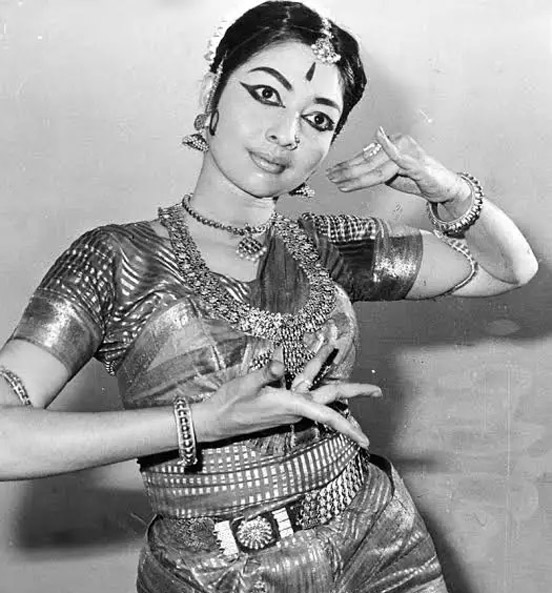
Born on December 20, 1940, Yamini Krishnamurti stood as one of India’s earliest cultural ambassadors, taking Bharatanatyam and Kuchipudi to international audiences, especially in the United States.
Padma Vibhushan Dr Yamini Krishnamurti embodied an entire universe of artistic depth along with discipline. She was more than just an artist whom the audience admired; she was an institution within herself. She brought a new perception of Indian classical dance through her dedication and clarity of thought. Her radiant presence is still talked about amongst the art fraternity.
The enduring strength of classical dance that she displayed with calm and poise while she performed Bharatanatyam and Kuchipudi segments in her recital in India and abroad, especially in the United States. Yamini’s performance served as a bridge in connecting and celebrating the Indian performing arts culture across the globe for the Indians who wanted to connect to their homeland and serve as a reminder that the cultural practices and traditions can thrive even when thousands of miles away.
There are individuals in life who purely impart art knowledge, but legends help redefine what it means to create and explore. My guru was the latter; Yamini Krishnamurthi was the eternal treasure of the Indian performing arts landscape that has influenced my journey. The direct training that I initially went through with my guru acted as a foundational anchor. Yamini Krishnamurti was not just an artist whom people looked up to; she became my inspiration. The force that moulded not just my artist path, but also the individualist artist I am today.
A guru who believed in appreciating Individualism
.jpg)
The Guru and the Shishya - Dr Yamini Krishnamurti with Aashna Ukkhal.
The most profound attribute of Yamini Krishnamurti was her belief in genuine individuality. She fostered the sense of self-belief in her students rather than making her disciples imitators of her. At any given point in time, she always mentioned that the ultimate goal of art was revelation, not replication. She believed that every individual had an ingenuity that needed to be discovered.
Thus, she always encouraged me to go beyond the meticulous imitations, henceforth exploring the profound truth and the freedom that came with the Abhinaya (expressive communication) that would make me stand out as an individual. Every step in the artistic path I take on and off stage comes from this very wisdom of hers that discipline is not caged but instead a source of creative endeavors that needs to be understood by the artist and brought before the audience.
My journey has been blessed. I was precisely shaped under her watchful and perceptive gaze, but never in that process was I moulded into her shadow. The core aspect that she always promoted was freedom of thought within the grammar of the classical arts framework, where rigid uniformity was considered the audience's delight. Yamini’s training demonstrated how authenticity can be grounded and subjected to an individual’s understanding. Yamini believed that a performing artist should have a diversity of vocabularies, even when one remains our primary discipline.
My guru, Yamini ji, wanted my training to be equally multifaceted as hers because she saw potential in my skills and the desire I had for learning the arts. This was the very reason she personally initiated arrangements for me to learn the art form of Kuchipudi with love and purpose. I reached out to her close friend, the renowned Padma Shri Guru Jayarama Rao, to guide me. She did this not as a light-hearted gesture but, more importantly, as a mark of her deep conviction and aspiration about my future as an artist in the performing arts.
.jpg)
Dr Yamini wanted her disciple's training to be equally multifaceted as hers.
She felt that acquaintance with learning classical dance forms manifold aspects that enhance and build up the emotional vocabulary and creative intelligence which an artist needs in the field. Her simple and perennial advice was "Tradition thrives only when students become original contributors, not replicas."
Passion meets perfection - Mastery built on dedication
Yamini's unwavering quest for purity, which manifested in profound foundation training at the Kalakshetra Foundation under the guidance of Rukmini Devi Arundale, was the source of her gruelling strength. Here she embraced the exacting discipline, beautiful aesthetic purity, and structural geometry of the divine art Bharatanatyam. Yamini received training from the Doyens of the art lineage - Gauri Amma, Thanjavur Kittappa Pillai, and Kanchipuram Ellappa Pillai, to name a few.
In this process, Bharatanatyam grammar became her soul's beat. In contrast, her guidance in the Odissi dance form under Pankaj Charan Das and Kelucharan Mohapatra brought fluidity, natural elegance, and subtle artistry. Kuchipudi training under Vedantam Lakshmi Narayana Shastri and Pasumarti Vanugopala Sarma offered dramatic vigor in her stage performances.
Yamini stands as a testimony that mastery is not born simply from talent but from persistent dedication, humbleness, and a lifetime of learning. She was one amongst the art fraternity to elevate Kuchipudi form from a regional, male-dominated art form to a globally recognized solo tradition, redefining cultural boundaries with unapologetic pride. Long before globalization made cultural exchange commonplace, Yamini Krishnamurti was already forging artistic pathways across continents. From the 1960s onward, she stood as one of India’s earliest cultural ambassadors, taking Bharatanatyam and Kuchipudi to international audiences, especially in the United States. Her presence on foreign stages offered a rare glimpse into India’s classical soul.
The name that became my vow
The greatest honor of my life, my Guru offered, was the name she gave me -Priyamvada. In Sanskrit, Priyamvada means “one who speaks with gentleness, grace, and pleasant truth.” It is a name associated with those who communicate with sincerity - not just through words but through presence, action, and intention.
Guruji chose this name for me with deep thought. Knowing the kind of artist she wanted me to become - clear in expression, honest in emotion, and graceful in communication. She bestowed upon me a name that would serve as a lifelong reminder of those qualities. This name was not just symbolic but transformative. It was her way of shaping my artistic destiny from within. Every time I hear the name Priyamvada, I am reminded of the immense trust Yamini Guruji placed in me. It is not simply an identity; it is a vow that shapes how I dance, speak, teach, and create.
An eternal legacy
In 1977, Yamini Krishnamurti was conferred with the Sangeet Natak Akademi Award. In 1968, she was honored with the Padma Shri, making her one of the youngest recipients at the age of 28 years, followed by Padma Bhushan in 2001 and Padma Vibhushan in 2016. These recognitions stand as national acknowledgments of the immense contributions made by her to the cultural heritage of India.
Yamini's prime-time performances for rustic audiences across the Hindi belt fetched her the sobriquet "Bijli". "She was truly electrifying," points out art historian Ashish Mohan Khokar. To many, her dance was representative of the Nataraja image that stayed inside her from her childhood.
.jpg)
[Aashna Ukkhal - known by her stage name Priyamvada - is a senior disciple of Padma Vibhushan Dr Yamini Krishnamurti. Based in New Delhi, Aashna is a Doordarshan-graded Bharatanatyam artist with additional training in Odissi, Kuchipudi, and Kathak dance forms.)
(All photos courtesy of the author)