By Vipul Tamhane
The situation in Iran appears more fragile now than at any point since 1979.
Originally sparked by traders angered over financial turmoil in Tehran’s main market, demonstrations have spread across every province without exception. At the center, Ayatollah Ali Khamenei contends with defiance from within even as foreign powers signal possible armed involvement. Economic breakdown combines with widespread dissent, fractures among leaders, and exposure on the world stage, with each element feeding urgency. Such pressures, building steadily, might exceed what past resilience could contain; with economic collapse, regional humiliation, and the specter of war.
One cannot ignore what the figures reveal. A single US dollar now demands more than 1.4 million Iranian rials, a sharp rise from 800,000 just months ago. This shift has left the national money nearly meaningless. In near region, the contrast appears stark, where India aligns at about 90 rupees per dollar. Meanwhile, daily essentials in Iran cost almost twice as much as they did one year earlier. Official data shows overall price growth exceeding 40 per cent.
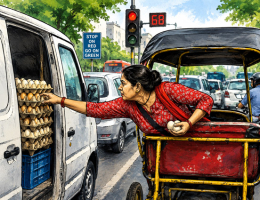
Such speed in decline hints at deeper instability beneath the surface. A single egg tray, priced at 2.2 million rials during one week, reached 3.5 million shortly after. Price tags now appear in US currency across store windows, showing an outcome once unthinkable within a nation known for its stance against American influence.
The downturn originates in overlapping setbacks. Sanctions from Europe, along with measures by the United States, restrict oil shipments, which are vital for national income, at a time when buyers in China show less interest. As worldwide pricing drops, earnings from petroleum, usually covering between one-quarter and half of state expenses, decline sharply because Tehran must sell at reduced values, currently eight dollars under standard value. Money exits rapidly; nine billion dollars left during only three months near the close of the prior year. A shrinkage of 1.7 per cent appears likely for 2025, followed by an even larger drop two years later.
Yet the financial collapse acts only as a trigger. What feeds the fire is long-standing anger toward a government that broke its core pledges. Over many years, religious leaders accepted limits on freedom because they said they delivered two results: spreading oil income among ordinary people and shielding Iran from outside threats, especially from America and Israel. Now neither reason holds true.
Humiliation across the region now stands complete. What was once a web of proxies, built to prevent strikes, lies in pieces. Hezbollah struggles for strength; Houthi actions spin beyond reach. Most striking was the collapse of Assad’s government in Syria occurred just months ago. Israeli aircraft moved through Iranian skies during assaults, facing no resistance. This revealed how fragile Iran’s shield truly had become. Chants like "Not Gaza, not Lebanon, I give my life for Iran" signal something deeper. A turning away from an ideology long draining national wealth and widening global distance.
What sets these protests apart lies in both scale and makeup. Starting among merchant traders, that once cautious allies of religious leaders, instrumental during the 1979 upheaval, these demonstrations trace roots to economic betrayal. These bazaaris accuse influential, government-linked exporters of pressuring the central bank toward currency devaluation harmful to ordinary business. This act reflects deeper rot, one weakening trust between citizens and institutions across Iran.
Across more than a hundred urban centers, dissent has drawn participation from students, traders, laborers, and those from countryside areas. Footage captures resistance once considered impossible, i.e., individuals setting fire to Iran’s national emblem, pulling down monuments honoring Qasem Soleimani, and in one widely shared moment, a young girl igniting an image of Khamenei, then using the flame for a cigarette, breaching rules on disrespect toward leadership, along with bans on women publicly smoking. What is emerging reaches beyond adjustments; it points directly at dismantling existing authority.
What followed was predictable: a harsh reaction that signals unease beneath the surface. According to monitoring organizations, at least 544 people have died; alternative counts suggest fewer than 200 lost their lives, while nearly 2,600 remain in custody. Medical facilities now operate beyond capacity, treatment areas are overcrowded, body storage units are exhausted. Across regions, digital connectivity has largely vanished, except where authorities allow limited bandwidth for outlets aligned with ruling figures.
A surprise shift took place when demonstrators located and executed an IRGC officer accused of directing gunfire at crowds, an act suggesting unease now spreads beyond the streets. Officials show signs of strain. Despite calling dissenters agents of outside powers, even Khamenei conceded their financial complaints hold weight. In rare remarks, President Masoud Pezeshkian confessed uncertainty about solutions, adding that unfair governance cannot last. Inside the leadership, fractures are emerging. Pushing forward without caution, that is what hardline factions of the Revolutionary Guard favor when it comes to nuclear arms. A different path appears wiser to moderates, where the diplomacy is leading to eased penalties. Disagreement becomes visible whenever statements from the highest authority clash with those of the head of state. What looks like confusion at the top can signal deeper instability beneath.
Unexpected risks emerge from abroad. Should violence against demonstrators persist, the United States may deploy forces; this warning came directly from President Trump. He described Iran as standing nearer to liberty now than at any point before. At the same time, he stated readiness with a phrase, ‘America stands prepared’. Operations in Venezuela recently concluded with the removal of Nicolás Maduro by Trump’s order. That move signaled a shift toward active involvement in altering foreign governments. Officials within the State Department have emphasized that these words carry weight. What was said, they note, points to actual plans, not mere expression.
Responses have emerged from Tehran in the form of warnings. Should US forces strike, a retort will follow without delay; the targets include Israel and American outposts throughout West Asia, stated Parliament Chair Mohammad Baqer Qalibaf. Talks between the Israeli leadership and Washington appear to have taken place, specifically, Benjamin Netanyahu with Secretary of State Marco Rubio on possible troop deployment. Alert levels within Israel now stand elevated. Tension spreads just as domestic instability deepens inside Iran.
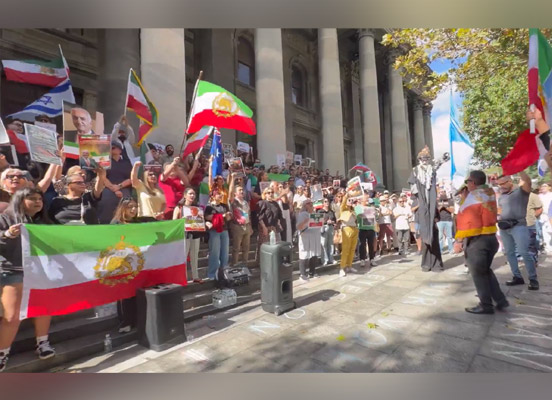
Flags showing the sun and lion symbol appear among demonstrators, linked to calls for Reza Pahlavi’s return from exile. Should he step into leadership, he states his intent to guide democratic change, yet opinions on backing him diverge sharply; figures hover between 35 per cent and, according to loyalists, up to 80 percent. Memories of his father’s repressive governance linger widely. Suspicion also exists that certain royalist signs at rallies might be staged by state actors aiming to tarnish protest credibility. Division within opposing groups continues to hinder cohesion.
Caution emerges from the past. Massive demonstrations in Iran during 2009, followed by others in 2011, 2018, 2019, and again between 2022 and 2023, were met with relentless force. Survival of the state hinged on severity. Still, history shows that such a rule weakens once certain elements converge.
Economic ruin without recovery paths forms one condition. A population unafraid marks another. When those tasked with order begin to pause, fragility grows. Momentum, if it holds, completes the set. Present circumstances meet most of these markers clearly.
Survival remains possible for now. Yet every upheaval chips away at strength, deepens isolation, erodes authority. Pressure builds as foreign powers hint at involvement, energy prices shift under strain, and youth set fire to portraits of their highest figurehead in public protest. The real issue might not involve survival at all. Instead, consider how decay unfolds, with a slow dissolution or abrupt breakdown, and what chaos follows when power vanishes.
----------------------------------------------------
.jpg)
(Vipul Tamhane is a counter-terrorism expert and governance consultant)
The views expressed are not necessarily those of The South Asian Times