By Krishan Sharma & Nida Rahman
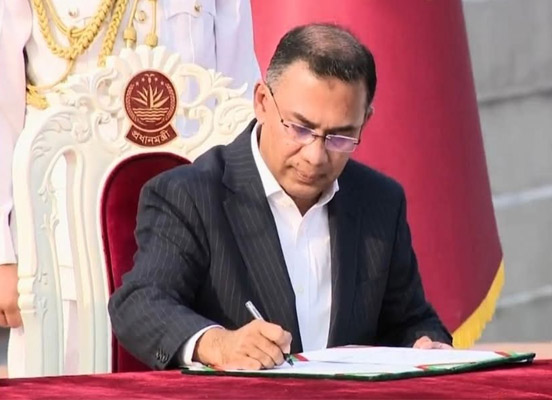
Tarique Rahman is stepping into office at a time when many Bangladeshis appear to want two things together: day-to-day stability and a sense of predictability in public life. The election has given him a clear mandate, but expectations are high at home and attention is high abroad. His performance will likely be judged on three linked tasks from the start: keeping domestic politics steady and inclusive, restoring growth with credible governance, and managing relations with India, Pakistan, China, and the United States in a way that protects Bangladesh’s interests and reduces avoidable friction.
Test 1: Domestic politics
A large victory can still bring challenges. Bangladesh’s political space has been changing, and a wider range of groups and voices now shape public debate. Governments in such moments face pressure to move fast, but short-term arrangements can sometimes make longer-term choices harder.
Many observers will watch simple signals first: whether administration looks impartial, whether public order is maintained fairly, and whether rules are applied consistently. This does not need to become an ideological contest. A practical approach is to focus on routine standards: a clear line against political violence and intimidation, regardless of source; professional policing and prosecution; equal protection and equal citizenship in practice; and a visible boundary between party politics and state institutions. When these basics work well, confidence improves and economic decisions become easier for households and firms.
Test 2: Economy & governance
Bangladesh’s development story has often been associated with steady growth, export strength, and improving social outcomes. Right now, the economy needs confidence. Recent figures show the context: World Bank estimates noted growth easing to 4.2% in FY2024 from 5.8% in FY2023, while the IMF projected around 4.7% growth in FY2026, with inflation still elevated. Inflation at 8.58% in January 2026 helps explain why household concerns remain high.
In practical terms, progress will be judged on a short list: easing inflation and food prices, improving power and energy reliability, keeping exports competitive through smoother logistics and clearer rules, strengthening discipline in the banking sector, and expanding jobs, especially for youth. Bangladesh’s export base remains concentrated: exports were about $48.28 billion in FY2024–25, and garments made up roughly 81.5% of the total, which increases the value of policy predictability and market access. Remittances are an important support, with reported inflows of about $32.8 billion in 2025, but that support is strongest when paired with reforms that build trust in institutions and reduce uncertainty for investors.
For younger Bangladeshis, the key test will be whether growth translates into better-quality jobs and credible routes from education and skills into work. Meeting these aspirations will also depend on predictable rules, fair hiring, and an environment where new firms can start, access finance, and expand.
Test 3: Foreign policy
Bangladesh sits at a strategic crossroads. China matters for investment and infrastructure, the United States matters for trade access and wider signalling, and Pakistan can carry domestic political meaning. Yet the relationship that most directly affects daily costs and confidence is India, through borders, transit, trade processes, and public narratives.
Improving ties with India can be pursued while maintaining Bangladesh’s sovereignty. It can be presented as making geography work better for Bangladesh’s economy. Rahman could focus on a practical baseline: keep routine disputes from becoming daily political messaging, limit sudden escalations, including those amplified online, and aim for early, workable gains such as faster trade facilitation, clearer border procedures, and easier people-to-people links.
Clear communication also helps cooperate where interests align, and state differences calmly where they remain. India also has a role if it wants a reset. Rather than relying on old assumptions, New Delhi could take visible steps that improve everyday cooperation and signal mutual respect. That includes careful public messaging, practical reductions in trade and logistics frictions, clearer and more transparent border protocols, easier medical, student, and business travel with clear procedures, and timely delivery of connectivity and energy projects with local consultation.
Quiet coordination to limit misinformation during sensitive periods would also help. These steps can be framed as practical measures that support smoother regional relations. A steadier approach on both sides would support stability and shared prosperity across South Asia.
(Krishan Sharma is an Assistant Professor at Bennett University and Nida Rahman is an Assistant Professor at IILM, New Delhi.)
The views expressed are not necessarily those of The South Asian Times