By Shine Raju Kappil & Milind Kumar Yadav
The health impacts of climate change are no longer a distant warning. They have arrived at India's doorstep. As temperatures shatter records and the monsoon grows increasingly erratic, the nation's public health infrastructure is confronting stresses it was never designed to bear. The summer of 2026 has exposed the depth of this vulnerability, while the approaching monsoon threatens to layer water-borne and vector-borne diseases on top of an already strained system.
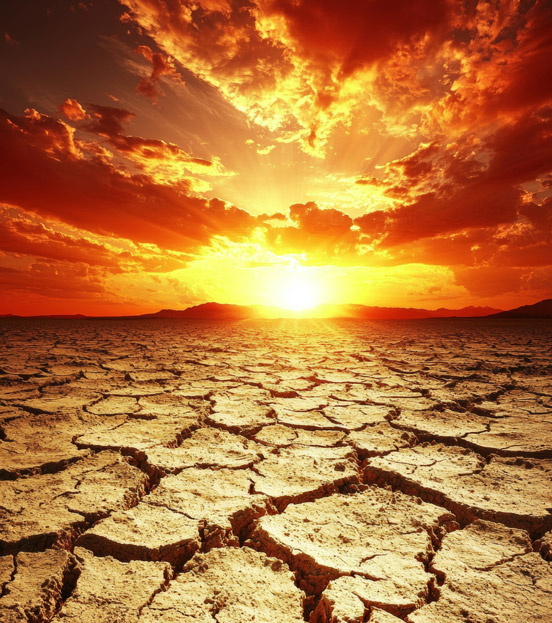
The numbers from this summer tell a stark story. In April 2026, Banda in Uttar Pradesh's Bundelkhand region recorded 47.6°C, emerging as the hottest city in the world on that day. The district subsequently touched 48.2°C in May.
Mercury crossed 46°C in at least eight cities across Uttar Pradesh, Rajasthan, Madhya Pradesh, and Maharashtra, with Jaisalmer, Wardha, Amravati, and Akola all registering extreme temperatures. Cities in Uttar Pradesh: Prayagraj, Mirzapur, Varanasi, Jhansi, now dominate the list of India's hottest urban centres. Odisha's industrial town of Jharsuguda recorded 44.6°C in April, briefly becoming India's hottest location.
Ahmedabad breached 44°C, continuing a pattern that has seen the city cross this threshold three times in the past five Aprils alone. The human toll of this heat is measured in hospital admissions and lives lost.
Heatstroke cases surged across northern and central India through April and May 2026. Hospitals in affected states reported a sharp rise in patients presenting with dehydration, acute kidney injury, cardiovascular stress, and cerebrovascular events, all conditions exacerbated or triggered by extreme heat exposure.
The elderly, children, pregnant women, outdoor workers, and those with pre-existing chronic conditions bore the heaviest burden. The urban heat island effect compounds this crisis. Dense built-up areas retain warmth, keeping city neighbourhoods 3°C to 5°C hotter than rural surroundings, often with no relief at night. Low-income communities in informal settlements, where single-room tenements lack ventilation and cooling, face the greatest risk.
The Government of India has responded with a series of policy measures. The National Action Plan on Climate Change and Human Health was launched to strengthen the health sector's capacity to respond to climate-sensitive diseases. The central government has directed all states to establish Heat Stroke Management Units in hospitals.
State-level heat action plans, pioneered by Ahmedabad following its devastating 2010 heatwave that claimed over 1,300 lives, have been adopted across multiple cities and districts. These plans include early warning systems, public awareness campaigns, training for healthcare workers, and the establishment of dedicated heat wards during the summer months.
The National Disaster Management Authority issues regular advisories on heatwave preparedness, coordinating with state disaster management authorities on ground-level implementation.
Yet the gap between policy intent and operational reality remains wide. The health and wellness centres established under the Ayushman Bharat scheme, proposed in 2018 to strengthen primary healthcare delivery, have seen uneven growth. Many of these centres lack adequate staffing, essential medicines, and diagnostic capabilities, let alone the specialised capacity to manage climate-related health emergencies.
The primary health centres and sub-centres that form the first line of response during heatwaves and post-monsoon disease outbreaks are chronically under-resourced. The enhancement of health expenditure as a percentage of GDP, which currently stands lower than in most developing nations, remains the most critical unfulfilled commitment.
As the monsoon approaches, the health challenge shifts. The southwest monsoon, while a respite from the heat, brings its own set of climate-sensitive health risks.
Vector-borne diseases such as dengue, malaria, and chikungunya surge during and immediately after the rainy season. Warming temperatures have expanded the geographic range of the Aedes aegypti mosquito, the primary vector for dengue, into regions and altitudes where it previously could not survive.
States in the Himalayan foothills, which historically reported few dengue cases, now experience regular outbreaks. Leptospirosis, a bacterial infection spread through water contaminated by animal urine, sees sharp spikes during urban flooding events. Water-borne diseases, including cholera, typhoid, and acute diarrheal disease, follow flooding and contamination of drinking water sources.
The spatial distribution of monsoon rainfall holds the key to the scale of these outbreaks. IMD has forecast an above-normal monsoon at 106 per cent of the long-period average for 2026. However, the distribution remains uncertain. If intense rainfall events cause urban flooding, as witnessed in Mumbai, Chennai, Bengaluru, and Hyderabad in recent years, the public health consequences will be immediate.
Stagnant water becomes mosquito-breeding grounds. Contaminated floodwaters spread gastrointestinal infections. Displaced populations in temporary shelters face heightened risks of respiratory infections and skin diseases. The costs ripple outward—lost wages, catastrophic out-of-pocket health expenditures, and deepening poverty among those least able to bear financial shocks.
Monitoring and surveillance systems require urgent strengthening. The Integrated Disease Surveillance Programme, which tracks disease outbreaks across the country, needs enhanced capacity for real-time reporting and climate-sensitive disease prediction. The IMD's heatwave early warning system, while improved, must be integrated with health facility preparedness at the district and block levels.
Currently, a heatwave warning may be issued, but the capacity of local primary health centres to respond with adequate staffing, oral rehydration supplies, and cooling facilities remains inconsistent. The same gap applies to post-monsoon disease surveillance: the lag between early warning and local health system response can be measured in days or weeks—time that translates directly into preventable illness and death.
The financial burden falls disproportionately on the poor. The National Family Health Survey-5 revealed that health insurance coverage stands at just 41 per cent of households, with coverage lowest at 36.1 per cent among those in the lowest wealth quintile. Out-of-pocket expenditure on health remains high, driving an estimated 55 million Indians into poverty annually.
Climate-sensitive diseases add another layer to this financial precarity. A single dengue hospitalization can cost a family tens of thousands of rupees. For daily wage laborers, already losing income to heat-related work stoppages, the combined financial shock of illness and treatment can be devastating.
The way forward requires fundamental changes. The most important step remains the enhancement of public health expenditure, which has hovered around 1.3 to 1.5 per cent of GDP for years, far below the 2.5 per cent target set by the National Health Policy 2017. Strengthening primary healthcare is another area demanding attention.
The health and wellness centres under Ayushman Bharat, if properly staffed, equipped, and linked to climate surveillance systems, could form the backbone of climate-resilient primary care. Heat action plans must move beyond state capitals to reach district and block levels. Disease surveillance must become predictive rather than reactive, integrating meteorological data with epidemiological monitoring.
India has shown it can achieve ambitious health targets. The elimination of polio, reductions in maternal and infant mortality, and the swift implementation of COVID-19 vaccination all demonstrate institutional capacity. Climate change now demands a similar mobilization, not for a single campaign but for a permanent recalibration of the relationship between environment and health. The summer of 2026 has delivered the warning. The coming monsoon will deliver the test.
--------------------------------

(Dr Shine Raju Kappil and Dr Milind Kumar Yadav are faculty members of Economics at Christ Deemed-to-be University, Pune, India)
The views expressed are not necessarily those of The South Asian Times