By Manoj Kumar Mishra
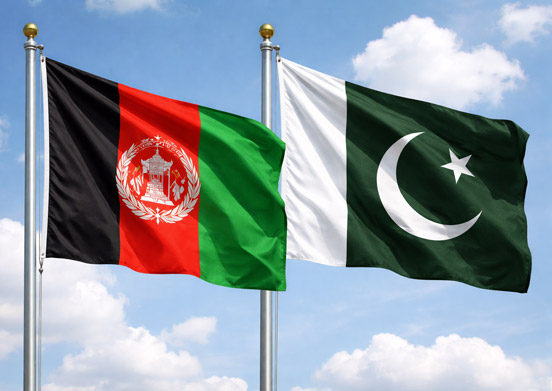
A temporary and fragile ceasefire between Afghanistan and Pakistan, which was intended to curb violence between the two countries, witnessed frequent violations, and the rift seems to be deepening as the latter has declared “open war” against the former following renewed clashes along the shared border. Pakistan has not only accused the Afghan Taliban of harboring the anti-Pakistani militants, it has previously carried out airstrikes against the Teherik-e-Taliban Pakistan (TTP) targets in Afghanistan’s Paktika province, which led to rounds of attacks and counterattacks. Countries such as Qatar, Turkey, and Saudi Arabia have made efforts to broker peace between them. But no efforts have ensured any slackening of ties between the Afghan Taliban and the TTP.
On the other side, Afghanistan has blamed Pakistan for its desire to dominate the former and for its collusion with external powers to undermine the sovereignty of the former. Pakistan has also condemned the Afghan Taliban for begetting many other terrorist outfits, including Al Qaeda, ISIS, and other regional militant outfits. The TTP has a strong base in the Tirah Valley within Pakistan, which is likely to turn out to be a flashpoint in the conflict between Pakistan and the group, and foment further conflict between Afghanistan and Pakistan.
Pakistan has been witnessing a surge in cases of terrorist activities since the Taliban came to power in Afghanistan in August, 2021. The country has been roiled by the fact that the TTP found a haven under the current Taliban regime in Afghanistan, and security forces near the border have become frequent targets of such violence.
Terrorist violence in Pakistan is not a new phenomenon. Pakistan has been a victim of terrorism perpetrated by the TTP for the last two decades. The recent development is, however, Afghanistan and Pakistan started confronting each other and exchanged fire as terrorist attacks on Pakistan spiked from across the border, which a temporary ceasefire between the two sought to stop. Some research institutes, such as the Pakistan Institute for Conflict and Security Studies, have described 2025 as the deadliest year for Pakistan in terms of the frequency and lethality of terrorist violence in the country’s territorial landscape.
The Afghan Taliban and Pakistan shared the strongest bond, especially in times when they stood united against any common enemy. Now, at a time when Pakistan forces the Taliban to sever its links with the TTP, a militant group with which the Taliban has common stakes, the significance of Pakistan to the Taliban takes a backseat, and Afghanistan’s bilateral problems with Pakistan, border issue, and tensions with Pakistan’s interventionist role start hardening the bilateral relations.
Pakistan finds the TTP’s demands irreconcilable, that includes implementation of Sharia law across Pakistan. It demands that Pakistan withdraw its troops from areas near the border. At the extreme point, the group has been pursuing the objective of overthrowing the existing government of Pakistan and seeking to supplant it with an Islamist emirate.
Afghanistan: A ceaseless victim of Pakistan’s geopolitical interests
Pakistan preferred an unstable Afghanistan to a peaceful one primarily because mutual antipathy and distrust characterized Indo-Pak relations since the beginning. Pakistan, for long, provided a theory that India’s enhanced presence in Afghanistan would encircle it from two sides by squeezing it in the middle.
In this light, in the post-Taliban era since 2001, it incessantly expressed its apprehension regarding Indian presence in Afghanistan, leading the US to limit New Delhi’s presence largely to non-military developmental aspects. Since its independence, Pakistan kept arguing that it pursued its legitimate security interests in Afghanistan, which included striving for a pliable regime and making Kabul strategically and financially dependent on it.
However, pursuing these objectives was not a cakewalk. Pakistan got locked into a territorial dispute with Afghanistan, with a recurring demand for self-determination from the Pashtun population spreading across the Af-Pak border area (Durand Line) to form Pashtunistan ever since its emergence.
More than an ethnic issue, Pashtunistan has been considered a geopolitical issue by successive Afghan regimes, being instrumental to gaining access to the Indian Ocean and therefore to the world market. All the trade routes to Afghanistan’s south ran through Pakistan’s territory, and the Pakistani efforts in Afghanistan were steered towards installing a pro-Pakistani clerical regime so that the Pashtunistan issue was subsumed under the broader banner of Islamic identity and a common front against India was materialized with the formation of the Afghanistan-Pakistan axis.
Pakistan directed its efforts to ensure that Afghanistan remained dependent on its trade-routes so that its influence there did not get diluted. The Soviet intervention in Afghanistan in 1979 provided Pakistan with the required security environment to pursue a friendly and amenable regime in Afghanistan to push the Pashtunistan issue to the backburner and solidify the Islamic identity as the basis of the axis between the two countries. Pakistan directed Pashtun hostility to fight against the Soviet Army and forge political Islam known as ‘Jihad.’ It is because of the cultural affinities of the Sunni Muslim Pashtuns on either side of the border and the dominant influence of Pashtuns in the higher ranks of Pakistan’s army and bureaucracy that Pakistan’s Afghan policy tilted in favor of mujahideen parties.
Pashtunistan was more a geopolitical issue than an expression of ethnic solidarity borne out of the fact that Pashtunistan dominated Afghan foreign policy in the early 1960s despite the little support it enjoyed among the Pashtuns of Pakistan.
Similarly, Pakistani involvement in the Taliban’s emergence and in its exponential rise needs to be placed within the larger context of changed geopolitics in the Eurasian landmass. The Soviet Union disintegrated in the early 1990s and gave way to the emergence of landlocked but resource-rich Central Asian states.
With the perceived loosening of Indian ties and influence in the region after the dismantlement of its closest partner, Pakistan was eager to extend both trade and political ties to the region. This required stability in Afghanistan, torn apart by the Civil War and the local rule and influence of warlords.
After repeated attempts by Pakistan’s favorite Hekmatyar to subdue other ethnic forces in Afghanistan, the second democratically elected government of Benazir Bhutto, under its Interior Minister General Naseerullah Babur, prepared the groundwork to utilize the Taliban to bring stability to southern and eastern Afghanistan. He saw high stakes involved in Afghanistan for Pakistan, through which trade routes could be opened and linked to different resource-rich Central Asian states. However, the act of resorting to radical Islamic groups for enhancing geopolitical influence proved to be a boomerang for Pakistan in the long-run. It not only kept Afghanistan boiling with continuous spilling of human blood, but Pakistani citizens very often fell victim to the rising menace of terrorism.
The Taliban has turned against its progenitor, Pakistan, largely because the latter sought to use this group to advance its narrow interests and streaks of dominance in Afghanistan. It promoted radical Islam to diminish India’s influence in Afghanistan and defuse the Pashtunistan issue, but radicalism later turned out to be an existential threat to Pakistan. Pakistan ignored the organic and ideological ties that interweave the Taliban of both countries. The Afghan Taliban is unlikely to break ranks with TTP for the fact that it will likely pave the way for splitting the protean Taliban, which includes pragmatic leaders as well as radical believers. Any move to alienate TTP by the Afghan Taliban would push the former to ally with the Islamic State – Khorasan Province (ISKP) - the dangerous rival of the Afghan Taliban.
.jpg)
[Dr Manoj Kumar Mishra is a senior lecturer of Political Science at SVM Autonomous College in Jagatsinghpur, Odisha, India.]
The views expressed are not necessarily those of The South Asian Times