The unleashing of technology as an autonomous entity with unpredictable reliance would essentially be an existential threat to democratic governance.
By Vipul Tamhane
What? Are we now doing movie reviews in a geopolitical column? Sorta! Read along.
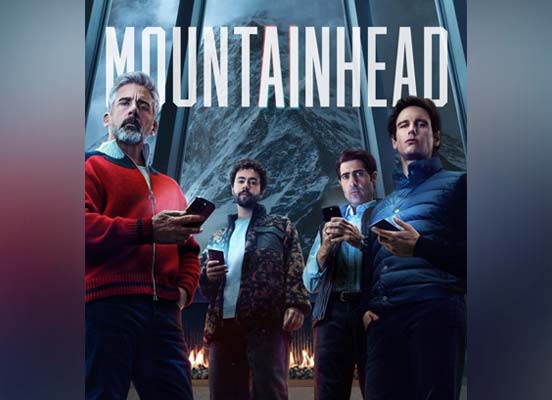
Jesse Armstrong's latest film, 'Mountainhead' has arrived at a peculiar moment where the thin veil separating celebrity satire as fiction from reality has never been thinner. Seeing the story about four tech billionaires retreating to a luxury mountain lodge, typically a wealthy international Jew's Rat Pack fantasy to escape the maggots slowly gnawing at the world (it's dark comedy folks), isn’t just darkly comedic; it's a bracing look into our current geopolitical reality where a small number of tech moguls have an enormous, unprecedented control over global affairs.
Armstrong's fictional consortium of characters, Jeff, Randall, Venice, and Hugo, represents what can only be described as a modern-day 'God' complex. They are not simply entrepreneurs or innovators; they are the fate of mankind. Venice, the Elon Musk-like character who deploys AI tools that unleash "explosively offensive deep fakes," is neither ashamed nor concerned about the planetary chaos and confusion unleashed in his wake. When he is confronted regarding his platform inciting explosive situations through its "unfalsifiable deep fakes" and "massive fraud," Venice states he simply "believes his technology can save the world."
This mirrors the real-world hubris we witness daily. Elon Musk has commanded global politics through dozens of rapid-fire, often inflammatory posts to his 210 million followers on X, calling for the release of jailed British far-right extremists and pressing King Charles on political matters. Musk is highlighting his enormous influence as a populist force galvanizing political provocateurs as a kind of one-man supranational non-state power, operating beyond traditional diplomatic channels and national boundaries.
The film's depiction of these tech titans looking down upon "the super poor world" while expressing the need to "coup out South American countries or even the United States itself" is not exaggeration; it is a prediction come true. When Armstrong's characters disdain "nation states with their unsightly regulatory encroachments," it is evoking a familiar sentiment increasingly visible in tech elites who see democratic institutions as impediments preventing them from pursuing their better world design.
Randall's obsession with archiving his consciousness for digital immortality is a vanity issue, but not an insanity issue. It represents the tech elite's belief that they can outlive the mortal confines of ordinary citizens. When tech elites pursue technological transcendence, they too often abstract away any human consequences. If you think you can cheat death itself, the agony incurred by the mere mortal becomes a tolerable innovation cost.
The film's representation of world leaders as pathetic supplicants to digital divinities may be captivating but it is also disturbing since that is what the president is in this fantasy. One character (Hugo) dismisses the president as a nuisance to their strategy game: "The president wants to talk to us." This is not fiction. Elon Musk's broadening public profile is ushering us toward a technology, and innovation led US foreign policy disposition, where technology moguls determine increasingly the foreign policy strategic dispositions traditionally covered by a regime's foreign policy structures.
Donald Trump's administration has appointed senior advisors from the business realm, including Elon Musk and Vivek Ramaswamy, who would be expected to shape policy thinking related to fledgling technologies like AI. The ecosphere of technological and business cooperation is not only changing but is changing so rapidly that private space companies are already achieving many of the benefits previously confined to government, transferring not only technological but also political (geopolitical) power to individuals who answer to no constituent or electorate.
One can see the chaos illustrated in 'Mountainhead' is imminent, as the AI-infused misinformation that incites global hysteria, riots, and instability, is happening today. Artificial intelligence is already causing geopolitical power shifts and rivalries, economic competitiveness and disparity and geo-relational distance. The idea that the fake videos in the film become indistinguishable from real videos, inciting "riots, coups, and assassinations," is increasingly a reality, not fiction.
Governance and policy must also be considered in the events from 'Mountainhead' as the emergence of AI indicates that technology could mean a shift in agency as a geopolitical actor with motives and objectives that differ greatly from governmental and private business. The unleashing of technology as an autonomous entity with unpredictable reliance would essentially be an existential threat to democratic governance.
Hugo's character in the film, who is profiting from the chaos by way of his meditation app, demonstrates the most dangerous facet of this tech-enabled disruption - the basis for normalizing profiting off of global instability. As nation-states grapple with the ongoing AI-fueled misinformation campaigns, these digital overlords act as both arsonists and firefighters, posing issues for the price of the solution.
This highlights an urgent and immediate call for a global governance framework addressing these outcomes brought about by technology at rates too unfathomable to comprehend. The international community needs to realize that we are faced with a unique assault on sovereignty itself. With the introduction of AI and machine learning into the space of biotechnology, industrial engineering, and state security, nation-states can export these AI systems to other authoritarian regimes, these nation-states are effectively implementing controlled models of governance and influence in countries who are hostile to Western influences.
The United Nations and G20 need to act now to create conditions that prevent one individual or company from using technology against democratic institutions or national sovereignty. We need international laws that prohibit the use of AI technologies to disrupt functioning governments, change the outcomes of elections and destroy the social fabric. But first, we need a way to ensure that no single individual, and I mean no single individual, can own the communication technology into which billions are coerced and expect some measure of accountability for acting or omitting action on behalf of billions.
As a mirror to our reality, 'Mountainhead' does not work as a means of escapist entertainment; it acts as a diagnostic, highlighting the malignancy of the growing
tumor at the core of our technological civilization. If we live in a world where a handful of individuals can change global politics with an algorithm while state governments are left trying to understand and navigate their world of technology that they do not fully control or regulate, we are now living in Armstrong's dystopia.
The hopeless end of the film, where the planet is still in chaos but deals are made behind closed doors, should wake everyone up. If we continue to allow unelected tech giant wannabe-dictators to play god with global affairs, Armstrong's fiction was not fiction anymore. We must act quickly, it's not going to be tomorrow or next year; it must be now, before 'the mountain lodge' becomes our everlasting prison and we the inmates become their everlasting rulers.
.jpg)
(Vipul Tamhane is a counter-terrorism expert and governance consultant)
The views expressed are not necessarily those of The South Asian Times