By K S Tomar
A sweeping mandate for the Rastriya Swatantra Party reflects a generational rebellion against Nepal’s entrenched political order and signals the arrival of a new leadership era.
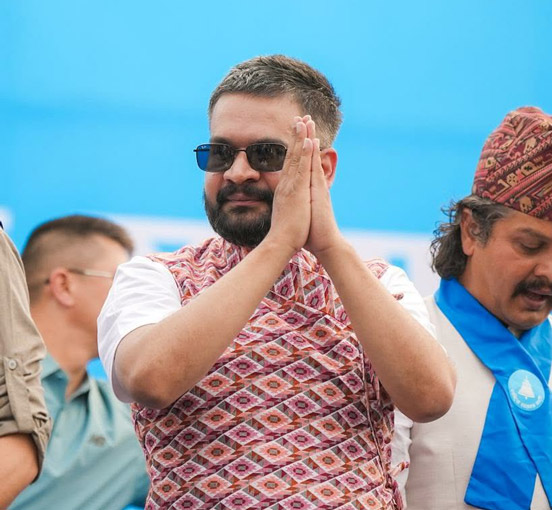
The spectacular victory of the Rastriya Swatantra Party (RSP), led by rapper-turned-politician Balendra Shah, who is poised to become Nepal’s next Prime Minister, has dramatically reshaped Nepal’s political landscape. The latest elections were not merely a routine change of government but a sweeping rejection of the political establishment that has dominated the country since the end of the monarchy. The scale of the shift is unprecedented in Nepal’s republican history.
Since the abolition of the monarchy in 2008, Nepal’s politics has largely revolved around two dominant forces—the Nepali Congress and the Communist Party of Nepal (Unified Marxist–Leninist). This election delivered a severe blow to both. A relatively new political formation has surged to the centre stage, reflecting public frustration with corruption, policy paralysis, and the cycle of unstable coalition governments that have long characterised Kathmandu’s politics.
Washington’s strategic calculus
From Washington’s perspective, the political churn in Kathmandu presents a strategic opening. The United States has long regarded Nepal as an important democratic partner in the Himalayan region and a geopolitical space where China’s expanding footprint must be balanced. American engagement in recent years—through initiatives such as the Millennium Challenge Corporation (MCC) compact—has sought to strengthen Nepal’s infrastructure, governance institutions, and democratic practices.
With the weakening of communist leadership traditionally closer to Beijing, Washington may see an opportunity to expand engagement with the new government. The US approach is likely to emphasize economic assistance, energy cooperation and institutional strengthening, offering Nepal alternatives to China’s infrastructure-driven influence while avoiding overt geopolitical rivalry.
India and the changing political landscape
For India, the emergence of a new leadership in Kathmandu presents both opportunities and uncertainties. Nepal’s communist parties often maintained closer engagement with China, occasionally creating strains with New Delhi. The arrival of a different political force could subtly alter this regional equation.
India’s response will need to be pragmatic. Rather than appearing intrusive, New Delhi would benefit from emphasizing areas of mutual interest—cross-border connectivity, hydropower cooperation, and trade integration. Building trust with the new leadership while respecting Nepal’s strategic autonomy will remain crucial for stable relations.
China watches closely
China, which invested considerable diplomatic energy in cultivating Nepal’s communist leadership over the past decade, will be assessing the new political situation carefully. Beijing has promoted infrastructure and connectivity initiatives aimed at expanding its economic presence in the Himalayan nation.
With traditional communist parties weakened, China may recalibrate its engagement and seek ties with the new government. Shah’s administration, meanwhile, is expected to pursue a balanced foreign policy that maintains engagement with both India and China while safeguarding Nepal’s national interests.
A generational surge in Nepali politics
The rise of the Rastriya Swatantra Party reflects a generational shift within Nepal’s electorate. A growing share of voters belongs to younger age groups, increasingly frustrated with traditional political leadership. Shah, who first gained prominence as the mayor of Kathmandu, emerged as the symbol of an outsider challenging the entrenched establishment.
His campaign departed from conventional electoral practices. Instead of relying mainly on established party networks, it emphasized digital outreach, volunteer mobilization, and a message centred on transparency, accountability, and administrative reform. This strategy resonated strongly with urban voters and younger constituencies seeking change.
For many citizens—particularly first-time voters—the election became less about ideological divisions and more about the desire to overhaul a dysfunctional political system. The RSP projected itself as a pragmatic alternative, avoiding rigid ideological labels while promising modern governance and a crackdown on corruption.
Youth-led protests during the past year also played an important role. These demonstrations exposed the widening gap between Nepal’s youthful society and its ageing political leadership. Shah’s electoral success, therefore, represents not only a political victory but the expression of a broader generational shift.
The burden of high expectations
While the electoral triumph has propelled Shah to the centre of Nepali politics, governing the country will present formidable challenges. Public expectations surrounding the new leadership are exceptionally high, and the enthusiasm that carried the RSP to power could quickly turn into pressure if reforms fail to materialise.
Nepal’s political system remains complex. Coalition politics are fragile, bureaucratic processes are slow, and institutional capacity is limited. For a newly formed party with little experience in national administration, navigating this system will demand adaptability and political skill.
Meeting the aspirations of young voters will be particularly difficult. Young Nepalis expect progress in employment generation, corruption control, digital governance, and urban development. Yet the economy remains fragile and heavily dependent on remittances and tourism. Delivering meaningful economic change will therefore require sustained reforms and political stability.
Maintaining cohesion within a rapidly expanding party will also test Shah’s leadership as the RSP evolves from an electoral movement into a governing organisation.
Setback for Nepal’s Communists
The election has dealt a major blow to the Communist Party of Nepal (Unified Marxist–Leninist), led by former prime minister K P Sharma Oli, who himself lost his parliamentary seat. Once a dominant political force, the party has witnessed a sharp erosion of public support.
Critics had long accused the previous administration of authoritarian tendencies and policy mismanagement. The government’s handling of youth protests further weakened its credibility and intensified public dissatisfaction.
Factional rivalries within Nepal’s communist movement also contributed to the decline, weakening organisational cohesion and ideological clarity and leaving many voters disillusioned.
Nepali Congress at crossroads
The Nepali Congress, historically Nepal’s principal democratic force, also suffered a significant setback. Despite its legacy in shaping democratic institutions, the party struggled to adapt to changing political expectations.
Its ageing leadership found it difficult to connect with younger voters seeking new narratives and leadership styles. Allegations of corruption and governance failures during successive administrations further eroded its credibility.
A defining moment for Nepal’s democracy
The latest election marks a decisive moment in Nepal’s political evolution. The success of the Rastriya Swatantra Party signals the arrival of a new political generation determined to challenge entrenched power structures and redefine governance.
Yet electoral victory alone cannot guarantee transformation. The real test for the new leadership will lie in translating popular enthusiasm into effective governance, institutional reform, and sustainable economic development.
If Shah’s government succeeds in delivering transparency, stability, and development, Nepal may enter a new phase of democratic consolidation. If not, the same electorate that dismantled the old political order may once again search for another alternative. Nepal’s latest political upheaval underscores a central reality: its democracy remains vibrant, unpredictable, and capable of renewal.
------------------------------------
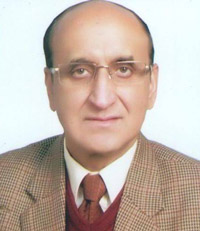
(K S Tomar is a strategic affairs columnist and senior political analyst based in Shimla)
The views expressed are not necessarily those of The South Asian Times