[The opinions expressed in this article are those of the author. They do not purport to reflect the opinions or views of The South Asian Times.]
India must recognize that it now faces a Pakistan not merely influenced by its army but constitutionally ruled by it.
By K S Tomar
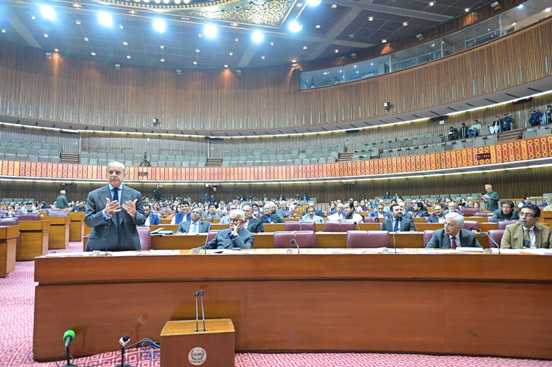
Pakistan’s Parliament has formally approved the 27th Constitutional Amendment — an audacious legal manoeuvre that consolidates military supremacy and simultaneously weakens the judiciary. Passed by the Senate on November 11 and the National Assembly on November 12, 2025, the bill now awaits presidential assent, a mere formality.
Once signed, it will reshape the foundations of Pakistan’s political and judicial system, transforming the country into a constitutional garrison state where the army’s authority is enshrined in law rather than imposed through force.
A coup without a coup
At the heart of the amendment lies a redefinition of Article 243, which governs command and control of the armed forces. It creates the new post of Chief of Defence Forces (CDF) — always to be held by the serving army chief — who will command all three services. The existing Chairman Joint Chiefs of Staff Committee is abolished, removing even the symbolic restraint on the army chief’s power.
The CDF’s tenure is fixed for five years and shielded from dismissal except through impeachment, granting near-total immunity unprecedented in a democratic framework. The measure effectively constitutionalises the Pakistan Army’s long-standing dominance over national institutions.
Washington’s pragmatic endorsement
The United States has chosen to view Munir as a stabilizing force in a region fraught with volatility. Washington’s approach, shaped by strategic pragmatism, values continuity and nuclear security over democratic idealism. The Biden and later Trump administrations alike have preferred a strong army chief capable of controlling internal unrest and preventing extremist factions from gaining ground. Munir’s cooperation in counter-terror operations, his mediation in Gulf security dialogues, and his role in facilitating US withdrawal logistics from Afghanistan have earned him quiet backing from Washington.
America may publicly express concern over Pakistan’s democratic backsliding, but its defense and intelligence establishments consider Munir a “necessary partner” to safeguard US interests in South Asia. Thus, while Pakistan’s democracy erodes, US policy tacitly sustains the very institution undermining it.
From de facto to de jure military rule
For decades, Pakistan’s generals have exercised power indirectly through the manipulation of civilian governments. The 27th Amendment now codifies that dominance in the Constitution itself. Civilian leaders will function within a framework that explicitly subordinates them to military authority. Ministries of defense, strategic planning, and even foreign affairs will effectively become administrative arms of the General Headquarters.
The Prime Minister’s power to appoint or remove service chiefs will be rendered largely ceremonial, marking the formal end of civilian supremacy in Pakistan’s hybrid system.
Consolidating control over strategic assets
The amendment also establishes a Commander of the National Strategic Command (CNSC) to oversee Pakistan’s nuclear arsenal. Though nominally appointed by the Prime Minister, the CNSC must be recommended by the army chief and filled from within the army, ensuring that control over strategic and nuclear assets remains exclusively in khaki hands. Civilian oversight over nuclear command — once exercised through the National Command Authority — has thus been reduced to fiction.
Judiciary under siege: Creation of the federal constitutional court
Equally consequential is the amendment’s transformation of Pakistan’s judicial architecture. It establishes a new Federal Constitutional Court (FCC) with sweeping authority over constitutional interpretation, disputes between federal and provincial governments, and matters arising from Article 199.
The Supreme Court’s jurisdiction will shrink drastically, limiting it largely to civil, criminal, and statutory appeals. Judges of the FCC will be appointed through a process giving greater influence to the President, Prime Minister, and Parliament — tilting the balance decisively toward the executive. Moreover, the President now gains the power to transfer high-court judges, with refusal treated as retirement, a clause that subverts judicial independence.
Outcry and political fallout
Opposition parties, led by Imran Khan’s Pakistan Tehreek-e-Insaf, have denounced the legislation as “an attack on the judiciary” and “the death knell of the Supreme Court.” Legal experts warn that it destroys the separation of powers envisioned in the 1973 Constitution. The government defends it as judicial reform aimed at modernizing the justice system, reducing backlogs, and clarifying jurisdictions. In reality, the reform completes a two-front consolidation: the army secures legal supremacy while the judiciary is stripped of its autonomy.
Munir’s calculated consolidation
The principal architect of this transformation is Field Marshal Asim Munir, whose political influence now exceeds that of any civilian leader since Zia-ul-Haq. Without declaring martial law, Munir has achieved total command through legislation. His rise was accelerated by the India-Pakistan standoff earlier this year and by his deft diplomacy with US President Donald Trump and Saudi Crown Prince Mohammed bin Salman. By leveraging external partnerships for financial bailouts and political legitimacy, Munir has turned the Pakistan Army into both the economic and constitutional centre of power.
Rifts within the ranks
Yet, the over-centralization of authority may sow unease within the services. The Air Force and Navy, constitutionally demoted to subordinate roles, risk losing operational autonomy. Even control of nuclear delivery systems, once shared, now lies under the CDF’s direct supervision. Although open dissent is improbable, such restructuring may foster silent institutional resentment that could surface during leadership transitions. The 27th Amendment thus carries within it the seeds of internal imbalance that could destabilize the military monolith itself.
Erosion of democracy and civil space
The combined military-judicial overhaul has pushed Pakistan’s fragile democracy to its lowest ebb. Parliament, judiciary, and civil administration are all subsumed under military oversight. Civil society voices, journalists, and rights activists already face unprecedented curbs, with arrests and media blackouts becoming routine tools of control. Economic decision-making, dominated by military-run conglomerates, is now further insulated from accountability. For ordinary citizens, the Constitution that once symbolised democracy now sanctifies uniformed rule. Pakistan’s hybrid democracy has thus mutated into a managed autocracy where dissent survives only at the margins.
Implications for India and regional stability
For India, these developments warrant close scrutiny. Historically, Pakistan’s army has exploited anti-India sentiment to justify its political supremacy. With constitutional endorsement now entrenched, a more confrontational stance can be expected — from renewed proxy activity across the Line of Control to louder international rhetoric over Kashmir. India must therefore recognize that it faces a Pakistan not merely influenced by its army but constitutionally ruled by it. New Delhi’s security calculus will need recalibration, combining firmness with diplomatic restraint to avoid giving Islamabad’s military leadership further political oxygen.
A garrison state in constitutional form
The passage of the 27th Amendment marks the formal militarization of Pakistan’s state structure. It completes a gradual process in which the army’s de facto power becomes de jure authority, while the judiciary is transformed from guardian of the Constitution to its captive.
The world may not see tanks in Islamabad’s streets, yet the result is identical: a coup accomplished through constitutional penmanship rather than bayonets. By legislating the army’s dominance, Pakistan has crossed the line separating controlled democracy from institutional militarism.
Conclusion: Democracy in retreat
By bending the Constitution to institutionalize military supremacy and erode judicial independence, Pakistan has entered a new phase of authoritarianism under a democratic façade. The 27th Amendment enshrines the principle that power in Pakistan flows not from the ballot box but from the barracks.
Whether described as reform or regression, the outcome is unmistakable — a permanent garrison state where the army reigns unchallenged, the Parliament is subservient, and the Supreme Court is reduced to ceremonial relevance. It is not simply another constitutional change; it is the legal blueprint of Pakistan’s transformation from a struggling democracy into a state governed by the logic of the uniform.
-----------------------------------------------

(K S Tomar is a strategic affairs columnist and senior political analyst based in Shimla)