By Ayesha Rafiq
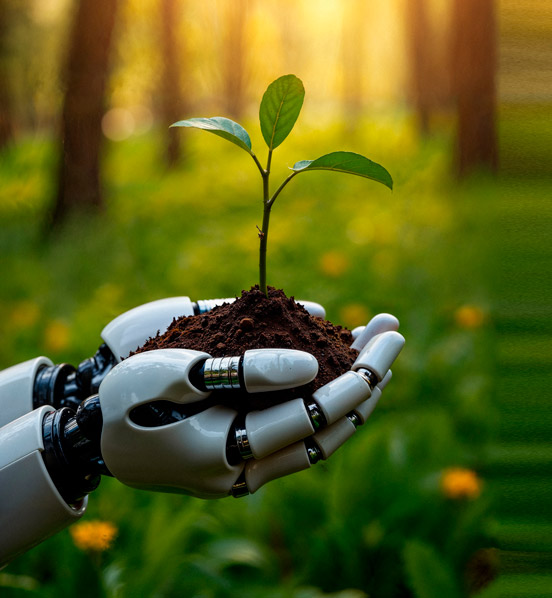
Big data, AI, and machine learning offer hope, allowing us to monitor environmental changes with unprecedented accuracy, but is it enough?
As the world grapples with the overwhelming reality of climate change and environmental destruction, we stand at a critical crossroads. Every day, the planet cries out, burdened by the scars of pollution, deforestation, and a rapidly changing climate. The pressure to find sustainable solutions has never been more urgent, and yet, the question remains: Can we truly save our home, or have we already reached the point of no return?
Traditional methods of environmental protection, reducing emissions, conserving biodiversity, and shifting to cleaner energy have laid the foundation for change. But as the digital age continues to evolve, we must ask ourselves: Can technology be the beacon of hope we so desperately need? Can it offer the tools to not only slow down the damage but also heal the wounds we’ve inflicted on the Earth?
In the age of technological miracles, we have seen amazing breakthroughs, but we must face the harsh reality that these advances often come with their own dark side. The challenge we now face is how to harness these innovations to fight back against the environmental chaos we have created, without making the problem even worse.
Look at the potential of green technologies. We’ve seen the rise of solar and wind power, renewable sources of energy that could revolutionize the way we live. Yet, in the midst of these advances, there are still gaps. Electric vehicles (EVs), hailed as the future of transportation, have the potential to save the planet from the suffocating emissions of fossil fuels. But without the infrastructure to charge these vehicles sustainably or the ethical sourcing of materials for their batteries, we might be trading one problem for another. And the challenges don’t end there.
Big data, artificial intelligence (AI), and machine learning offer hope, allowing us to monitor environmental changes with unprecedented accuracy. But is this enough? Can technology alone halt the accelerating destruction of ecosystems, the melting ice caps, the rampant deforestation, and the suffocating pollution in our cities? Drones can map endangered habitats, and satellites can track the destruction of our forests, but do we truly understand what it means when an ecosystem collapses or when a species becomes extinct?
We cannot ignore the environmental cost of technology itself. The production and disposal of electronics have created their own toxic footprint, one that we cannot simply wish away. The extraction of rare minerals for our smartphones, tablets, and batteries often comes at the expense of local communities and fragile ecosystems. Meanwhile, the data centers powering our digital lives consume vast amounts of energy. Are we truly saving the planet if our technology is contributing to its destruction?
Can technology save the planet? Perhaps. But it cannot do it alone. It can be the catalyst for change, but it requires us – governments, businesses, and individuals – to rally together and make the difficult decisions. We must take action, not just through innovation but through real-world implementation. We need policies that foster green technologies, businesses that commit to sustainability, and communities that embrace eco-friendly living.
The challenge we face is not a lack of solutions; it is a lack of will. We have the tools to change the world, but we must summon the courage to use them. The future of the planet doesn’t lie in the hands of technology alone, but in our collective willingness to act, to choose sustainability over convenience, and to put the Earth’s survival before our short-term desires.
As we continue to develop new technologies, we must ask ourselves: Are we using them to create a world that is not only more connected but also more compassionate, more sustainable, and more respectful of the precious life on this planet? The answer to this question may determine whether future generations will inherit a thriving Earth or a desolate one.
The clock is ticking. The time to act is now.
--------------------------------------------------
.jpg)
[Ayesha Rafiq is a distinguished policy analyst and a top-ranking graduate in Peace and Conflict Studies from the National Defence University, Islamabad. She can be reached at - [email protected]]