By Vipul Tamhane
What stands out about 2026 is its conflicting nature. Even as nations rely on one another economically, suspicion shapes their actions. While sanctions remain in place, commerce continues across borders.
Entering 2026, the globe stirs not to alarm bells, but rather a steady undercurrent of unease. Some experts warn urgently about ticking crises, their words charged with urgency. Leaders pledge firm responses even as they delay concrete choices. Economic systems keep running, partnerships remain intact, talks persist across borders... still, certainty has vanished. This phase does not signal an inevitable breakdown, nor marks a path back to calm. In other words, it is a long period where the future is not clear; the greatest danger comes not to open battles but to the misunderstandings caused by the demands within the institutions and the very brief opportunities to respond.
When one thinks of the year 2026, the disaster scenario that many people foresee is totally understandable. The nuclear arms control of the two powers will no longer be monitored, and that will happen in February when the New START Treaty expires, a situation that has not been experienced since the early days of the Cold War. Trade worth 3 trillion dollars yearly is, on the one hand, pushed and, on the other hand, pulled by the rising tensions with the South China Sea, where conflict is practically becoming open in some places.
At the same time, the less fortunate countries have to deal with unbearable debts, which increases the possibility of government defaults and refugee flows. All this is not to say that the situation is worsened; the flaws in the system are, indeed, very visible.
Still, fixating on the next crisis tends to hide deeper change, power spreads out even as influence fades. The US holds strong advantages in weapons and money, unmatched by others so far. Yet its actions abroad now echo tensions at home more than long-term goals. Choices made overseas pass through political friction inside the country, causing partners to stay confident in speeches but slowly lower their hopes. Opponents receive clear messages yet keep probing boundaries, betting hesitation will outweigh resolve once things get tough.
What we see now is not a decline like before. Attention elsewhere defines this moment instead. Intentions stated openly do not match actions taken, creating a lasting pattern in global affairs. NATO remains intact due to the high costs of breaking apart, not a common purpose. Alliances in the Indo-Pacific show a presence to express unease without promising clear outcomes. Trust-based constructions not only survive but also preserve their integrity when the trust in them diminishes.
The most visible place of this transition is in today's way of China's operating, which is totally different from that of the past decades. Quiet persistence takes over while long-term positioning gets priority over short-term victories. Around Taiwan, military movements are no longer occasional warnings but part of daily reality. Instead of dramatic acts, steady repetition shapes control in the South China Sea. Patience becomes a tool, slowly reshaping what options others believe they have. Over time, resistance feels less like a choice and more like a burden. What once seemed possible grows harder to imagine. Beijing counts on duration, not force alone, to redefine the landscape.
Underneath the steady push, signs of stress show. Economic expansion has eased permanently, and joblessness among young people now affects political stability; instead, a housing downturn has weakened trust within urban households. Such forces limit how long China can manage outside tensions without greater cost. The approach remains tight control internally while maintaining presence globally; however, as room to manoeuvre shrinks, caution may look like hesitation. In crowded strategic areas where timing is narrow for both parties, actions risk being misunderstood.
Nowhere else does depletion work quite like it does in Russia. Since launching the war on Ukraine, the country has avoided both revival and breakdown. Instead, functioning below earlier levels, it takes in penalties without reversing their effects. Supposed endurance looks less like strength and more like shrinking choices, reduced ambitions, fewer options allowed, fuel shipments redirected at lower rates. Gone are promises of stability or progress once offered by Moscow. Resistance works well enough in some African and West Asian regions. Because building real options takes more effort than stopping outside plans.
A shift gaining momentum through 2025, possibly extending into 2026, centers on nations of mid-tier influence. Faster than larger powers, these countries adapted - clear-eyed about constraints. Rigid alliances now seem riskier; strict moral stances appear less effective as shields. Rather than lock step, they separate priorities, spread diplomatic ties, then negotiate trade-offs across different domains.
What stands out about India is its rare consistency. Though building stronger military ties with the United States, it continues to source energy from Russia. Along disputed frontiers, rivalry with China persists even as commerce and limited contact endure. Far from confusion, this reflects deliberate choices meant to keep options open in different areas. What gives India weight now isn’t just whom it stands with, but how steadily it acts. In a world where unpredictability dominates, the mere ability to predict becomes a strength.
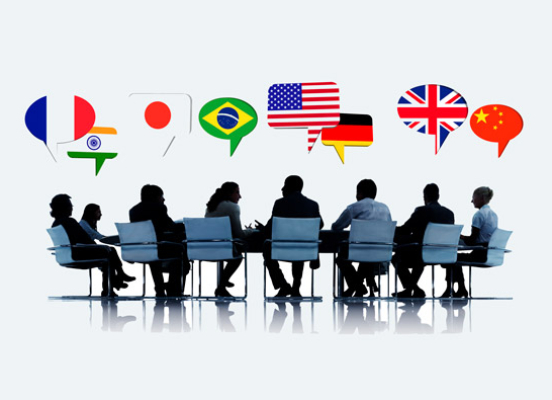
Similar trends are seen in different parts of the world, such as West Asia, Southeast Asia, and Africa. The nations no longer depend on strong friends but instead look for several alternative routes to progress. Strategic alignment shifts depending on context. Commitment depends on circumstances. What appears as doubt is actually adjustment. Instead of giving way to a fresh system, the former international framework is splintering into layered zones where standing must be discussed, never taken for granted.
Europe faces a tough balancing act, raising defense budgets while keeping Washington involved, pushing economic expansion alongside fiscal restraint, all while standing firm on open markets and environmental policies. Doing everything at once is impossible. Pouring money into military plans might help output a little, yet tight budget rules could fuel backing for far-right movements, weakening unity just when it is most needed. Once confident that stable democracies could spread via blueprints of institutions, the region now sees clearly: effective government depends on fitting systems to specific societal norms, contexts, and expectations.
What stands out about 2026 is its conflicting nature. Even as nations rely on one another economically, suspicion shapes their actions. While sanctions remain in place, commerce continues across borders. It is through announcements rather than secret negotiations that discussions often occur. The UN, WTO, and IMF, for instance, are finding it increasingly difficult to maintain regulations due to challenges from developing nations that doubt an international system based on Western values.
Speed comes faster because of machines. Nations gather powerful processors like past armies collected weapons. Government-backed digital strikes shift toward factories and bridges instead of only files. A war run entirely by artificial intelligence might begin quietly, through small choices piling up until defence systems stop working without warning. Battlefields once limited to earth, water, and sky now stretch into orbit, icy poles, and even the far south, where Chinese presence grows steadily.
Still, within such tangled conditions, some rules hold firm. By 2026, impact goes to whoever handles pressure without reacting too fast. The quantity of output brings no automatic weight. A flashy presentation cannot cover a lack of clarity. Success belongs to nations keeping control over choices yet staying consistent; broadening ties while holding trust intact; avoiding the urge to treat each crisis like an ending.
What stands out now is how operations go on even as confidence wears thin. Even though trades finish, big future projects stall. Partnerships stay intact; despite this, arguments over who does what grow sharper. Talks continue without leading anywhere close to answers. Headlines ignore such shifts, instead drawn to loud upheavals, while quiet pressures build beneath structures built for calmer times.
Fear of appearing weak might push leaders toward choices they’d otherwise avoid. In 2027, the biggest risk isn’t cold calculation by those who know exactly what they want. Instead, it is decisions made too fast under internal strain. When public unrest grows, actions may follow emotion rather than strategy. As time shrinks, options shrink faster. Misreading another nation's moves could turn tension into conflict, where threats seem real even if never meant to be carried out.
Restraint now draws more value than forceful displays. Power is less about dominance, more about adaptability. Instead of insisting on loyalty, flexibility gains ground. Some assume constant movement means command. Loudness does not equal influence. Swiftness in decisions hardly proves capability. These miscalculations may carry steep costs by 2026.
Stability remains out of reach this year. Still, outright collapse seems unlikely. Instead, rigidity takes hold. Tensions continue, unresolved. Some collaboration appears, not from goodwill, but because circumstances force it. Quiet persistence, yet not dramatic warnings, will define progress. Those who prepare carefully, who strengthen systems quietly, gain ground. Rushing reactions fade. What matters grows slowly: steady planning, durable structures. The real task ahead lacks spectacle. Yet its impact could outweigh every headline. 2026 tests endurance.
------------------------------------------------------
.jpg)
(Vipul Tamhane is a counter-terrorism expert and governance consultant)
The views expressed are not necessarily those of The South Asian Times