In Man’s Search for Meaning, Viktor Frankl recounts how even in the brutality of concentration camps, suffering could become a teacher. What struck readers worldwide was not the pain itself, but Frankl’s realization that meaning could still be chosen. That idea—that hardship can instruct rather than destroy—has made the book a timeless bestseller. Long before Frankl, spiritual traditions echoed the same truth: not all teachers arrive gently. Some come disguised as wounds.
When we are hurt—betrayed by a friend, dismissed by a colleague, or wounded by someone we trusted—our first responses are rarely graceful. Anger rises quickly, demanding justice. Revenge whispers promises of balance. Complaints feel justified; after all, we were wronged. Sometimes resentment becomes a companion, replaying conversations long after they end. These reactions are human. They are raw, emotional attempts to regain control after something precious—trust, dignity, or peace—has been shaken.
Yet if pain were only destructive, humanity would never grow. The turning point comes when we pause and ask a difficult question: What is this experience trying to teach me?
This is where the unexpected mentor emerges.
Those who hurt us often provide a masterclass in contrast. By experiencing dishonesty, we learn the value of truth. By feeling ignored, we recognize the power of listening. Their actions become negative examples that quietly shape our character. Without intending to, they teach us exactly how we never want to treat another human being. What initially feels like loss slowly reveals itself as clarity. During such moments, it becomes a time to reflect on what our faith teaches us.
In the Swaminarayan tradition, Bhagwan Swaminarayan emphasized mastery over one’s reactions rather than control over others. In the Vachanamrut, he teaches, “If one remains equipoised in the dualities of honor and insult, he gains the power to sustain God within him fully and thus becomes totally possessed by God.” He repeatedly reminded seekers that external circumstances are unpredictable, but our inner response remains within our command. Hurt becomes a test—not of another person’s morality, but of our own spiritual maturity.
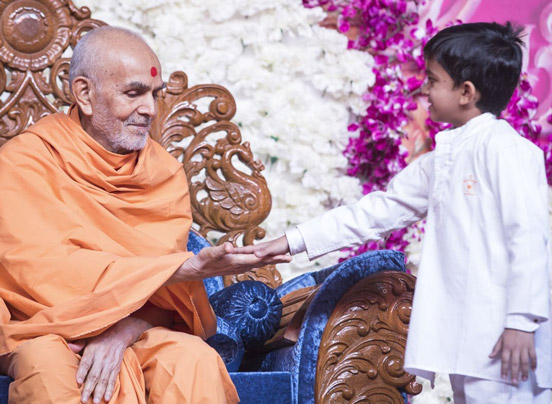
His Holiness Pramukh Swami Maharaj embodied this teaching in action. No matter what a person may be like, he never disliked them. By practicing tolerance toward those who hurt or insult us, we begin to experience honor and insult as the same. Just as we feel joy when someone praises us, we should learn to remain equally steady when insulted. True stability in honor or insult lies in maintaining love even for one who acts against us. When criticized, misunderstood, or opposed, Pramukh Swami Maharaj’s response was never bitterness. This was not a denial of wrongdoing, but a refusal to allow negativity to take root in his heart. By choosing humility over resentment, he showed how to transform pain into progress.
His Holiness Mahant Swami Maharaj continues to guide us in this way today, gently reminding us to see everyone as divya—inherently divine. When we learn to view others through this lens, our reactions begin to change. Instead of focusing on another person’s faults, we strive to maintain purity in our own thoughts and responses. Situations that once stirred resentment become opportunities to practice understanding, patience, and humility. In this way, peace does not come from changing people around us, but from changing the way we see them.
Over time, pain refines us. It sharpens our ability to recognize sincerity and teaches us to protect our kindness without abandoning it. Most importantly, it brings the quiet wisdom of “never again”—not rooted in fear, but in understanding.
In the end, those who hurt us do not define us. Instead, they unknowingly become our unexpected mentors. As the Swaminarayan teachings remind us, true strength lies not in retaliation, but in elevation—choosing growth over grievance and allowing even painful experiences to guide us toward inner peace.
-Lenin Joshi
BAPS Swaminarayan Sanstha