What happens when you finally get everything you once prayed for?
A successful career. Financial stability. A loving family. Respect from society. Comfort. Security. On the surface, this looks like the finish line. Yet for many people, something unexpected happens once these boxes are checked: the sense of fulfillment they imagined never quite arrives.
Mitch Albom, an American author, writes about this exact tension: after reaching the goals he once begged for, he slowly drifted away from spirituality. With success in hand, he began to question what place God or spiritual seeking still had in a life that seemed complete. If life was “figured out,” what was left to seek?
This experience is not unique. Many of us, especially in achievement-driven cultures, grow up believing happiness lies one goal away. We chase degrees, promotions, homes, experiences, and recognition. And for a time, each achievement delivers a genuine thrill. The first luxury purchase feels extraordinary. The first first-class flight feels indulgent. The first big milestone feels validating.
But over time, the excitement fades. What once felt special becomes ordinary. The car that once brought pride becomes a burden. So we move to the next rung of the ladder. If material things no longer satisfy, we turn to experiences. When experiences fade, we turn to service and altruism. Helping others, giving time and resources, and making a difference in the world can be deeply meaningful. Yet even service has its limits. It depends on circumstances, capacity, health, and recognition. If appreciation disappears or the ability to serve is lost, fulfillment can waver.
At each stage, something becomes clear: we are still relying on external conditions to feel complete. To summarize the progression: “Material things are: ‘Look what I have.’ Experiences are: ‘Look what I did.’ Service is: ‘Look who I helped.’ Spirituality is: ‘Look who I am.’”
The Hindu way of life offers a strikingly balanced framework for understanding this progression through the four pursuits of life: dharma (righteous living), artha (material stability), kama (fulfilling desires), and moksha (liberation). Wealth and desire are not rejected. They are acknowledged as necessary stages. But they are not the destination.
Moksha points inward
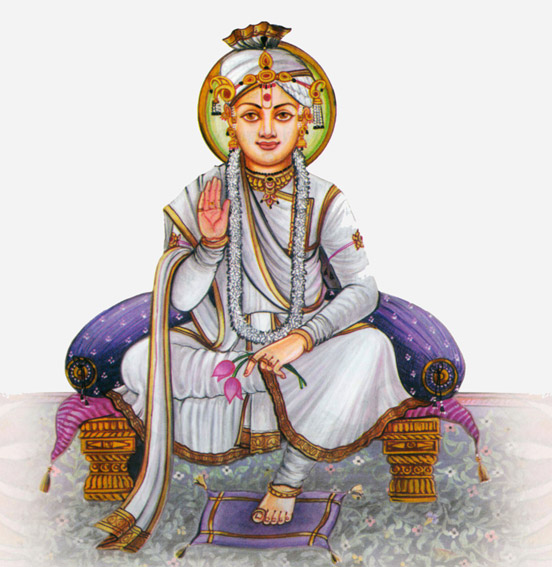
Bhagwan Swaminarayan explains this inner shift with remarkable clarity in the Vachanamrut. In Vachanamrut Gadhada I-21, He teaches that lasting peace cannot come from external conditions alone, because external conditions are always changing. True stability begins when a person understands, “I am the atma, distinct from the body.” When identity is tied only to roles, possessions, or social standing, fulfillment remains fragile, rising with gain and falling with loss.
True fulfillment comes from understanding who we are beyond the body and mind. We are not merely our roles, achievements, or struggles. We are the atma, the conscious self. The happiness we experience through objects and experiences is only a reflection of the soul's inherent bliss.
And even that is not the final step
In the Vachanamrut, Bhagwan Swaminarayan emphasizes that self-realization naturally leads to God-realization. In Vachanamrut Gadhada I-27, He explains that the highest fulfillment comes when one becomes brahmarup, firmly established in spiritual understanding, and offers devotion to God with love and conviction. When actions, service, and life itself are oriented toward God, fulfillment is no longer dependent on circumstances. Peace becomes stable. Joy deepens with time instead of fading.
Everything else in life changes. Health fades. Wealth fluctuates. Recognition disappears. Even the memory of great experiences softens. But a relationship with God grows richer, steadier, and more nourishing as time passes.
This is why having it all is not enough. Not because success is wrong, but because success alone cannot answer the deeper question of who we are and why we are here. When spirituality becomes the center rather than a tool, life does not shrink. It becomes grounded, purposeful, and quietly joyful.
And that kind of fulfillment does not wear out.
To hear this conversation unfold in its original form, listen to the podcast on YouTube at youtube.com/@bapsbetterliving.
-BAPS Swaminarayan Sanstha