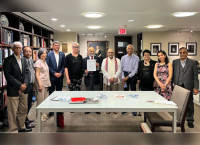
New York: The American Association of Physicians of Indian Origin (AAPI) has welcomed the recent court decision blocking the proposed $100,000 requirement for H‑1B physician visa applications, calling the ruling a critical victory for patient care and the stability of the U.S. healthcare system.
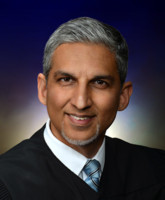
In an official statement, AAPI President Dr. Amit Chakrabarty emphasized the importance of the decision for both physicians and patients across the country.
“This ruling restores fairness and stability to a system that thousands of international physicians depend upon,” said Dr. Chakrabarty. “This is not a political victory—it is a healthcare victory. It ensures that patients are not placed at risk due to policy barriers unrelated to clinical need.”
AAPI leaders stressed that the proposed financial requirement would have disproportionately impacted rural hospitals, safety-net institutions, and underserved healthcare settings, where International Medical Graduates (IMGs) play an essential role.
Such a policy, they noted, could have led to hospitals withdrawing employment offers, leaving critical vacancies unfilled, and significantly reducing access to care in already vulnerable regions.
“Many hospitals would have struggled to absorb such a financial burden,” Dr. Chakrabarty explained. “The consequences would have been immediate—fewer physicians, longer wait times, and reduced access to care for communities that already face healthcare disparities.”
“This decision is vital for protecting access to care in medically underserved communities,” Dr. Chakrabarty said. “Healthcare policies must always prioritize patients and the physicians who serve them.”
IMGs—physicians trained outside the United States and Canada—are a cornerstone of the American healthcare system. Their contributions are substantial and measurable:
IMGs make up approximately 25% of the U.S. physician workforce, representing one in four practicing doctors.
They provide care to nearly 1 in every 6 patients nationwide.
About 40% of physicians in rural and underserved areas are IMGs.
More than half of internal medicine trainees include IMGs, helping sustain the physician pipeline.
These physicians are particularly concentrated in high-need specialties such as internal medicine, geriatrics, nephrology, endocrinology, and infectious disease, where workforce shortages are most acute.
“International medical graduates are not just contributors—they are essential to the functioning of our healthcare system,” Dr. Chakrabarty stated. “They serve where the need is greatest and bring a deep commitment to patient care.”
AAPI highlighted the important role IMGs play in advancing health equity and culturally competent care. Many serve diverse and minority populations, improving communication and fostering trust between physicians and patients.
Their multilingual skills and cultural awareness enhance patient engagement and satisfaction, while studies consistently show that IMGs deliver care comparable in quality to U.S.-trained physicians.
“IMG physicians bring not only medical expertise but also empathy, cultural understanding, and a global perspective,” Dr. Chakrabarty pointed out. “They are essential to delivering equitable, patient-centered care in a diverse nation.”