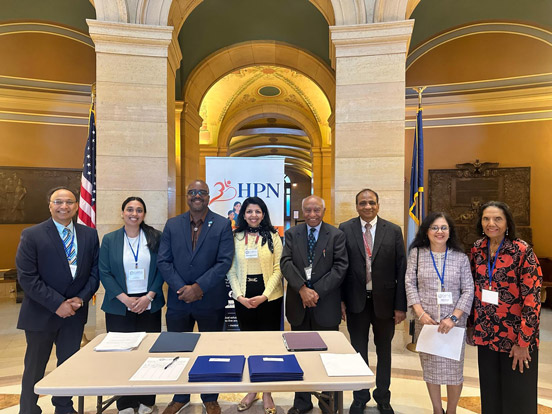
St. Paul, Minnesota: The Coalition of Hindus of North America (CoHNA) hosted the state’s inaugural Hindu Advocacy Day at the Minnesota State Capitol, bringing together community leaders, youth volunteers, and representatives from legislative offices for a day of engagement and dialogue.
The event created opportunities for bipartisan engagement with attending lawmakers (legislators + staff) such as Senator John A. Hoffman (D) and Representative Kristin Robbins (R), learning about issues affecting Minnesota’s Hindu community. The event also drew interest from a range of stakeholders, including the Council on Asian Pacific Minnesotans, the Governor’s Office, an interfaith representative, and members of the public.
The advocacy day comes as Resolution SF 4115—condemning anti-Hindu hate, bias, and discrimination—was recently introduced in the Minnesota Legislature. More than 600 Minnesotans and religious freedom advocates have signed a community petition supporting the resolution, reflecting growing awareness and engagement on the issue.
“It was a historic day for Minnesota’s Hindu community. We showed up at the Capitol, made our voices heard, built greater relationships with those who represent us, and educated them on our concerns,” said Neha Markanda, Director of CoHNA’s Minnesota chapter. “We are grateful to leaders from organizations such as Gujarati Samaj, the Rajasthan Association of Minnesota, Hindu Milan Mandir, and Geeta Ashram, among others, for joining this grassroots effort.”
Hosted in the Capitol Rotunda and Governor’s Dining Room, the interactive event featured exhibits and conversations on issues including religious discrimination, temple safety, and the need for broader awareness of Hindu identity and civil rights in the United States.
Participants also cited documented incidents affecting temples and individuals across the country, including in Minnesota. These examples underscored the importance of visibility, improved reporting mechanisms, accurate representation in anti-bias training, and stronger community engagement through diversity initiatives and interfaith dialogue.