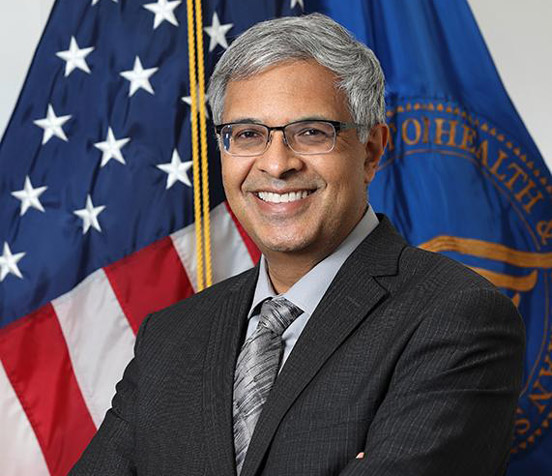
Washington, DC: Dr. Jay Bhattacharya, a senior Trump administration health official and prominent critic of the federal government’s pandemic response, will serve as acting director of the Centers for Disease Control and Prevention (CDC), according to a The Washington Post report.
Bhattacharya will continue in his role as director of the National Institutes of Health (NIH) while temporarily leading the CDC. He replaces Jim O’Neill, who had been serving as acting CDC director and previously as deputy secretary of the Department of Health and Human Services (HHS). O’Neill is expected to be nominated to head the National Science Foundation after declining a potential ambassadorship to the Organization for Economic Cooperation and Development.
The appointment marks the latest leadership shift at HHS as the Trump administration and Health Secretary Robert F. Kennedy Jr. seek to stabilize the department ahead of the midterm elections. The CDC, which oversees the nation’s public health response and issues vaccine recommendations, has been at the center of internal disputes and policy debates.
A physician and economist at Stanford University, Bhattacharya rose to national prominence during the COVID-19 pandemic as a co-author of the Great Barrington Declaration, published in October 2020. The document called for ending widespread lockdowns and instead focusing protections on vulnerable populations. His stance drew sharp criticism from many public health leaders, who argued that such an approach would endanger lives. The debate elevated Bhattacharya’s profile among critics of federal pandemic restrictions.
As acting CDC director, Bhattacharya will oversee vaccine recommendations, a politically sensitive area as Kennedy has sought to revise certain policies. Public trust in the agency has declined in recent years. A recent KFF poll found that 47 percent of U.S. adults trust the CDC for reliable vaccine information, compared with 85 percent in early 2020.
Despite his criticism of pandemic mandates, Bhattacharya has affirmed his support for routine childhood vaccinations. At a Senate hearing this month, he said, “The best way to address the measles epidemic in this country is by vaccinating your children.”