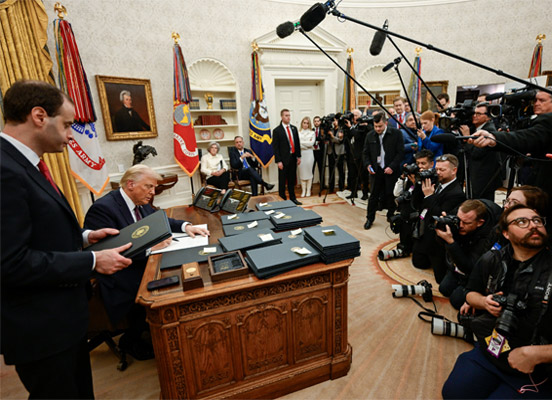
Washington: Donald Trump signed as many as 80 executive orders after he took oath as the 47th President. Executive orders are a key tool for any US president wanting to make their mark on government policy.
In one of his first acts as the new president, Trump signed an executive order aimed at ending "birthright citizenship" - meaning the automatic American citizenship that is granted to anyone born in the country. It's a policy change he's long promised.
This order aims to end birthright citizenship for children born in the US to immigrant parents who are in the country illegally, as well as those born to parents who are in the country on a temporary basis. There have been reports that the administration will enforce the order by withholding documents, such as passports, from people it deems ineligible for citizenship.
Anyone born in the United States is considered a citizen at birth, which derives from the Citizenship Clause of the 14th Amendment which was added to the US Constitution in 1868.
Trump's order seeks to change the rules to deny the granting of citizenship to the children of migrants who are either in the US illegally or on temporary visas. The document does not suggest that the order would apply retrospectively. But it remains unclear how he intends to achieve this.
After Trump signed an executive order aimed at ending birthright citizenship, a coalition of civil rights and immigration groups filed a lawsuit challenging the move, setting the stage for a major legal battle. The two other lawsuits were brought by 22 Democratic-led states along with the District of Columbia and the city of San Francisco, in federal courts in Boston and Seattle.