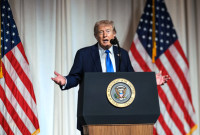
Washington: President Donald Trump said on August 7 that he has instructed the Commerce Department to change the way the Census Bureau collects data, seeking to exclude immigrants who are in the US illegally.
"People who are in our country illegally will not be counted in the census," Trump said, adding that he has directed the Department of Commerce to "immediately begin work on a new and highly accurate census."
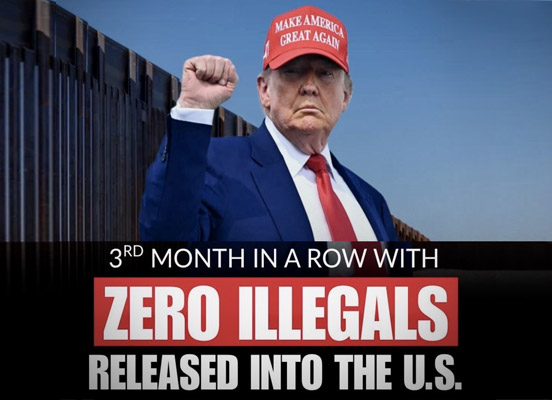
The directive aims to reshape how the US population is counted, potentially affecting congressional representation, federal funding allocations, and policy planning. Since taking charge in January 2025, Trump has amped up efforts to deport immigrants living illegally in the US.
By seeking to exclude undocumented immigrants—who have historically been counted in census tallies regardless of legal status—Trump’s proposal could shift political representation and financial resources, potentially to the detriment of states with large immigrant populations.
However, the legality of such a move remains unclear, and constitutional and legal challenges are likely. Trump’s latest directive is also consistent with broader efforts to reshape the federal government’s statistical infrastructure. (Hindustan Times inputs)
|
BRIEFLY... >> President Donald Trump has said he will impose a 100 per cent tariff on imported computer chips >> Additional tariffs likely to be imposed on China, similar to the 25 per cent duties announced earlier on India over its imports of Russian oil. >> Apple CEO Tim Cook joined Trump at the White House this week to announce a commitment by the tech company to increase its investment in US manufacturing by an additional USD 100 billion over the next four years. >> State Department has announced it will begin a one-year pilot program commencing on August 20, allowing consular officers to require security bonds of $5,000, $10,000, or $15,000 from some applicants for B1 (business) and B2 (tourist) visas. >> Trump has demanded the immediate resignation of Intel’s newly appointed CEO, Lip-Bu Tan, citing what he described as “highly conflicted” ties to Chinese technology firms. |