The amendments made in the White House fact sheet for the trade deal reflect the shared understandings of both countries in the joint statement, says India
New York: US President Donald Trump has hailed the trade deal with India as “historic”, saying America will increase its coal exports dramatically to the country and to others with which it has trade agreements.
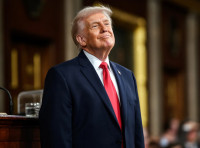
Speaking at the “Champion of Coal" event, Trump placed the India deal at the forefront of his remarks, presenting it as evidence of the United States’ growing dominance in global energy markets.
“And under our leadership, we're becoming a massive energy exporter. In just the past few months, we've made historic trade deals with Japan, Korea, India and others to increase our coal exports dramatically,” Trump said.
"We're now exporting coal all over the world, and the quality of our coal is supposed to be...the finest anywhere in the world,” he added, suggesting that the deal with New Delhi forms part of a broader push to position US coal as a premium product in international markets.
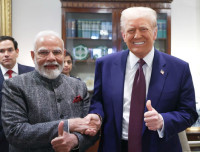
Last week, the US and India announced they have reached a framework for an interim agreement on trade, under which New Delhi will eliminate or reduce tariffs on all American industrial goods and a wide range of food and agricultural products.
A joint statement issued by the two countries said they have reached a framework "regarding reciprocal and mutually beneficial trade.”
It added that the framework reaffirms the countries’ commitment to the broader US-India Bilateral Trade Agreement (BTA) negotiations, launched by President Trump and Prime Minister Narendra Modi on February 13, 2025, which will include additional market access commitments and support more resilient supply chains.
India welcomes factsheet amendments
Meanwhile, the amendments made in the White House factsheet for the India-US trade deal reflect the shared understandings of both countries in the joint statement, the Ministry of External Affairs (MEA) said on Thursday.
MEA spokesperson Randhir Jaiswal said during the weekly media briefing that India and the United States had agreed to a joint statement on the framework for an interim agreement on reciprocal and mutually beneficial trade.
The United States has revised the fact sheet of the trade deal with India, making a few changes in the key terms of the agreement in the formal document, which is more closely aligned with what India has been stating. These changes have been incorporated into the factsheet available on the official website of the White House.
The US has removed "pulses" from a list of American products on which it said India will eliminate or reduce tariffs, revising the statement to say "India will eliminate or reduce tariffs on all US industrial goods and a wide range of US food and agricultural products, including dried distillers’ grains (DDGs), red sorghum, tree nuts, fresh and processed fruit, soybean oil, wine and spirits, and additional products."
The agriculture chapter of the trade agreement released by India mentioned that pulses remain fully protected as a highly sensitive sector under an exemption category.
Another revision in the factsheet on the trade deal is to include India "intends" to buy more American products and purchase over $500 billion of energy, information and communication technology, coal, and other products from the US.
The earlier US fact sheet had stated that India "will purchase over $500 billion of US energy, information and communication technology, agricultural, coal, and other products." This tended to indicate that India has committed to buying products worth this amount.
Another sticky point, which has been scrapped, is the earlier mention that India will "remove its digital services tax”. The revised version only says: “India committed to negotiate a robust set of bilateral digital trade rules that address discriminatory or burdensome practices and other barriers to digital trade.”