By Ila Joshi
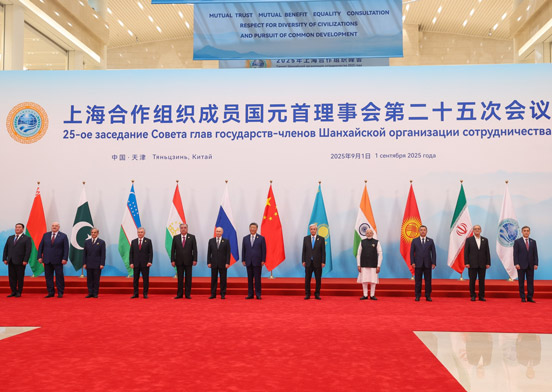
The 25th Shanghai Cooperation Organisation (SCO) summit in Tianjin (September 1, 2025) was the very first bilateral meeting between India and China since the Galwan Valley clashes in 2020. It was both symbolism and substance as India, represented by Prime Minister Narendra Modi, pushed hard on issues of counter-terrorism and sovereignty, and President Xi Jinping projected the SCO as a platform for a regional order as versioned by China.
Also, with India drawing close to Russia, the India-China-Russia axis was more than just optics during the summit. While China’s state media mostly saw it as “fruitful” and capable of “resetting” the bilateral ties between the two Asian giants, New Delhi’s position in the light of unfolding US tariffs across the nations holds both opportunity and caution for New Delhi. On one hand, New Delhi can use this platform for sharpening its counter-terrorism agenda and collaboration on the technology and security aspect, but on the other hand, it also has to be very cautious of its limits of cooperation with Beijing when it comes to building strategic mutual trust and the boundary question.
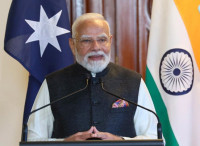
While addressing the plenary session of the SCO, Prime Minister Modi called out Pakistan’s role in the April 22 terror attack in Jammu and Kashmir's Pahalgam, where 26 people were shot dead by the Pakistan-trained and backed terrorists. Addressing SCO as the ‘extended family of the entire Eurasian region’, he reiterated India’s foreign policy based on three main pillars: Security, Connectivity, and Opportunity (SCO). Addressing terrorism as the greatest threat to peace, PM Modi also stressed that mutual respect for sovereignty and integrity must hold priority in all connectivity projects.
It was a veiled reference to China’s Belt and Road Initiative, and in particular the China–Pakistan Economic Corridor (CPEC), which runs through territory claimed by India. PM Modi also stressed on dialogue platforms for cultural and civilizational exchange, reflecting India’s preference for inclusivity, multilateralism, and balance.
By contrast, China projected the SCO as an instrument to overcome “Cold War mentality, hegemonism, protectionism and North-South gap” by enhancing its “institutional capacity”. Xi insisted on developing economic and trade relations, collaboration in the emerging fields of science and technology, and frequent people-to-people interactions between the SCO nations. Beijing’s rhetoric of “dragon and the elephant walking together” suggested complementarity, but hinted at the overarching influence of Beijing through economic integration and technological leadership. Also, nowhere did Xi’s statement suggest any backing for India’s position on Pakistan-backed terrorism.
But this bonhomie between India and China during the SCO summit cannot be imagined without India observing caution. Ranging from militarized assertiveness along the Line of Actual Control to its selective approach to terrorism at the United Nations, Beijing has left much less for India to trust. Also, with China’s BRI projects, particularly in India’s neighborhood, the asymmetric dependence of the countries on China poses concern for India’s security and broader regional stability. Hence, India’s insistence on connectivity and opportunity, but without posing any challenge to the territorial sovereignty of any nation, was more than just diplomatic formality during the SCO summit address.
Apart from this, the discussions on sharing of knowledge, especially in the field of AI technology, were more than what meets the eye. While India highlighted equality as a principle in technology development, transparency, and sharing, China’s own approach to digital governance is more of surveillance and state dominance.
The optics of PM Modi walking hand-in-hand with Xi and President Vladimir Putin served more than just a symbolism. For India, this triangle represented an alignment but with leverage. While Russia has been an old trusted regional and military ally, limited but meaningful engagement with China is what India looks for against the US’s hegemonism.
Both Moscow and Beijing give India a bargaining chip with the West and also ensure India’s long-term vision in Eurasia. Yet, it is a delicate line for India to tread. Russia’s closeness to China and China’s ‘iron friendship’ with Pakistan constrain India’s room to manoeuvre. If India is not cautious enough, Beijing’s overpowering of the SCO with its agenda risks marginalization of New Delhi.
India did achieve tangible success in its anti-terrorism agenda as the Tianjin Declaration explicitly condemned the April 22 Pahalgam terror attack and called for perpetrators, organizers, and sponsors to be brought to justice. This acknowledgment delegitimizes Pakistan’s attempts to mask its role in cross-border terrorism and places India’s concerns at the centre of the SCO’s security agenda. It positions New Delhi as a flag holder in regional counter-terror efforts. Through its efforts in SCO discussions, India ensured that terrorism is not treated just as another “bilateral issue” but as a transnational challenge, and SCO serves as an instrument of accountability and action.
Another success was achieved by India in leveraging the summit to influence non-traditional security issues. New Delhi’s clear message of equitable access in technology and AI, without any monopoly or challenge to the sovereignty of any country, gave it normative weight among Global South members of the SCO.
Way ahead
Challenges remain in the form of China’s aggressive strategic designs, and India must remain alert to the possibility that Beijing will continue using multilateral forums to legitimize its China-centric strategic, political, and economic goals. For India, therefore, the SCO framework could serve in three ways. First, the diplomatic victory on counter-terrorism must be complemented with concrete operational mechanisms like intelligence-sharing, financial tracking, and coordinated law enforcement. Second, India must take the lead and press on the ethical development and sharing in the non-traditional security fields like AI, digital economy, and disaster resilience, where China’s dominance is neither inevitable nor unchallenged. Third, India should champion the ‘intent’ of the SCO spirit and bring South-South cooperation to the fore in this platform.
The SCO summit has clearly demonstrated that even in not the most favourable environment, India has the ability to engage without conceding, and New Delhi can punch above its weight in multilateral diplomacy. As SCO is not a neutral forum, it is a contested space where narratives and national interests compete; China’s expansive play requires vigilance. India’s task is to stick to its principles of sovereignty, equity, and zero tolerance for terror and hold the line against narratives. The challenge for New Delhi lies in participating without conceding and cooperating without being co-opted.
(Ila Joshi is an Assistant Professor at the Jaypee Institute of Information Technology. She has a PhD in China Studies from Jawaharlal Nehru University, Delhi.)
The views expressed are not necessarily those of The South Asian Times