By Vipul Tamhane
The G20 Finance Ministers and Central Bank Governors Meeting in South Africa offers a vital opportunity to tackle pressing global economic challenges.
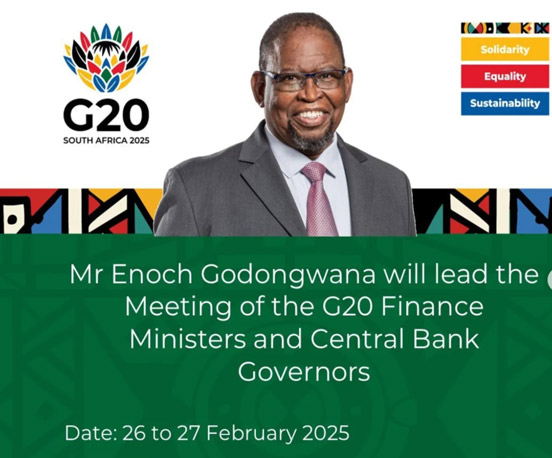
The G20 Finance Ministers and Central Bank Governors Meeting in Cape Town, South Africa on February 26-27, 2025, is held at a pivotal moment for the global economy. As leaders prepare for the G20 Summit, key issues such as economic recovery, debt vulnerabilities, climate finance, digital transformation, tax reforms, and geopolitical risks will dominate discussions. With the world still reeling from major conflicts, rising inflation, and urgent climate action needs, this meeting aims to foster collective action and innovative solutions to address these pressing challenges and shape a more stable future.
Addressing debt vulnerabilities in low- and middle-income countries
Many low- and middle-income countries are experiencing severe debt distress, worsened by geopolitical tensions, pandemic, and rising interest rates. The G20's Common Framework for Debt Treatments has yet to provide meaningful relief. Key discussion points include reforming the framework, which has faced criticism for slow implementation and limited participation from private creditors, enhancing debt transparency to accurately assess vulnerabilities, and exploring innovative solutions like debt-for-climate swaps to promote sustainable development.
Proposed resolutions involve expanding the framework to include middle-income countries, establishing a global debt authority for fair restructuring, and promoting debt-for-climate swaps. China, a major creditor, may face pressure to engage more actively in restructuring, while African nations will observe the summit for being advocated for comprehensive debt relief and expedited implementation of the framework. Countries like Sri Lanka and Zambia highlight the urgency of these discussions, with a focus on improving the debt restructuring process and developing sustainability frameworks that protect essential social services.
Mobilizing resources for climate finance
Transitioning to a green economy requires significant investments, particularly in developing countries, but current climate finance flows fall short of Paris Agreement goals. Key discussions will focus on developed nations fulfilling their 100 billion annual climate finance commitment, mobilizing private capital through green bonds, and ensuring a just transition that protects vulnerable communities.
Proposed solutions include a roadmap to exceed the 100 billion annual climate finance target, incentives for private renewable energy investments, and a global just transition framework. The EU is expected to push for ambitious climate finance goals, while India will highlight the need for technology transfer and capacity-building. Despite the US withdrawal from the Paris Accord, climate change remains a top G20 priority, with calls for meeting climate finance pledges and exploring global carbon pricing. The EU will advocate for robust climate policies, while Saudi Arabia may emphasize just transition strategies to mitigate economic impacts from reducing fossil fuel dependence. Collective action is essential to drive green energy transitions and address climate challenges.
Addressing the economic impacts of geopolitical tensions
The ongoing war in Ukraine has triggered significant economic disruptions, particularly in the areas of energy and food security. The G20 will need to focus on ensuring that energy supplies remain stable, food supply chains are not further disrupted, and sanctions are carefully calibrated to minimize global economic damage. Proposed resolutions will include investing in renewable energy, establishing a global food security fund, and fostering dialogue between sanctioning and sanctioned countries to mitigate economic disruptions. Russia and China may push for easing sanctions, while the EU will focus on energy diversification and security.
Promoting financial inclusion and transformation of the Digital Public Infrastructure
The digital revolution holds transformative potential for economies but also presents challenges, particularly regarding financial inclusion and cybersecurity. Key discussion points include the exploration of the Central Bank Digital Currencies (CBDCs) to enhance payment systems and promote financial inclusion, the development of robust digital public infrastructure to support e-governance and data sharing, and strengthening global cooperation to combat cyber threats.
Proposed resolutions involve establishing a global framework for CBDC development and regulation, promoting digital public infrastructure in developing countries, and enhancing international collaboration on cybersecurity standards. India may advocate for global adoption of successful models like its Unified Payments Interface (UPI), while the US and EU will likely focus on regulatory aspects. Ensuring digital financial services reach unbanked populations and enhancing cybersecurity will be crucial for G20 discussions, with India, Japan, South Korea, and China playing key roles in shaping the future of digital finance.
Global tax reforms for multinational corporations
The two-pillar international tax agreement seeks to combat tax avoidance by multinational corporations and promote a fairer distribution of taxing rights. Key discussion points include the ratification and implementation of Pillar One and Pillar Two by all G20 members, addressing concerns of developing countries to ensure they receive a larger share of tax revenues, and establishing mechanisms for monitoring compliance.
Proposed resolutions involve expediting the ratification process and providing technical assistance to developing nations, as well as creating a global tax authority to oversee implementation. The European Union is expected to advocate for swift action, while developing countries like India may seek greater representation and revenue shares. The initiative aims to ensure multinational corporations pay their fair share, especially amid increasing digitalization and global business complexities. The US will be crucial in balancing corporate interests with fiscal fairness, while EU nations will push for stronger compliance to combat tax havens.
Enhancing the role of MDBs in addressing global challenges
Multilateral Development Banks (MDBs) are essential for financing development and tackling global challenges, but they require reforms to meet 21st-century demands. Key discussion points include enhancing capital adequacy to increase lending capacity, redirecting resources toward global public goods like climate change and pandemics, and implementing governance reforms to better represent developing countries.
Proposed solutions involve expanding MDB capital through increased member contributions, creating dedicated funding for global public goods, and reforming governance structures to amplify the voices of developing nations. The US and Japan are likely to support capital increases but may resist governance changes, while countries like Brazil and South Africa will advocate for greater representation. Strengthening MDBs will necessitate reforms that mobilize private sector investment and prioritize financial support for the least developed countries.
Financial sector stability amid rising interest rates
The global financial system is under significant threat from rising interest rates, high debt levels, and economic uncertainties, prompting the G20 to prioritize financial stability. Key discussion points include enhancing banking sector resilience by strengthening capital and liquidity buffers, updating regulatory frameworks to address emerging risks like digital assets, and fostering cross-border cooperation to monitor systemic risks.
Proposed resolutions involve conducting stress tests to evaluate banking resilience, integrating digital assets safely into the financial system, and establishing a global financial stability board. The U.S. and EU are expected to advocate for stronger regulations, while emerging economies like India and Indonesia will likely seek capacity-building support. Strengthening regulatory frameworks and ensuring resilience against external shocks are essential for sustained growth, with the US, EU, and China playing pivotal roles in global financial reforms.
A call for collective action
The G20 Finance Ministers and Central Bank Governors Meeting in South Africa offers a vital opportunity to tackle pressing global economic challenges. This summit allows world leaders to collaborate on interconnected issues, fostering a more stable, inclusive, and sustainable future. By focusing on sustainable recovery, addressing debt vulnerabilities, mobilizing climate finance, and promoting digital transformation, the agenda is both ambitious and essential. The meeting's success hinges on G20 members' willingness to set aside geopolitical differences and unite towards common goals, ensuring the resilience needed to navigate uncertain times ahead.
===============
(The writer is a counter-terrorism expert and a visiting faculty with Pune University (SPPU) at the Department of Defense and Strategic Studies. He is also the founder & editor-in-chief at Diplomacy Direct, a public interest think-tank. Contact: [email protected])