By Vipul Tamhane
The year 2024 was marked by a series of pivotal geopolitical events that shaped international relations, influenced global security dynamics, and highlighted the complexities of a multipolar world. As we reflect on the key developments that defined the geopolitical landscape throughout the year, it becomes clear that these events have set the stage for 2025, a year that holds the potential for both challenges and opportunities.
Evolving bilateral relations
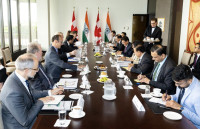
In this year, we witnessed significant shifts in bilateral relations among various nations, reflecting the complexities of a rapidly changing geopolitical landscape. As countries navigated economic competition, security threats, and climate change, their interactions evolved, underscoring both cooperation and tension. One of the most closely watched relationships was between the United States and China. Following a high-stakes summit in San Francisco, both nations committed to dialogue aimed at addressing trade imbalances and technological rivalry. However, unresolved issues regarding Taiwan and cybersecurity continued to strain relations.
In the Middle East, the relationship between Israel and Arab nations evolved amid ongoing conflict. Violence in Gaza prompted renewed diplomatic efforts from the US and Arab states to propose a peace initiative for a two-state solution. These evolving bilateral relations emphasized the importance of strategic diplomacy in an interconnected world.
Evolving conflicts between nations in 2024
The year 2024 underscored the intricate web of geopolitical rivalries and the persistent challenges in achieving lasting peace. As countries grappled with historical grievances and territorial disputes, the potential for escalation loomed large, emphasizing the critical need for diplomacy and international cooperation.
The Russia-Ukraine conflict remained a focal point, with Ukraine launching a renewed counteroffensive to reclaim occupied territories, bolstered by NATO support. However, Russia's intensified military operations and cyberattacks further escalated tensions. In the South China Sea, territorial disputes prompted the US to reaffirm its commitment to freedom of navigation. Meanwhile, renewed violence in Gaza and southern Lebanon highlighted the fragility of
peace in the Middle East. A coalition of Arab nations, the US, and the EU proposed a new peace initiative aimed at a two-state solution, offering a glimmer of hope amidst ongoing tensions.
Nuclear disarmament efforts
A landmark conference in Geneva brought together representatives from over 100 nations to discuss nuclear disarmament and non-proliferation. A new treaty proposal received support from both nuclear and non-nuclear states, marking a significant step toward reducing the global threat of nuclear weapons. The emphasis on a collaborative approach to disarmament reflects a growing recognition of the need for international cooperation on security issues. As we enter 2025, the momentum gained from this conference could lead to new treaties or agreements aimed at reducing nuclear arsenals.
Climate change and global cooperation
The effects of climate change became increasingly evident in 2024, prompting a surge in global action. The United Nations Climate Change Conference (COP29) in Nairobi saw leaders, scientists, and activists unite to forge ambitious climate strategies. Key outcomes included commitments to achieve net-zero emissions by 2050 and the establishment of a global fund to support climate adaptation in developing nations. The year was also marked by devastating climate-induced disasters, including Hurricane Helene, which underscored the urgent need for resilience and adaptation strategies. As we move into 2025, the implementation of COP29 commitments will be critical in shaping international
climate policy.
Social justice movements
Human rights and environmental advocacy movements gained unprecedented traction in 2024, with protests erupting worldwide demanding accountability for systemic injustices and environmental degradation. Notable demonstrations in Brazil focused on Amazon deforestation and indigenous rights.
The 2024 US presidential election became a focal point for discussions on racial equality, healthcare access, and climate action, with record voter turnout reflecting a shift toward progressive policies. The momentum gained by social justice movements in 2024 is likely to continue influencing political discourse and policy decisions in 2025.
Technology and scientific breakthroughs
The rapid advancement of technology in 2024 spurred both excitement and ethical concerns. A global summit on AI ethics in Tokyo addressed critical issues surrounding privacy, employment, and the military applications of artificial intelligence. The resulting international guidelines emphasized the necessity of human oversight in decision-making processes.
In a historic milestone, SpaceX successfully launched the first crewed mission to Mars, led by CEO Elon Musk, marking a significant step toward humanity’s potential for future colonization. AI researcher Dr Fei-Fei Li gained recognition for developing AI systems that prioritize human values, influencing global research and policy.
In medicine, Dr Katalin Karikó and Dr Drew Weissman received the Nobel Prize in Physiology or Medicine for their groundbreaking work on mRNA technology, pivotal in combating the COVID-19 pandemic. Russia announced plans for an mRNA-based cancer vaccine for free distribution in 2025, while the University of Florida made strides in treating brain tumors. Dr Jennifer Doudna was awarded
the Lasker Award for her contributions to CRISPR technology, opening new avenues in medicine and agriculture.
Cultural milestones
The 2024 Paris Olympics served as a platform for unity and cultural exchange, showcasing the talents of athletes from around the world. With a record number of female athletes participating, the event highlighted the progress made in gender equality in sports. The opening ceremony’s message of peace resonated globally, emphasizing the unifying power of sports in a time of division. The World Cultural Forum in Lisbon brought together artists and thinkers to explore culture’s role in addressing global challenges, underscoring the potential of cultural exchange to bridge divides.
Humanity rises amidst political upheaval
The past year was marked by significant regime changes in countries like Sudan, Myanmar, and Bangladesh, highlighting the fragility of global political systems and the humanitarian crises that ensued. Escalating civil conflict in Sudan displaced millions, while Myanmar’s military coup continued to suppress democratic movements, exacerbating political instability in Bangladesh and increasing regional tensions.
The humanitarian landscape was dire, with nearly 300 million people requiring assistance globally due to conflicts, climate emergencies, and economic instability. The situations in Gaza, Sudan, and Syria were particularly critical, with millions facing severe resource shortages. Despite these challenges, there were humanitarian triumphs, as organizations mobilized resources to respond to crises and local communities demonstrated remarkable resilience.
Amidst these struggles, a notable push for multilateralism emerged, with countries collaborating to tackle global challenges like climate change, health crises, and security threats. Grassroots movements advocating for democracy, human rights, and environmental justice gained momentum, leading to greater political engagement among citizens, particularly ‘the youth’.
Setting the stage for 2025
As we stand on the brink of 2025, the events of 2024 have woven a delicate fabric of hope and resilience. The global stage is set, and shaped by the interplay of diplomacy, social movements, and the courage to confront ongoing conflicts. Each nation, with its unique story, holds the potential for dialogue, fostering understanding amidst unresolved tensions.
Somewhere in Oriental East, the clouds of conflict hover, with a hostile giant gearing up to take on a tiny state with the possibility of allies coming through in need; where somewhere the possibility of peace dances on the horizon as in Eastern Europe. While nations explore new paths to independence through multilateral currencies, signaling a shift toward collaboration. The Middle East, too, whispers promises of peace initiatives, igniting hope in the hearts of many. With lessons learned, we step forward together, embracing a future where cooperation and compassion guide our journey toward a brighter, more stable world in 2025.
-------------------------
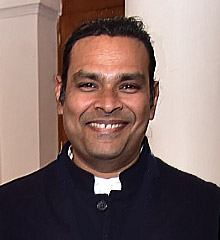
(The writer is a counter-terrorism expert and a visiting faculty with Pune University (SPPU) at the Department of Defense and Strategic Studies. He is also the founder & editor-in-chief at Diplomacy Direct, a public interest think-tank. He can be contacted at [email protected])
The views expressed are not necessarily those of The South Asian Times.