2024 was the year of the elections as more than 60 countries, apart from the world’s biggest democracies the US and India, cast their ballots and several of those voted against the incumbents, including in the UK
New Delhi: From Pakistan to Sri Lanka, from the UK to Japan and France, the year gone by was certainly the year of the elections where several countries voted against the incumbents. Here is a throwback of key elections from around the world.
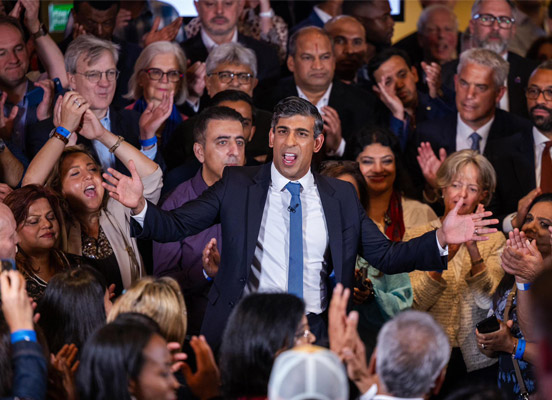
The UK saw a change in government. The Labour Party won, ending the 14-year rule of the Conservative Party. It was a stunning comeback for the Labour Party, which saw its worst electoral defeat in over 80 years. The man behind the win was Keir Starmer, now the UK’s Prime Minister.
The elections were held on July 4. The Labour party secured over 400 of the 650 parliamentary seats, their largest majority in decades. Rishi Sunak apologized to the nation following the Tory's defeat, saying he heard voters' "anger" at his government.
"To the country I would like to say first and foremost, I am sorry. I have given this job my all but you have sent a clear signal that the government of the UK must change, and yours is the judgement that matters. I have heard your anger, your disappointment, and I take responsibility for this loss," Sunak emphasised.
.jpg)
Anura Kumara Dissanayake of the National People’s Power (NPP) alliance. (Photo courtesy: X@anuradisanayake)
The Presidential elections were held in Sri Lanka on September 21. Anura Kumara Dissanayake of the National People’s Power (NPP) alliance defeated his rivals to secure the presidency.
Dissanayake , 55, a Marxist member of Parliament from Colombo representing Marxist Janatha Vimukthi Peramuna (JVP), defeated prominent names including incumbent President Ranil Wickremesinghe, who finished third with just 17 percent of the votes and Namal Rajapaksa, son of former President Mahinda Rajapaksa, who managed less than 3 percent of votes in the election.
Dissanayake's victory was a significant development in the politics of Sri Lanka – the nation grappling in the aftermath of the mass protests that ousted Gotabaya Rajapaksa in 2022. Sri Lankan people clearly voted out the incumbent reflecting the anger in the country. Two months after the Presidential elections, parliamentary elections were conducted in Sri Lanka on November 14. The NPP secured a historic landslide, winning 159 out of 225 seats.
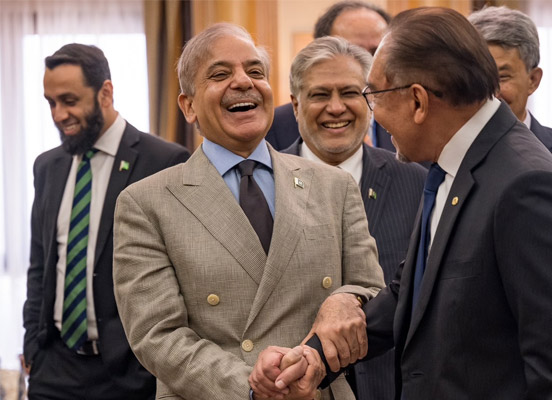
Prime Minister Shehbaz Sharif. (Photo courtesy: X@CMShehbaz)
Pakistan held elections in February this year. However, it wasn’t until a month later that it decided on a prime minister. There was talk that Nawaz Sharif would make a comeback. However, that changed after the PMN-L won fewer seats than expected.
Elections were held to the National Assembly on February 8. Polling was held after the arrest of former Prime Minister Imran Khan and banning of his party, Pakistan Tehreek-e-Insaf (PTI). Since the PTI was banned, many of its candidates ran as independents, securing over 100 seats and becoming the largest single group in the assembly.
However, the PTI independents lacked the mandatory coalition to form a government. The Pakistan Muslim League-Nawaz (PML-N), led by former Prime Minister Nawaz Sharif, emerged as the largest formal party with 75 seats, followed by the Pakistan People’s Party (PPP) with 54 seats. A coalition government was subsequently formed by the PML-N and PPP, along with smaller parties, under Prime Minister Shehbaz Sharif.
Economic instability continues to grip Pakistan. With Imran Khan wielding influence from behind bars, the threat of a political upheaval looms large.
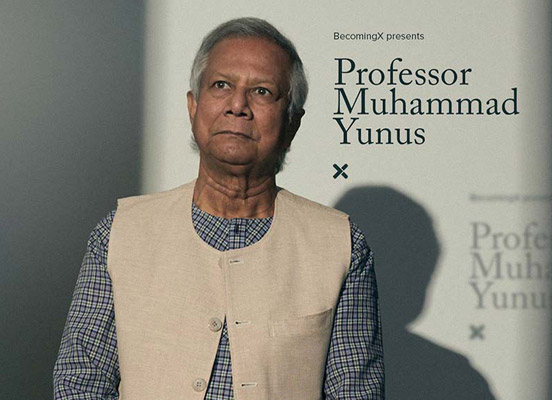
Bangladeshi interim government's Chief Advisor Muhammad Yunus. (Photo courtesy: X@Yunus_Centre)
Parliamentary elections were held in Bangladesh on January 7. The elections for the 350-member Jatiya Sangsad faced criticism over fairness. The ruling Awami League (AL), led by Prime Minister Sheikh Hasina, secured a fourth consecutive term, winning 224 of the 300 contested seats. However, the election results were boycotted by major opposition parties, including the Bangladesh Nationalist Party (BNP). The charge against the government of suppressing opposition voices and creating an uneven playing field.
In the aftermath of the election, Bangladesh saw widespread protests amid criticism from global leaders. A students’ movement against job reservations snowballed into a mass uprising in July and August 2024 forcing Sheikh Hasina to resign. An interim government headed by Nobel laureate Muhammad Yunus as the Chief Adviser was established.
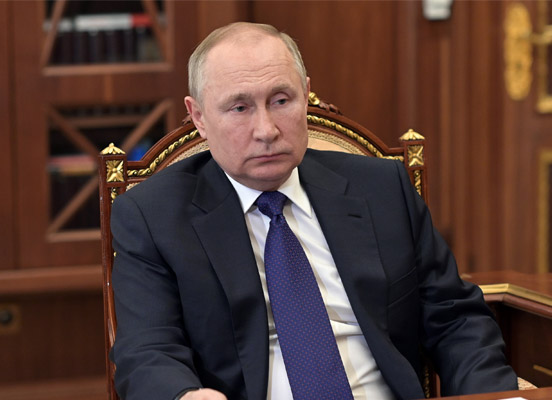
Vladimir Putin claimed his fifth term in office. (Photo courtesy: X@KremlinRussia_E)
Amid war, Russia too held its presidential election. The country insists it’s a democracy but the results are foreseeable. In March, Vladimir Putin claimed his fifth term in office. Another presidency which will last six years means he will remain in office until 2030.
Japan’s Prime Minister Shigeru Ishiba called for snap polls this October. It shook up politics in the country as the ruling Liberal Democratic Party – which governed the country for most of the post-World War II era – and its coalition partner, Komeito, lost its majority in the parliament.
France held the first round of snap polls on June 30 and second round on July 7 to elect all 577 members of the National Assembly. President Emmanuel Macron dissolved the Assembly after significant losses for his coalition in the European Parliament elections. The elections resulted in a hung parliament, with the National Rally securing the most seats but failing to achieve a majority. Prime Minister Michel Barnier led government collapsed early in December in a confidence vote over his cost-cutting budget. Macron named Francois Bayrou as Prime Minister in December.
General elections were held in South Africa on May 29 to elect a new National Assembly as well as the provincial legislature in each of the nine provinces. The African National Congress failed to win a majority of National Assembly seats for the first time since the end of apartheid. On June 14, the ANC, the DA, the Inkatha Freedom Party (IFP) and the Patriotic Alliance (PA), agreed to form a national unity government, with Cyril Ramaphosa being re-elected President of South Africa.