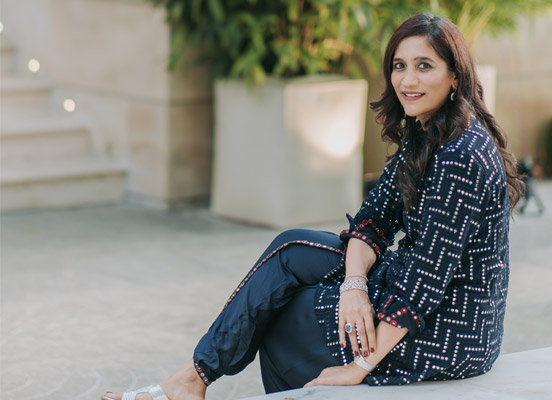
For Delhi-based author Namrata Jain, the common thread across all her books is that values are not meant to be confined to textbooks —they are meant to be lived, shared, and celebrated by people of all ages, especially kids and young adults.
New Delhi: The metamorphosis of a danseuse to an author, Namrata (Kothari) Jain’s journey is a fascinating blend of art, culture, and creativity. Raised in New York and New Jersey, she trained for 14 years in Kathak under Rachna Sarang (disciple of the legendary Pandit Birju Maharaj), mastering both Jaipur and Lucknow gharanas.
In 2017, her academy, Nritya Kulture, staged its first full-fledged Kathak show at Triveni Kala Sangam, Delhi, and continues to perform at renowned platforms.
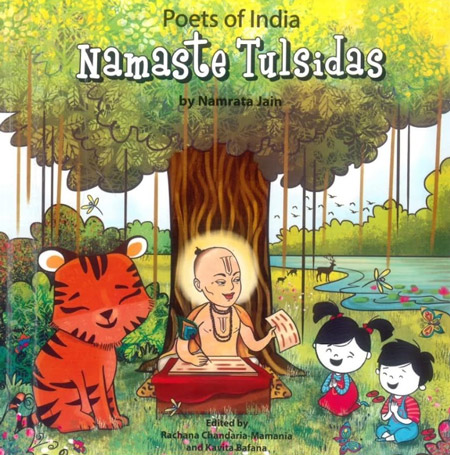
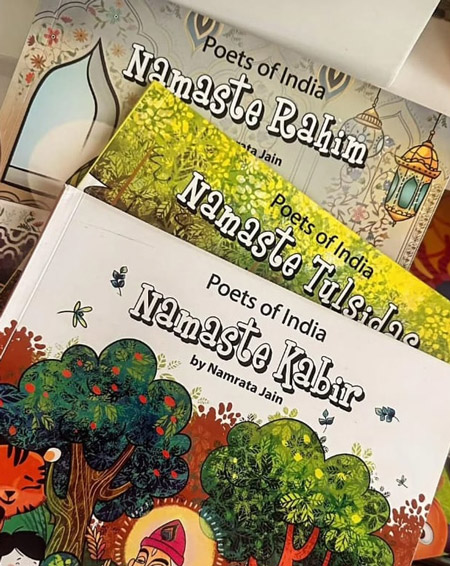
Her first trilogy, The Namaste Series, introduces children to the timeless wisdom of Indian poets — Kabir, Rahim, and Tulsidas — through rhyming stories and vibrant illustrations. Presented bilingually in Hindi and English, these books make dohas accessible and engaging for young readers.
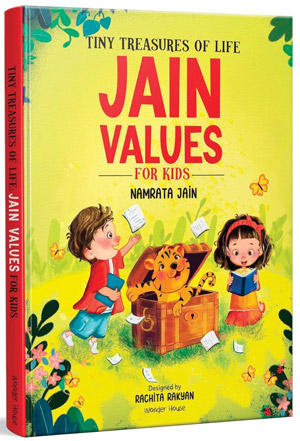
Her latest work, Jain Values for Kids, draws on the five Anuvratas (small vows) of Jainism — universal principles like non-violence, truth, and non-possessiveness — presented in a simple, relatable format for children.
In her own words.
Subjects That Remain Relevant
When I think about the subjects I choose for my books, one guiding principle always stands out — values and morals never go out of fashion. They are timeless, evergreen, and in fact, their relevance grows stronger as society advances technologically but struggles with emotional and ethical balance. In today’s fast-paced world, where distractions are plenty and traditions are often sidelined, subjects rooted in values, culture, and humanistic principles serve as much-needed anchors.
That is why my work often revisits themes that may appear ancient on the surface — dohas from poets like Kabir, Rahim, and Tulsidas, or the vows and principles of Jainism—but in truth, they hold extraordinary relevance for the modern world. These teachings carry within them wisdom on compassion, patience, respect, simplicity, and balance—all of which are urgent needs of our current times. By reintroducing these timeless subjects in a fresh, exciting, and relatable way, especially for children and young adults, I hope to create bridges between our cultural past and the challenges of today’s societies.
For me, it isn’t about nostalgia; it’s about drawing on deep wells of wisdom and showing how they can provide practical tools for living in harmony, whether with ourselves, with others, or with the environment. In that sense, the subjects I pick are not just relevant—they are essential.
Books as a Path Back to Sanity
We live in uncertain times — political unrest, climate anxieties, the pressures of social media, and the increasing isolation of individuals despite being constantly “connected.” Amid this chaos, books serve as sanctuaries. They provide a quiet space for reflection, imagination, and dialogue with ideas larger than ourselves. Reading allows us to pause, absorb, and think — a much-needed antidote to the frenzy of today’s world.
Books are also powerful because they connect us across generations. When children read stories rooted in traditions, culture, and values, they don’t just absorb information—they internalize a worldview that is balanced, empathetic, and resilient. Reading together as families or communities fosters bonds, stimulates discussions, and creates shared moral frameworks. It is a way of planting seeds of sanity in an otherwise chaotic landscape.
For India in particular, reading can play a transformative role. Our country has a rich reservoir of traditions, philosophies, and cultural practices that have shaped human thought for centuries. If today’s children and young adults can rediscover these treasures, not as outdated relics but as guiding lights, they can build a future that is both modern and deeply rooted in ethical foundations.
A truly developed nation is not just one that boasts skyscrapers and economic progress — it is one where its people live with dignity, compassion, and moral clarity. Books can guide us in this direction, helping the next generation dream of and work towards such an India.
Latest Work: Jain Values for Kids
My newest book, Jain Values for Kids, continues this journey of reintroducing timeless principles in a way that is fun, simple, and relevant to children today. At its heart, this book focuses on five Anuvratas, or small vows, that are derived from the larger Mahavrats practiced by Jain monks. While these vows hold deep religious significance within Jainism, they are also universally applicable and immensely practical for everyone, regardless of faith.
The five principles—non-violence, truthfulness, non-stealing, celibacy/self-restraint, and non-possessiveness—may sound lofty, but in truth, they are small, everyday practices that can shape children into thoughtful, responsible individuals. For instance, the vow of non-violence isn’t just about abstaining from physical harm—it also relates to kindness in speech, respect for all living beings, and even environmental responsibility. In today’s context, where sustainability is a pressing concern, these vows become remarkably modern, guiding children to grow up with sensitivity towards the planet.
My goal with this book is to make these values accessible to young readers. Through engaging language, illustrations, and relatable contexts, I hope to show children that values are not abstract ideas but simple habits that can make life easier and more meaningful. By learning to imbibe them early, children gain tools to navigate challenges with clarity and compassion.
This book also aligns with my larger vision as an author. My earlier Namaste series introduced children to dohas, teaching morals through the words of great poets. Now, with Jain Values for Kids, I am extending the same idea by drawing from my own tradition, showing how our cultural and religious wisdom can be presented in fresh, vibrant, and relatable ways. The common thread across all my books is that values are not meant to be confined to textbooks—they are meant to be lived, shared, and celebrated.
Looking Ahead
For me, writing is a continuous process of learning and sharing. I see myself not just as an author but as an eternal student, always discovering new ways to present old truths. India has a treasure trove of knowledge—be it through literature, religion, or folklore—that the world can benefit from. My mission is to bring these treasures to light, especially for younger audiences, so that they grow up seeing values not as restrictions but as stepping stones to freedom, imagination, and growth.
In an age where screens dominate attention and trends shift rapidly, books can offer stability. They give children and adults alike the freedom to dream, to step away from the noise of technology, and to engage in meaningful reflection. If my work can play even a small part in reviving this love for reading, and in presenting values in ways that resonate with today’s generation, I will feel my journey as an author has been worthwhile.
(All photos courtesy: Namrata Jain)