The annual $30,000 prize is the largest of its kind in support of contemporary Himalayan artists
The Rubin also announces the 2025 Research and Art Projects grantees. A total of $200,000 of funding is distributed to 15 projects.
New York, NY: The Rubin selects India-based Khadhok – Tibetan Artists’ Collective as the winner of the 2025 Rubin Museum Himalayan Art Prize, alongside the funding of 15 art and research projects in its second cycle of annual Rubin Grants. The Rubin Art Prize is a $30,000 unrestricted cash prize and the largest international award in support of contemporary art related to the Himalayan regions. Together the Rubin Art Prize and Rubin Grants will provide $230K of direct support to artists and researchers working in the Himalayan region and internationally. These initiatives demonstrate the Rubin’s enhanced commitment in its new model to nurturing the next generation of artists and scholars dedicated to expanding awareness and understanding of Himalayan art.
“Working with Himalayan art and living artists has been part of our approach since the Rubin was founded in 2004,” says Jorrit Britschgi, Rubin Museum of Himalayan Art Executive Director. “As a museum without walls we hope to increase visibility and awareness of Tibetan and Himalayan art globally. The recipient of the 2025 Rubin Art Prize, Khadhok, shares this aspiration and has been leading exceptional work in Dharamshala in a short amount of time by creating space for artists to share their work, and to enable dialogues and moments of connection within the local Tibetan community. I am certain the impact of their work will continue to expand in years to come.”
The Rubin Museum Himalayan Art Prize was established in 2024 to support living artists and collectives who have made a mark in creative and critically relevant dialogues between Himalayan art and contemporary life. The winner is selected by a jury of Rubin staff members and experts in the field. In 2024 the inaugural winner was Tenzin Gyurmey Dorjee.
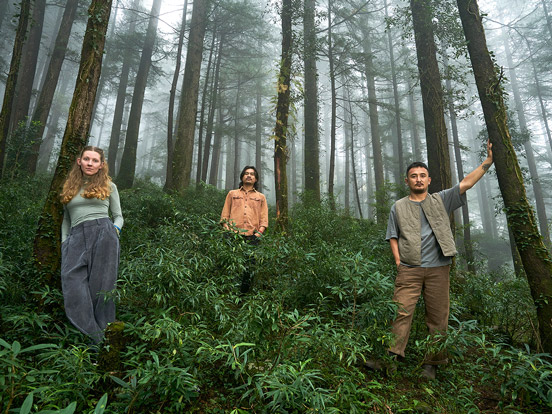
“We were deeply moved when we first heard about the award,” said the founding members of Khadhok, an India-based artist collective that is a platform for Tibetan artistic exchange, community engagement, and youth empowerment. “As a young collective, being recognized by an institution with such a long history in Himalayan art makes us feel truly seen and valued. This recognition strengthens our confidence and encourages us to keep growing. Most importantly, it changes what is possible for Khadhok, allowing us to build a strong foundation that truly lasts and supports artists and our community for many years to come.”
"I met the Khadhok collective last year in Dharamsala and have followed their projects since. To see them honored with the Rubin Himalayan Art Prize 2025 is profoundly moving,” says Tibetan singer-songwriter and artist YESHE. “Khadhok’s practice doesn’t just exhibit but builds, creating spaces of intergenerational dialogue that give young Tibetan artists in exile both mentorship and a platform for experimentation, a form of resistance to erasure. Their work embodies the courage of Himalayan artists who create in the face of displacement and exclusion, offering resilience and tenderness from spaces where stories are too often silenced. As a Tibetan artist, I see their work as a vital affirmation that Himalayan presence endures not as echoes of history, but as living expressions of today.”
The annual Rubin Grants program was launched in 2024 in support of art and research initiatives that aim to promote the rich cultural legacy and living traditions of the Himalayan regions. As part of the second award cycle, the Rubin received 132 letters of inquiry of which 15 projects were selected with grant sizes ranging from $3,000 to $25,000, depending on the scale, impact, and needs of each project. Selected projects will advance and generate further knowledge of this developing area of focus through a new conservation training program in Mongolia; documentation of historic art in central Bhutan and Nepal; research that focuses on the provenance of objects from a Tibetan Buddhist temple in Darjeeling, India; Tibetan visual art teaching resources and materials for educators; a two-channel video installation in northern India that explores the Tibetan Buddhist concept of interdependence; new exhibitions, multimedia projects, and much more.
“It is exciting to see the global response from emerging and established scholars, artists, and nonprofits from over 30 countries applying to our grants program," says Michelle Bennett Simorella, Rubin Museum Director of Global Projects & Collections. “It exemplifies the critical need for this resource that can empower scholars and creatives to dedicate their time to pursue projects that will give greater understanding and visibility to the rich cultural legacy and living traditions of the Himalayan regions.”
In addition to the annual Rubin Art Prize and Grant Project, the Rubin’s new model also includes traveling exhibitions such as Gateway to Himalayan Art, which is touring nationally; multimedia educational initiatives like Project Himalayan Art; Mandala Lab curriculum lessons taught in New York City classrooms; and long-term loans and collaborations such as the Rubin Museum Tibetan Buddhist Shrine Room at the Brooklyn Museum, which opened on June 11 and is on view for six years.
About Khadhok – Tibetan Artists’ Collective
Khadhok - Tibetan Artists’ Collective was founded in Dharamshala, India, in 2023 to provide a dedicated space for Tibetan contemporary visual artists to present their work, exchange ideas, and strengthen their practice, with a focus on emerging artists. Its name, Khadhok, means “color” in Tibetan, reflecting the diversity, vibrancy, and richness of Tibetan expression.
The collective was inspired by the dream of late artist Jigme Choedak (1997–2023), whose life and practice were rooted in observing the nuances of Tibetan culture. He envisioned a platform where young Tibetan artists could create freely, be recognized for their work, and contribute to a shared cultural dialogue. Following his untimely passing, Khadhok organized its first exhibition, Celebrating Jigme Choedak’s Art and Life, at the Old Tibet Museum in the Dalai Lama Temple Complex in Dharamshala. The three-day exhibition included an auction benefiting JC’s family, marking both a tribute to JC and the beginning of a collective committed to nurturing Tibetan artistic voices.
Since then, Khadhok has grown into a vibrant platform for artistic exchange, community engagement, and youth empowerment. The collective’s activities include exhibitions, mural projects, workshops, talks, and youth engagement initiatives in schools and community spaces, supporting both professional growth and reflection on identity, culture, and belonging.
Recent projects include UNSETTLED (2024), a group exhibition that brought together 20 Tibetan artists from around the world; Khadhok Mural Project (2025), a large-scale mural initiative across Dharamshala that provided a visible platform for Tibetan contemporary art, fostering dialogue with locals, visitors, and the broader community; Dreaming Tibet (2024-2025), a youth project that encouraged Tibetan students from five schools to create artworks on theme “If I were in Tibet,” which later culminated in an exhibition at the Kangra Art Museum in Dharamshala, which traveled to the India Habitat Centre in New Delhi; and Dear Kundun (2025), a global youth art exhibition featuring artwork from Tibetan children worldwide marking the 90th birthday of His Holiness the 14th Dalai Lama.
2025 Rubin x Research Grantees
Studio Nyandak
Documenting and Safeguarding Zanskar’s Buddhist Heritage
Zanskar, in remote northern India, is home to various Buddhist monasteries and nunneries, whose traditional mud-brick structures are endangered by climate change, seismic activities, and rapid modernization. This collaboration between Tibetan and Zanskari architects/engineers and local monks and nuns documents the structures of eight Tibetan Buddhist sites (Karsha, Phugtal, Bardan, Mune, and Stongde Monasteries and Dorje Dzong and Chuchikjal Nunneries), and aims to capture Zanskar’s vernacular architecture and cultural landscape before irreversible changes take hold.
Grant amount: $25,000
Treasure Caretaker Training
Preservation of Buddhist Art in Mongolia: Research and Training for Painters and Community Members in Charge of Conservation in Remote Areas
This project aims to train community members who oversee conservation efforts in Mongolia — held at the Zanabazar Museum in Ulaanbaatar, and in smaller, remote museums and religious sites. Most of those community members are painters without formal conservation training. The project will provide low-cost, practical conservation guidance tailored to local skills and resources, particularly focusing on preserving traditional thangkas while respecting existing practices of repainting these cultural treasures. The project will also research traditional preservation methods in remote Mongolia and document local heritage practices.
Grant amount: $20,000
Loden Foundation
Documenting Thangkas and Religious Artifacts of Sumtrhang Samdrup Chödzong
Sumtrhang Temple, founded in the 13th century, is located in Ura in central Bhutan and houses an extensive collection of manuscripts and artworks. While the manuscripts have been digitized, its extensive collection of religious paintings (thangkas), wall murals, statues, and ceremonial objects remains largely undocumented. The project aims to create a complete digital record of these artworks through photography and detailed cataloging. By interviewing religious leaders and community members the project will also aim to capture how the sacred objects were and are used in rituals and daily religious life. This project will provide invaluable insights into Bhutanese religious history and artistic heritage.
Grant amount: $19,500
Chiara Bellini (with Edoardo Ferrari and Sabrina Ciolfi)
Feeding the Fire or Worshipping the Ashes? Divergent and Controversial Approaches to the Restoration of Himalayan Artworks
This project examines the understudied methods employed by Himalayan communities to restore their sacred artistic heritage, which often contrast with Western approaches. For Himalayan communities, restoration essentially means reconstruction: restoring functionality to the so-called ‘receptacles’ of the deities and their sacred spaces, whereas Western methods have evolved towards a conservation-oriented model that generally avoids reconstruction and is not always aligned with the religious sensibilities and needs of local communities. This project documents restoration practices by contemporary traditional artists in Ladakh and/or Mustang and aims to explore how indigenous approaches might inform restoration methods in museums and international collections beyond their original contexts.
Grant amount: $12,500
Dawa Gyalpo, Tandin Paljor, Shiriin Barakzai
Documenting Cham Dances in Kham
After the destruction of the Shechen Monastery in Kham in 1950, the Shechen Monastery in Boudha, Nepal, was established in 1980. To this day, it remains the only Shechen monastery that holds ritual dances (cham) for the public outside of Kham. Since 2004, when the last Tibetan master visited to teach the traditional dances, the transmission has been interrupted, with no remaining authorities available locally to consult on the proper methods. The goal of this project is to produce a set of instructional videos to document the dances.
Grant amount: $6,250
Kalzang Dorjee Bhutia
Reuniting the Temple: Recovering and Returning Sikkimese Buddhist Knowledge and Material Culture from Museums to Mountains
This research project by Kalzang Dorjee Bhutia focuses on the provenance and current location of a corpus of cultural belongings and art removed from Sikkim in the 1890s by the Buddhologist and British colonial officer L.A. Waddell (1854–1938). Referred to in Waddell’s writings as a “Lāmaist temple with its fittings.” Bhutia has researched collections and records in the United Kingdom connected to the temple and Waddell as an author and collector, and will now study records on and holdings by Waddell in the Ethnologisches Museum in Berlin.
Grant amount: $5,250
Suyog Prajapati
Assembling Courtyard Cities: Architecture and Monasticism in the Kathmandu Valley (ca. 15th–18th Century)
This dissertation research project by Suyog Prajapati (University of Michigan) examines the art and architecture of a group of understudied monasteries in Bhaktapur, which was among the Kathmandu Valley’s most influential city states during the later Malla period (ca. 1500–1769 CE). Bhaktapur developed a dense urban fabric punctuated with plazas, shrines, courtyards, and residences that were interconnected by arterial streets and thoroughfares, which included two dozen Buddhist monasteries. Of those, the study examines the visual and material culture of Tadhichem Baha, a royally sanctioned monastery located in the city’s palace precincts, and three other independent monasteries.
Grant amount: $3,000
Briana Brightly
Anatomy of the Buddha: Visualizing the Body in Tibetan Medicine, 1687–1900
The research by Briana Brightly (Harvard University), which is part of a dissertation project, focuses on anatomical illustrations. In 1687 the painter Lhodrak Tenzin Norbu carefully observed and sketched the liver, heart, spleen, and other organs of a recently dissected corpse at a surgeon’s dissection table. These observations served as the basis for a series of anatomical paintings illustrating a fundamental text of traditional Tibetan medicine. This project traces the reception history of Lhodrak Tenzin Norbu’s illustrations between the eighteenth and early twentieth centuries and contributes to a growing body of scholarship in the history of science that shows medicine to be, in part, a visual pursuit.
Grant amount: $3,000
2025 Rubin x Art Projects Grantees
Nawang Tsering & Jamyang Tenzin
Tibetan School Art Curriculum: Teaching Resources & Materials for Art Educators
This project addresses the risk to Tibetan artistic traditions caused by exile and displacement by creating a comprehensive visual arts curriculum that bridges traditional art forms with modern educational methods. The curriculum is grounded in established pedagogical frameworks to support diverse learning styles while fostering creativity, cultural identity, and critical thinking. This collaborative initiative among educators, artists, and scholars aims to preserve Tibetan artistic heritage by equipping teachers with structured materials and empowering students to engage with art as both personal expression and cultural resilience.
Grant amount: $22,000
VAST Bhutan
The Lungta Art Festival (LAF) 2026
The Lungta (Wind Horse) Art Festival to be held in 2026 and organized by VAST Bhutan aims to promote compassion and ethical responsibility through arts. The festival specifically addresses the environmental crisis of synthetic microplastic pollution in the Himalayan Mountain ecosystems, using art and the Buddhist philosophy of interdependence to help participants understand how individual actions impact the wider ecosystem. The grant supports a number of exhibitions that are to take place as part of the festival.
Grant amount: $15,000
Tenzin Tsering (Tenzoni)
Threads of Camp Mountain
This project supports Toronto-based artist Tenzoni in creating a graphic novel, Threads of Camp Mountain. The novel follows three Tibetan sisters from the Western diaspora who attend a transformative summer camp in Dharamshala, India, where they discover their heritage. The story explores second-generation identity and diasporic disconnect as the sisters navigate the journey of understanding their roots, blending heartfelt storytelling with humor and vibrant illustrations that make Tibetan culture accessible to young readers. The project aims to provide representation for diasporic and underrepresented communities while bridging generational gaps and celebrating the power of sisterhood, humor, and cultural heritage in the process of growing up and finding belonging.
Grant amount: $15,000
Khyenle
Lima Bronze Snow Leopard Art Project – Recycling with Cultural Heritage
This project by Khyenle, a Tibetan bronze art center and platform for artists in Derge County, Sichuan, aims to merge traditional Tibetan bronze craftsmanship, the Lima bronze technique, with contemporary environmental concerns by teaching artists how to create snow leopard sculptures with recycled cans. This initiative not only highlights the rich cultural legacy of the Himalayan region but also promotes sustainable practices and raises awareness about wildlife conservation. By transforming discarded materials into artworks, the project seeks to inspire society to embrace recycling and honor traditional craftsmanship.
Grant amount: $18,000
White Crane Films (Ritu Sarin and Tenzing Sonam)
The Earth Is My Witness
The two-channel video installation by renowned Dharamsala-based filmmakers Ritu Sarin and Tenzing Sonam is a contemplative project exploring the Buddhist concept of interdependence through the lens of humanity's destructive dominance over nature and in an increasingly disrupted world. The work will be filmed over one year in the Himalayan region of North India, capturing the traditional rhythms of farmers, shepherds, miners, and spiritual practitioners living in harmony with their landscape, while also documenting the intrusive impacts of human activities on this natural order. The installation will weave together contemporary footage with archival materials and recordings of Tibetan Buddhist monks debating impermanence and interdependence.
Grant amount: $12,000
Human Clay Productions CIC
Weaving the Threads of Bhutanese Heritage
This feature-length documentary follows Yeshey as she returns to Bhutan's Khoma village to explore the traditional Kishuthara silk-weaving technique practiced by local women who pass down this intricate craft across generations. The film captures both the material process of creating symbolic textiles like the kira (national dress) and the cultural, environmental, and social context in which this weaving tradition serves as a repository of embodied knowledge and familial transmission.
Grant amount: $18,500
Lujan Rai Dongol
Wheel of Life – A Contemporary Reimagining of Samsara
Nepal-based artist Lujan Dongol’s project will reinterpret the ancient Buddhist concept of samsara for contemporary audiences, addressing how traditional depictions of the cycle of birth, suffering, death, and rebirth often feel disconnected from modern lived experiences. Motivated by personal experiences with loss and Buddhist teachings, as well as witnessing global issues like over-consumption and division, the artist aims to reimagine the Wheel of Life's power to provoke reflection by bridging ancient wisdom with contemporary realities through playful yet reverent reinterpretation.
Grant amount: $5,000