By Murli Menon
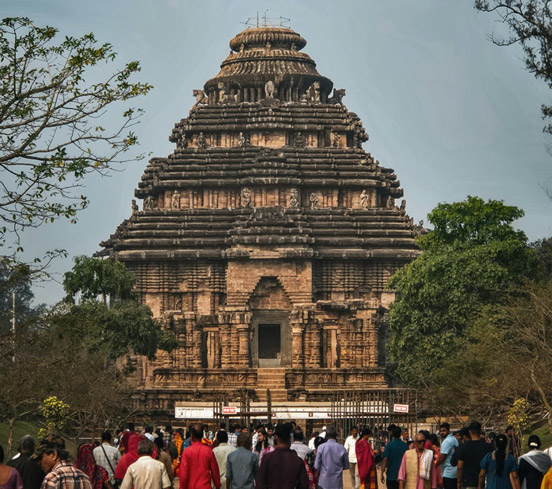
Chandrabhaga Beach: Located on the eastern shores of Odisha, about 35 kilometres from Puri, the Konark Sun Temple near Jagannath Puri is undoubtedly one of India’s most awe-inspiring monuments. Known as the Black Pagoda by European sailors, this 13th-century marvel is not just a temple but a colossal stone chariot dedicated to Surya, the Sun God.
Its grandeur, symbolism, and artistry make it one of the most celebrated achievements of Indian architecture. The temple was commissioned around 1250 CE by King Narasimhadeva I of the Eastern Ganga dynasty. It is believed to have taken nearly twelve years and more than ten thousand artisans to complete. The king built it both as an act of devotion to the Sun god (Suryadev) and as a symbol of victory over invading forces.
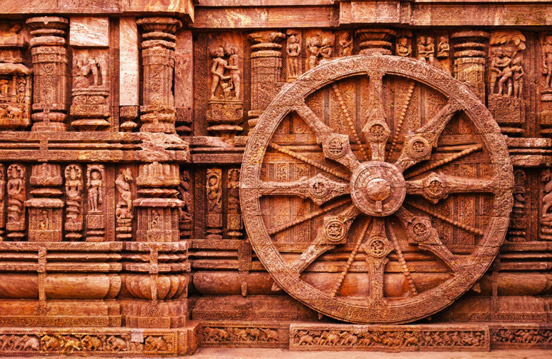
The temple is conceived as a gigantic chariot with twenty-four intricately carved wheels.
Legends also connect the temple to Samba, son of Lord Krishna, who was cured of leprosy after worshipping the Suryadev and vowed to build a shrine in gratitude. Chanting the seven divine names of Suryadev at Konark is sacrosanct in Sanatana Dharma. (Mitra, Arka, Aditya, Bhaskara, Marichay, Ravi, and Surya) and Gayatri mantra (108 times) at sunrise, noon, and sunset, while symbolically offering water from the Chandrabhagha, adds to the spiritual progress of all Sanatani souls.
The temple is conceived as a gigantic chariot with twenty-four intricately carved wheels (representing a 24-hour solar day) and seven galloping horses (representing seven days of the week), symbolizing the Sun God’s cosmic journey across the sky.
Each wheel, nearly 12 feet in diameter, doubles as a sundial, capable of measuring time with remarkable precision even in 2026. The alignment of the temple ensures that the first rays of the rising sun illuminate the sanctum, a fusion of astronomy and spirituality. The carvings on the temple walls depict gods, celestial dancers, warriors, animals, and scenes from everyday medieval
life.
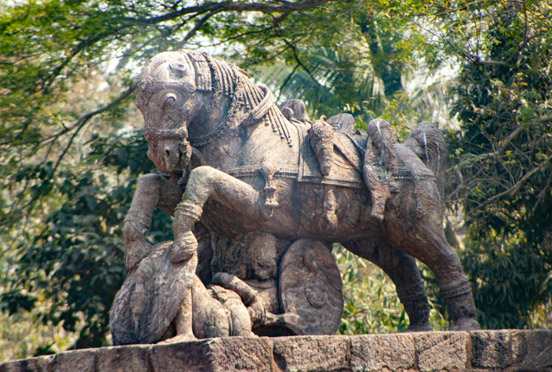
The sculptures of seven galloping horses represent the seven days of the week.
A giraffe sculpture inside the temple is Konark’s best-kept secret. The ancient Odiya mariners visited Africa and saw giraffes, which is what this sculpture depicts. Konark is steeped in folklore. One famous tale is of Dharmapada, a 12-year-old boy who sacrificed his life to save his father’s team of sculptors from execution after solving a crucial architectural challenge.
Another legend speaks of a massive magnet once placed atop the temple, believed to suspend the Sun idol in mid-air. This scientific research by French sailors adds to the temple’s mystical aura. The temple also stood beside the sacred Chandrabhaga River, now vanished, which was once central to rituals and believed to cure ailments. Pilgrims still gather nearby during the Magha Saptami festival to honor the Sun God at Chandrabhaga Beach.
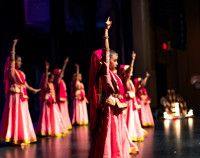
The temple is not just a monument but a cultural beacon. Its motifs and symbols permeate Odissi dance, literature, and art, and even appear on Indian currency notes. The annual Konark Dance Festival, held in front of the temple, showcases India’s classical dance traditions against the backdrop of this architectural wonder.
Some of the temples lie in ruins today. The main tower collapsed centuries ago, possibly due to invasions, natural decay, or the removal of its crowning magnet. In the early twentieth century, Western archaeologists filled the Jagamohan with sand to prevent collapse. Today, the Archaeological Survey of India is carefully removing this sand using advanced drilling and robotic technology, marking a new chapter in the preservation of the Konark temple.
Konark is best visited between October and March when the weather is pleasant, and festivals abound. Nearby attractions include the Jagannath Temple in Puri, Chilika Lake, and Bhubaneswar’s famous Shiva temples. The Konark Dance Festival in December and the Chandrabhaga Mela in February are highlights.
The nearest airport is Biju Patnaik Airport in Bhubaneswar, with good road and rail connections. For travellers seeking comfort and proximity, OTDC Panthanivas, also known as Yatrinivas Konark, is the most convenient option. Just eleven minutes’ walk from the Sun Temple and close to Chandrabhaga Beach, it offers budget-friendly, clean rooms with spotless baths.
Traveling through Odisha is not just a journey through temples and heritage; it is also a culinary adventure. The stretch from Bhubaneswar to Puri and Konark is dotted with roadside vegetarian Odiya dhabas (rustic eateries) and local eateries that serve hearty meals. For vegan travellers, this corridor is a delight, as many traditional Odiya dishes are naturally plant-based, cooked in organic, locally wood-pressed mustard oil, and centered around rice, lentils, and seasonal vegetables.
The dhabas are known for freshly cooked meals, generous portions, and homely flavors. Wooden benches, steel plates, and the aroma of mustard oil define the experience. Roadside dhabas offer wood-fired cooked food prepared the way locals eat it daily, and impart a delicious smoky flavor to food.
The Konark Sun Temple is more than stone and sculpture; it is a living chronicle of India’s devotion, artistry, and scientific genius. Whether viewed as a celestial chariot, a cultural emblem, or a timeless mystery, Konark continues to inspire awe and reverence. And for travellers, the journey is enriched not only by the temple’s grandeur but also by the flavors of Odisha. Together, heritage and cuisine make Konark not just a destination, but an experience of Odisha’s soul.
--------------------------------------
.jpg)
(Murli Menon is the author of ZeNLP books and conducts storytelling workshops based on his works on eschatology. He can be reached at [email protected])
(All photos courtesy of the author)