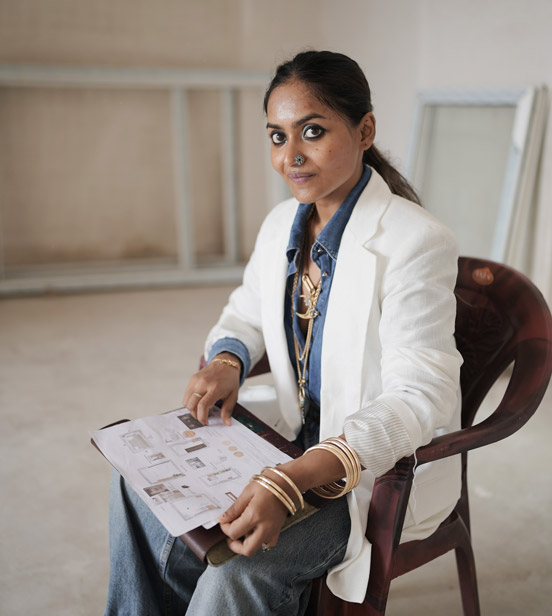
Artist Deepanjali's work reflects a belief that environments shape how one feels, remembers, and belongs.
Meet the multidisciplinary artist whose work moves fluidly between spatial design, scenography, and visual storytelling. Having studied and worked across India, London, and New York, Deepanjali brings together global exposure with a deep respect for South Asian material heritage.
With a foundation in architecture and advanced training in performance and narrative environments, her practice explores how space can hold memory, emotion, and cultural identity. Rather than treating design as purely functional, she approaches every project as a story waiting to be experienced
Deepanjali completed her MFA at Pratt Institute in New York, where her studies in animation and visual storytelling earned recognition at multiple international animated film festivals, including the New York Dog Film Festival.

Deepanjali's studies in animation and visual storytelling earned her recognition at the New York Dog Film Festival.
Following her studies, she began her professional career at a media and PR agency in New York, specializing in the design of large-scale movie premiere events for major Hollywood productions. She went on to design and leadexecution for high-profile product launches and charity galas for Fortune 500 companies.
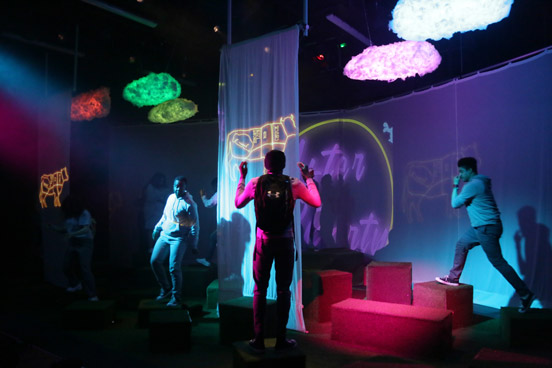
In New York, Deepanjali worked at a media and PR agency specializing in designing large-scale movie premiere events.
Alongside her professional practice, she continued nurturing her passion for animation and design as an Adjunct Professor at the University of Lynchburg, where she taught graduate students 2D and 3D animation. This blend of academic rigor, industry experience, and creative exploration shaped a design language that feels contemporary yet rooted, expressive yet intentional.
A defining influence on her practice comes from her background in scenography. Trained to design spaces for performance, she learned to see environments as active participants in narrative. Light, texture, scale, and movement become tools not only for aesthetics but for shaping emotional journeys.
This theatrical sensibility continues to inform her architectural and interior work, where she often creates spatial sequences that unfold gradually — revealing atmosphere over time rather than all at once.
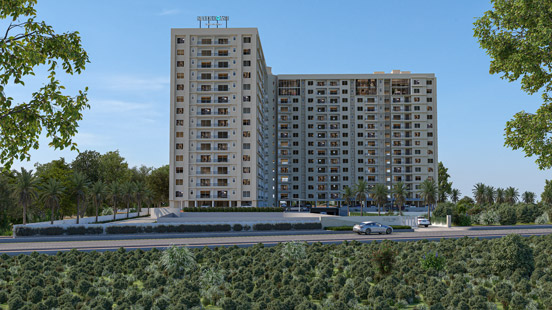
One of Deepanjali's significant ongoing works, Silver Coast, is a large-scale residential project in India where she leads both the architectural and interior vision.
One of her significant ongoing works, Silver Coast, is a large-scale residential project in India where she leads both the architectural and interior vision. Conceived as a contemporary yet grounded living environment, the project emphasizes warmth, material authenticity, and a sense of belonging.
Natural textures, handcrafted surfaces, and regionally inspired details are woven into a modern framework, allowing tradition and contemporary life to coexist. Rather than imposing a globalized design language, Deepanjali prioritizes cultural continuity, creating homes that feel emotionally familiar while still forward-looking.
.jpg)
The artist prioritizes cultural continuity, creating homes that feel emotionally familiar while still forward-looking.
Material exploration plays a central role in her practice. She frequently works with terracotta, textiles, natural finishes, and hand processes — not as decorative elements, but as carriers of human presence.
She views craft as a form of storytelling, where each handmade surface carries the imprint of time, labor, and memory. By placing these materials within contemporary spatial compositions, her work builds bridges between past and present, craft and modernity.
Beyond residential architecture, Deepanjali’s work extends into narrative and experiential environments shaped by her scenographic training. In these projects, space becomes immersive, guiding people through mood, rhythm, and sensory engagement. This cross-disciplinary foundation allows her to blur boundaries between art, architecture, and performance, creating environments that are not only seen but deeply felt.
A recurring theme in her work is what she describes as emotional sustainability. She believes the longevity of a space depends not only on durability or material quality, but on the emotional connection people form with it. When individuals see their identity, memory, and story reflected in a space, they value it more deeply. Her philosophy centers on designing environments that invite attachment — spaces people grow into rather than out of.
Deepanjali’s evolving practice is a dialogue between space, story, and cultural memory. Whether designing residential developments, interior environments, or narrative-driven concept spaces, she treats design as a living medium capable of carrying meaning. Her work reflects a belief that environments shape how we feel, remember, and belong.
Across disciplines and geographies, Deepanjali approaches space as a form of storytelling — where design becomes an art of experience, and every environment holds the potential to become a narrative in itself.
(All photos courtesy of the artist)