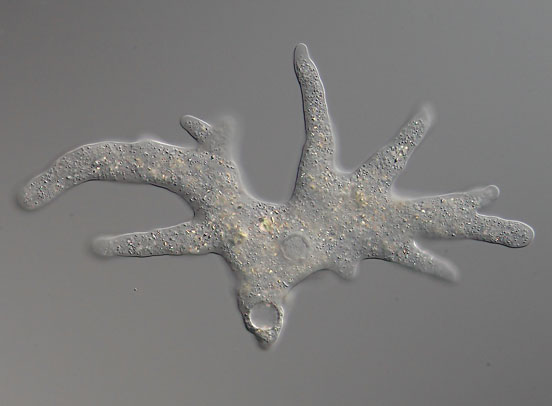
Mumbai: Free-living amoebae in Vashi Creek, a tidal estuary in Mumbai, were found to harbour bacteria which had far higher levels of antimicrobial resistance (AMR), according to a global study, including researchers from the Institute of Technology (IIT) Bombay.
The study, conducted by researchers at the University of Strathclyde in Scotland, noted that the amoebae are acting as a ‘Trojan horse’ harbouring and protecting multidrug-resistant bacteria.
Nearly half of the bacteria in the amoeba were resistant to four or more antibiotics, rising to six or more in 22 percent of the samples. In marked contrast, the same level of resistance was found in only 0.6 per cent of samples derived from the sediment.
While they are normally predators of bacteria, amoebae could serve as “sentinel indicators” of AMR, offering the potential for earlier detection of emerging resistance threats in the environment, stated the global team in the paper, published in the journal Environmental Microbiology.
The researchers believe this approach aligns with the World Health Organization’s (WHO) One Health strategy seeks a sustainable balance between the health of people, animals, and ecosystems.
The work comes against the backdrop of a major global health challenge, with bacterial AMR directly responsible for an estimated 1.27 million deaths in 2019 and contributing to nearly five million deaths overall.
“Amoebae are abundant in every environment and can act as vectors, transporting clinically relevant bacteria from the environment into high-risk areas such as hospitals or water treatment facilities without being detected. They essentially operate as a microbial Trojan Horse, giving bacteria a protective space in which to survive, adapt, and strengthen their resistance,” said lead author Dr Ronnie Mooney, of Strathclyde’s Department of Civil and Environmental Engineering.
“Our research raises important questions about how these hidden reservoirs are being overlooked by current surveillance systems,” Mooney added.