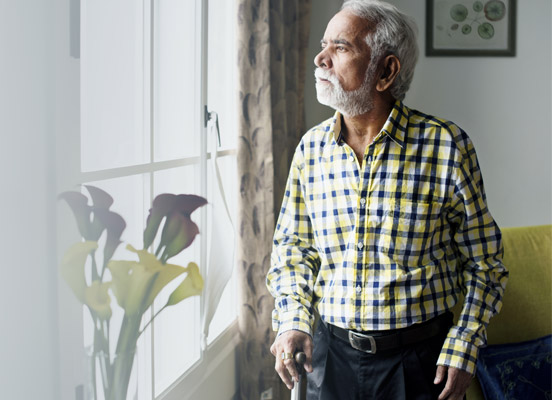
Bengaluru: There is a need to put in more energy, resources and participation to improve senior care in the country, and the government welcomes ideas from industry leaders, experts, investors and businesses towards achieving this goal, according to Dr VK Paul, Member, NITI Aayog.
Addressing an event by the Association of Senior Living India (ASLI) here, leading senior care industry experts highlighted the sector's vast opportunities. “We have seniors who have contributed to building this nation, and they need special measures, a special touch and a comprehensive response to their care. Towards this, we welcome your suggestions on how to fashion a response, keeping their physical, digital and financial security in mind,” said Dr Paul.
“The expectations of the government, from institutions like the ASLI, are higher than ever, and we welcome your ideas, which will help us draft policies in line with our goals and societal values,” Dr Paul told the gathering.
He also touched upon the work of the NITI Aayog in framing a comprehensive recommendation on senior citizen welfare for the government’s consideration. “There is a need to put in more energy, resources, and participation. The moment has arrived,” Dr Paul noted.
Projections show that by 2050, one in five Indians will be a senior citizen. Yet the sector has a mere 1.3 per cent penetration, while mature markets are at 6 per cent, presenting a remarkable $10–15 billion opportunity for the senior living sector.
ASLI also released findings from a survey that explores India's senior population's priorities, behaviors and aspirations, with McKinsey & Company as knowledge partners. Ankur Gupta, Co-founder, ASLI, said the survey is a wake-up call for all stakeholders to acknowledge the shifting priorities of India's senior population.
“As the senior care industry continues to grow and mature, it's essential that we prioritise the holistic well-being of seniors, encompassing their physical, emotional, and social needs,” he noted.
India’s elderly population to reach 319 million by 2050New Delhi: The elderly population currently stands at about 104 million in India which is projected to rise to 319 million by 2050, calling for a unified action to address healthcare challenges. Healthy ageing is about fostering physical, mental, and social well-being in order to enable people to live long, healthy, and fulfilling lives. Experts said that the government has been addressing this subject through laudable initiatives but over the years, major issues around elderly healthcare have emerged. “In order to enable older persons to preserve their independence, remain active, and participate completely in their communities throughout their lives, supporting surroundings and policies are needed,” said Anil Rajput, Chairperson, Assocham National Council on CSR, which is the social arm of the industry chamber, during a panel discussion here. Globally, ageing is one of the 21st century's most significant social challenges. In India, with a three-fold increase in elderly population expected over the next two-and-a-half decades and geriatric care still being a relatively new area in healthcare and mainly restricted to cities, “I believe that empowerment of the elderly necessitates active and sustained participation from the corporate sector, civil society, and the government,” said Rajput. According to Padma Shri Professor (Dr) Subhash Manchanda, cardiologist, Sir Ganga Ram Hospital, yoga has the potential to control the common diseases among the elderly, like heart disease, high BP, diabetes and joint problems. “Scientific studies show that yoga can delay brain damage and even may be anti-aging. Hence it is suggested that yoga is a perfect technique for healthy and graceful aging,” he suggested. |