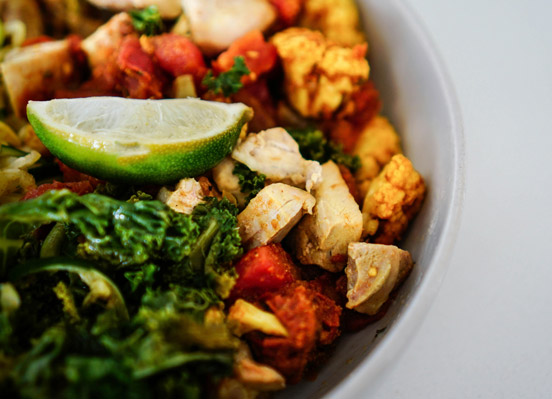
New Delhi: Clinicians and food scientists at the All India Institute of Medical Sciences (AIIMS), Delhi, and The George Institute have developed the first Indian Adapted Mediterranean Diet (IAMD) that they say is highly cardioprotective and suitable for the patients of coronary artery diseases (CAD), the most common type of heart disease and a leading cause of deaths in the country.
The menu prepared by the researchers, some of them also from other organizations, combines the principles of Mediterranean diet with Indian ingredients, and is now being assessed in a clinical trial at the premier health institute for its efficacy and acceptability.
Funded by the Indian Council of Medical Research (ICMR) and co-developed by researchers at the AIIMS, The George Institute of Global Health, Delhi and the University of South Carolina, USA, the IAMD is a seven-day Indian diet plan based on Mediterranean dietary principles which makes it highly anti-inflammatory and cardioprotective.
The details of the first IAMD, which has been developed using locally available anti-inflammatory ingredients, were published in the BMC Nutrition last week.
Detailing their work, the researchers noted that while traditional Indian diets have several anti-inflammatory ingredients similar to a Mediterranean diet, current Indian dietary analysis reveals high consumption of cereals with low legume, nut, fruit, and vegetable intake.
As part of the project, the researchers carefully compiled anti-inflammatory Indian food ingredients and incorporated them into routine diets, calorie- and nutrient-specific diet plans with a seven-day cyclic menu with North Indian recipes, aligning with Mediterranean diet principles.
“Anti-inflammatory diets with low Dietary Inflammatory Index or DII scores have been shown to be beneficial to heart health, mental health, lower incidence of dementia and certain cancers like colon and breast cancer and (result in) overall greater longevity,” said Dr Ambuj Roy, professor of cardiology at AIIMS and principal investigator of the project.
DII is a numerical score that assesses the inflammatory potential of a person’s diet. It’s designed to quantify how a diet might contribute to or counteract inflammation in the body, based on scientific research.
A more negative DII score suggests a diet that is more anti-inflammatory, while a more positive score indicates a pro-inflammatory diet. The researchers found that the current DII of the diets consumed by CAD patients ranged from -1.8 to 3.8, with a median score of 1.1.
The DII scores of the developed diet plans ranged from -7.8 to -8.4, with a median of -8.0, approaching the theoretical maximum anti-inflammatory score.
The efficacy, acceptability and feasibility of the IAMD is now being tested on 140 patients at AIIMS. Nearly half of them are CAD patients.
The CAD is a condition where the arteries supplying blood to the heart muscle become narrowed or blocked, usually due to a buildup of plaque. This plaque buildup, called atherosclerosis, restricts blood flow, potentially causing chest pain, shortness of breath, and, in severe cases, heart attacks.
Poor dietary patterns, along with sedentary lifestyle, obesity and family history, has been identified as major risk factors for CAD that makes people susceptible to heart attacks and strokes. Data from 2019-2021 indicates its prevalence ranging from 7 percent to 13 percent in urban populations and 2 to 7 percent in rural populations.
Considered one of the most well-researched dietary patterns globally, the Mediterranean diet is inspired by the eating habits and traditional foods of Italy, parts of Greece and the Mediterranean coasts of France and Spain.
This diet emphasizes plentiful intake of plant-based foods mainly unprocessed cereals, legumes, vegetables and fruits, healthy fat (from olive oil and nuts), moderate consumption of fish and dairy products and restricted amounts of red meat, refined grains and sugar.
These diets are rich in plant-based compounds polyphenols (flavonoids, anthocyanin, lycopene), antioxidants like vitamin C, vitamin E, fibres from whole grains, and omega-3 fatty acids. All of these are anti-inflammatory and are good for gut health, pointed out Suparna Ghosh Jerath, nutrition researcher from The George Institute who is associated with the IAMD project.
The researchers noted that except for quinoa, cannellini, and fava beans, the whole grains and legumes found in the Mediterranean diet were also present in North Indian cuisine.
In the IAMD, broken whole wheat and local rice varieties (Basmati) were substituted for bulgur and farro, respectively, and maize flour was added instead of polenta. Extra virgin olive oil was partially replaced with the more culturally acceptable and available mustard and peanut oils.
Some condiments and spices in the Mediterranean diet, like thyme, rosemary, and marjoram, were supplemented with other herbs and condiments used in Indian cuisine, such as Indian basil (Tulsi), carom seeds (ajwain), turmeric (haldi), nutmeg (jaiphal) and mace (javitri).
Similarly, the green leafy vegetable list was supplemented with Chenopodium Album (Bathua), amaranthus viridis (Chaulai), fenugreek leaves and radish leaves.
Using the food exchange list, a comprehensive diet plan was developed for calorie-specific plans and different caloric planning depicted a balanced nutrient approach, with around 15 percent of the energy derived from proteins, 25–30 percent from fats, and 50–53 percent from carbohydrates.