A growing challenge to meet the ever-growing healthcare needs of a fast-aging community.
By Himanshu Rath
India stands at the crossroads of a demographic shift. With improvements in life expectancy and decreasing fertility rates, the country is witnessing a steady increase in its elderly population. According to the Ministry of Statistics and Programme Implementation, the number of senior citizens (aged 60 and above) in India was around 138 million in 2021, and this figure is projected to reach 194 million by 2031. This growing segment brings with it a unique set of healthcare needs that are not adequately addressed by the current healthcare infrastructure. The need to develop a robust healthcare system that caters effectively to older persons is not just a health issue—it is a moral, social, and economic imperative.
Current status of healthcare infrastructure for senior citizens
India’s healthcare infrastructure, although expanding, continues to be inadequate and unevenly distributed. Public healthcare expenditure in India stands at just 1.9% of GDP (FY 2026), among the lowest in the world. While urban areas boast large tertiary care hospitals and a growing private healthcare sector, rural regions—which house over 65% of India’s population—often rely on under-equipped and understaffed Primary Health Centres (PHCs).
For senior citizens, the challenges are further magnified. Geriatric care facilities are limited in number, and very few hospitals have dedicated geriatric wards or specialized medical professionals trained in geriatrics. As per a report, nearly 47% of the elderly report difficulties in accessing affordable and quality healthcare. The lack of long-term care options, rehabilitation centres, and home-based care services further compounds the problem.
While countries like the USA and Canada have robust public health systems with specific programs like Medicare covering almost all elderly citizens, India’s system is still in its infancy when it comes to geriatric care. Even China has invested heavily in eldercare infrastructure as part of its aging population strategy.
Urban-rural divide in healthcare infrastructure
India’s urban centres offer relatively better healthcare services in terms of infrastructure, specialist availability, and diagnostic facilities. However, they are also becoming increasingly overcrowded and expensive. In contrast, rural India suffers from an acute shortage of healthcare professionals—nearly 60% of the vacancies for specialist doctors in Community Health Centres (CHCs) in rural areas remain unfilled.
This urban-centric growth has led to overdependence on urban hospitals. Elderly patients often travel long distances to cities for treatment, incurring high transportation and accommodation costs and enduring physical discomfort. Strengthening rural healthcare systems with trained personnel, telemedicine, and mobile healthcare units is essential to bridge this gap.
Why a robust healthcare infrastructure is needed
With the projected rise in the elderly population, India faces a looming public health challenge. The elderly often deal with multiple morbidities, requiring integrated and continuous care. A robust healthcare infrastructure would not only cater to disease treatment but also focus on preventive and palliative care.
Investing in elder-friendly healthcare would:
Qualitative impact of good healthcare access on senior citizens and society
Good access to healthcare enables elderly citizens to live dignified, active, and independent lives. Healthier seniors are less dependent on family members and contribute meaningfully to society through their knowledge, experience, and even economic activities such as caregiving or small entrepreneurship. Moreover, a society that cares for its elders fosters intergenerational solidarity and social stability. When older persons feel secure and supported, it enhances overall community well-being and reduces social isolation and depression among the elderly.
The rural imperative: Reducing dependence on urban centres
To create a more equitable healthcare landscape, expanding the healthcare network in rural India is non-negotiable. This involves:
Decentralized and community-based care will alleviate the pressure on urban hospitals and ensure timely treatment, especially for chronic conditions.
Access to healthcare as a human right for senior citizens
Access to healthcare is not a privilege but a basic human right. Article 21 of the Indian Constitution guarantees the right to life, which inherently includes access to health services. For senior citizens—many of whom face physical, financial, and social vulnerabilities—realizing this right is crucial. The government must uphold its duty to provide equitable, affordable, and quality healthcare to all elderly individuals, irrespective of geography or economic status.
Ayushman Bharat: A gamechanger
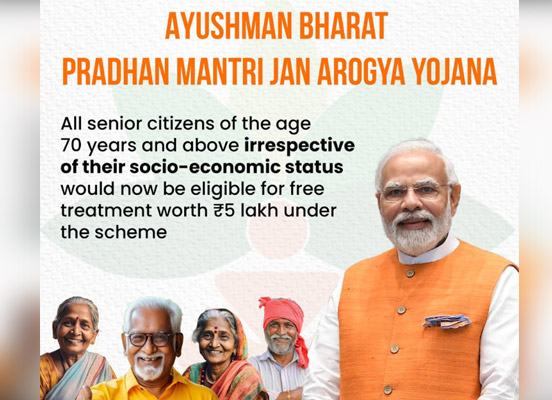
Ayushman Bharat, India’s flagship health insurance scheme, has been transformative, offering financial protection to over 500 million Indians. A “Senior Ayushman” variant, 'Ayushman Bharat – Pradhan Mantri Jan Arogya Yojana (AB-PMJAY)', could ensure 100% coverage for senior citizens above 70, including services such as home care, assisted living, mental health, and rehabilitation.
Ensuring their well-being is not just about extending life—it is about enabling a life worth living in the golden years. A nation’s progress is best reflected in how it treats its most vulnerable citizens. As India marches forward economically, it must not leave behind its elderly. A robust, inclusive, and future-ready healthcare infrastructure is essential—not only to meet the immediate health needs of the aging community but also to secure a humane and just society for generations to come.
When we ensure good health and dignity for our elders, we build a more compassionate and resilient India. It’s time to reimagine our healthcare system—with senior citizens not on the margins, but at the very heart of policy, planning, and practice.
-------------------------------------------

(The author is the founder of Agewell Foundation, a not‐for‐profit organization working for the welfare and empowerment of the elderly in India)