Elder abuse will not decline on its own. It demands sustained social commitment, policy innovation, and moral accountability.
By Himanshu Rath
As South Asia ages, the neglect and abuse of older persons have emerged as urgent social issues demanding immediate attention from families, policymakers, and civil society. The region’s demographic transformation i.e., more people living longer, often without adequate social or financial protection, is reshaping family dynamics, caregiving practices, and the capacity of institutions to uphold the dignity and rights of older citizens. Elder abuse is not a marginal issue; it is a public-health, human-rights, and development concern that undermines the physical safety, mental well-being, and economic security of millions.
The demographic shift: More elders, greater vulnerability
India today is home to over 153 million people aged 60 and above, a number projected to rise steeply in the coming decades. The population aged 80+, the most dependent segment, is set to grow several-fold by mid-century. Across the broader Asia-Pacific, the United Nations and ESCAP report that older adults already represent a rapidly expanding share of the population, numbering in the hundreds of millions. This demographic shift means that even modest rates of abuse translate into staggering absolute numbers of affected individuals. The data clearly indicate that elder care and protection systems must evolve rapidly to meet this growing challenge.
Elder abuse is widespread
Studies on prevalence vary by methodology and context, but most reveal troubling patterns. Surveys in Indian communities and institutions have reported abuse rates ranging from a few per cent to over a third of respondents, depending on definitions used. Emotional mistreatment and neglect by caregivers are the most commonly reported forms. While inconsistencies in data collection make exact figures elusive, the consensus among researchers and public-health experts is clear — elder abuse is pervasive, under-reported, and deeply rooted in social norms.
Gravity of the issue
In recent years, several disturbing incidents have brought elder abuse into sharp public focus in India. Viral videos exposing mistreatment in unregistered care homes led to police raids and rescue operations. Urban helplines and NGOs have reported rising complaints of verbal abuse, humiliation, and neglect, particularly among older women. Courts have intervened in cases where elderly parents were harassed, denied maintenance, or illegally dispossessed of their homes by adult children. These cases, widely covered by the media, underscore both the gravity of the problem and the vital role of the judiciary, media, and civil society in defending elders’ rights.
Forms of elder abuse and neglect
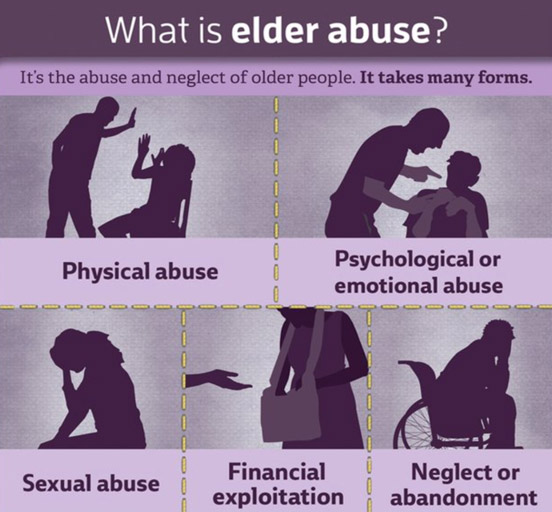
Elder abuse takes multiple forms, often overlapping and recurring over time:
• Physical abuse – hitting, pushing, restraining, or inflicting bodily harm.
• Emotional or psychological abuse – verbal insults, humiliation, threats, or deliberate isolation.
• Financial exploitation – coercion, misappropriation of pensions, theft, or fraudulent property transfers.
• Neglect or caregiver neglect – withholding food, medicines, hygiene, or medical attention.
• Sexual abuse – any non-consensual sexual act or behavior.
• Institutional abuse – poor care standards, neglect, or exploitation in care homes and facilities.
Among these, neglect remains the most common and insidious, often normalized as routine indifference until it becomes life-threatening. The rising incidence of elder abuse reflects the intersection of demographic, social,
and economic changes:
• Demographic pressure and dependency: Growing numbers of frail elders, particularly those aged 80+, require constant care. Families unable to meet these needs may unintentionally neglect them.
• Erosion of traditional family systems: Migration, urban living, and nuclear households have weakened traditional caregiving structures. Many elders now live alone, separated from children.
• Economic stress and poverty: Household financial strain can lead to frustration, neglect, or even exploitation of elders with savings or property.
• Inadequate social protection: Limited pension coverage and poor access to affordable healthcare deepen dependency and vulnerability.
• Gendered ageing: Older women, who often outlive their spouses, face heightened risks of poverty, isolation, and abuse.
• Institutional gaps and weak regulation: Many elder-care homes operate with minimal oversight, leaving residents exposed to neglect or exploitation.
• Low awareness and stigma: Cultural taboos and fear of family dishonor suppress reporting, perpetuating silence around abuse.
These intertwined factors illustrate how ageing without adequate care systems can turn longevity from a blessing into a burden.
The intergenerational divide: A social fault line
Modernization has widened the gap between generations in values, lifestyles, and communication patterns. Younger family members, shaped by fast-paced, tech-driven environments, may struggle to understand elders’ emotional and physical needs. Bridging this divide requires active intergenerational dialogue through schools, community programs, and media campaigns that restore respect and empathy for older adults.
Equally important are support structures for caregivers — including respite services, flexible work policies, and caregiver training — to reduce stress and prevent burnout that can lead to neglect or mistreatment.
Law, policy, and awareness: Strengthening the framework
India and other South Asian countries have enacted laws such as the Maintenance and Welfare of Parents and Senior Citizens Act (2007), alongside criminal provisions against abuse and emerging elder-care regulations. Yet, enforcement remains weak. Many elders are unaware of their rights, lack access to legal aid, or fear retaliation for reporting abuse. Strengthening these frameworks requires:
• Greater awareness campaigns at the community level,
• Simplified reporting mechanisms,
• Training for police, health workers, and legal professionals, and
• Enhanced monitoring of care institutions.
A strong legal foundation must be coupled with compassion-driven awareness efforts to make rights meaningful in daily life.
Civil society at the forefront
Amid these challenges, civil society organizations are vital in prevention, protection, and advocacy. Agewell Foundation, an active NGO across India, demonstrates how community-based initiatives can effectively safeguard elders’ dignity and well-being. Its key interventions include:
• Helplines and outreach: Agewell’s dedicated elder helplines provide counselling, legal guidance, and referral services for victims of abuse or neglect. Early intervention through helplines helps prevent escalation and restore safety.
• Distribution of essential healthcare items: Providing wheelchairs, adult diapers, and medical supplies ensure mobility and hygiene for frail elders, reducing physical neglect.
• Awareness and rights education: Through workshops, information materials, and CSR collaborations, Agewell promotes non-violent caregiving and educates families about elders’ rights.
• Partnerships and CSR engagement: Collaborations with corporates enable large-scale initiatives such as food-ration distribution, health camps, and home-based care support.
• Advocacy and research: Agewell documents ground realities and engages with policymakers to advocate for stronger enforcement and elder-care reforms.
These integrated efforts exemplify how community action, supported by corporate and policy partnerships, can transform elder welfare from reactive charity to proactive social responsibility.
A call to action
Elder abuse will not decline on its own. It demands sustained social commitment, policy innovation, and moral accountability. Governments must expand pension and healthcare coverage, regulate care facilities, and fund community-based supports. Families must rekindle bonds of empathy and resist normalizing neglect. Civil society and the private sector must broaden outreach, awareness, and service delivery.
Ultimately, protecting older persons is both a moral duty and a societal investment. A compassionate society is measured not by how fast it grows, but by how it treats those who built its foundations. As South Asia grows older, the true mark of progress will be in how we ensure that no elder suffers in silence, that every older person can live with dignity, safety, and respect.
--------------------------------------------------
.jpg)
(Himanshu Rath is the founder of Agewell Foundation, a not‐for‐profit organization working for the welfare and empowerment of the elderly in India)