By Ananya Jain
My journey of uncovering how to live in the moment mindfully.
Preface: The Call to Silence
In November 2024, I made one of the most radical decisions of my life. I signed up for a 10-day Vipassana retreat—a complete detox from the external world. No phones. No talking. No books. No journaling. Just me, my breath, and the raw, unfiltered noise of my own mind.
On paper, it sounded simple. But deep down, I knew it was going to be the hardest thing I’d ever done. I didn’t go because I wanted a spiritual Instagram moment or to "find myself" in a trendy way. I went because something inside me felt deeply disoriented. The world was loud, and I had forgotten the sound of my own silence. My mind was overworked. My soul, undernourished. I needed stillness—not as a luxury, but as survival.
The decision to sign up for Vipassana was also not an overnight thing. It was an incremental step forward in the process of discovering my own self that started as an effect of the vacuum created during and after COVID-19. Some of you may recall that I started this journey in 2020 with a religious fast of 10 days that only allowed me to drink water once a day. Fasting was not only a sacrifice of not eating but also adopting minimalism by using the bare minimum, which also included words and thoughts.
With these experiences and several other explorations challenging my beliefs, leading to a spiritual (not religious) path forward, hiring therapists in India and here in the USA to help me get answers to the swirl within me, listening to great philosophers like Osho, Rumi, etc., and then detaching from all of these to build space to connect with myself and what I came to believe in, I once decided to vow silence as a practice over a weekend in 2023. And oh boy! That loosely practiced weekend of self-enforced silence felt so powerful—I was more in tune with what all of this above self-exploration journey was leading me to.
That is when I started to look for what I could do to maximize this experience. And out of nowhere, with no context of my journey, a friend introduced me to Vipassana in a random conversation as if they knew what I was searching for. I read about it, luckily found a center 2 hours away from Boston, and planned ahead to get myself listed for this free-of-cost program that allows you to disconnect from the world for 10 days, where they provide you with accommodation and food. The reason it is free is so that when you practice, you do not even feel like you are entitled to a certain treatment—after all, humility and humbleness are the first steps to the path of self-awareness.
Between late 2023 and November of 2024, when I would go to practice Vipassana for 10 days, a lot of alternative existing plans came up that tempted me to consider rescheduling my plans for Vipassana. This included attending weddings of my cousins who are very close to me. But my calling to find the outcome of this practice was so strong that I was undeterred. I rejected every plan and apologized to my sisters for not being available for the weddings and promised them that I will see them when I visit India next, wherever they would be, to make up for not being there for the weddings. I think the process of letting go of pleasures to find something greater had started way before I reached the center. I was excited and determined.
But the night before the retreat began, anxiety hit hard. What if this is a cult? What if I get drugged? What if I lose my mind instead of finding it? I wasn’t prepared for how vulnerable the silence would make me feel.
Yet, I went in.
Arrival: Snow, Stillness, and the Unknown
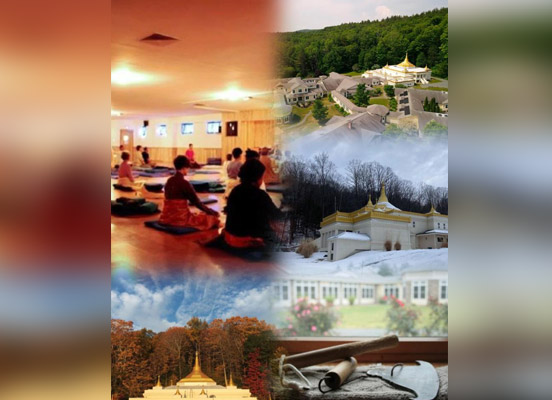
The retreat was nestled in the snow-dusted hills of the Berkshires, serene and untouched, like a secret place meant for soul work. The entire environment was optimized for one goal: to keep you distraction-free. Even when you needed something, a note would appear to be right there with just the help you sought—almost magically. The attention to detail was incredible.
The structure was rigid but comforting. Days began at 4:30 AM and ended around 9 PM. Two vegetarian meals a day—breakfast and lunch. No dinner. Complete silence. No eye contact. No gestures. Just you, your thoughts, and your bodily sensations.
There was nothing to hide behind. No phone, no mirror, no status updates, no validation. Just raw presence.
Days 1–3: The Unraveling
The first few days were chaos—not outside, but inside. I couldn’t stop thinking about work. Work emails drafted themselves in my head during meditation. My body ached from sitting still. I was uncomfortable, bored, and skeptical. My mind was a relentless chatterbox, reminding me of everything I didn’t want to think about.
Then, the floodgates opened. I remembered strange, specific memories—throwing a basketball from a 10th-floor balcony, bursting a fire cylinder as a child, TV time with my sister, the rifle club where we would spend most of our childhood weekends, and swimming days. Happy moments. Embarrassing ones. Regretful ones. Things I hadn’t thought about in years.
I learned that change is the only constant, sadness will continue to come and go in our lives, and death is unavoidable. I cried. Hard. On Day 3, I broke down. Tears I didn’t even know were stored inside me came rushing out. And in that release, I felt like I was living my entire life all over again, scene by scene. It was not like a blurry recollection—it was as clear as if I was back in those days—as if I was time traveling.
I thought of my father’s love, of romantic moments, of family bonds, of people who genuinely cared for me. And then, I thought of all the emotional baggage I carried and the roles I unconsciously played. I started to remember all the people whom I have loved and who have loved me and then eventually left me (passed away), and more painfully, I saw the future of people who are in my life, whom I dearly love, and the fact that I am going to lose them someday. And this thought was the one that broke my floodgates.
The Teacher, the only person I was allowed to talk to, saw me crying and asked me to join him for a walk outside in the open. He asked me what was going on, and I burst out crying and spoke my heart out. I thought he would guide me on how to handle such strong emotions or maybe give me a long lecture to soothe me. Instead, he smiled and said it is beautiful. And he said to continue to find the reality and left.
Not sure what helped me with that statement, but I felt a sense of detachment, not from people, but from the feeling of happiness or sadness or attachment, etc. The next few days helped me dig deeper into this state of mind.
Days 4–6: Into the Body, Into the Mind
By Day 4, we shifted into actual Vipassana practice—observing bodily sensations, not just the breath. This is where things got deep. We were asked to scan our entire body, slowly and methodically, observing every sensation—itching, pain, warmth, vibrations—without reacting. Not labeling anything as good or bad. Just witnessing.
At first, this seemed impossible. But then I saw what it was teaching me: impermanence. Pain that felt unbearable by sitting on the ground in the lotus pose for an hour started to fade. Pleasant sensations didn’t last either. I began to understand—not intellectually, but experientially—that nothing lasts. This is the bedrock of the practice: “Anicca,” impermanence. This was a prime example of how you can believe in something by intellect or believe in something because you trust a guide, but once you believe in something because you experienced it, that is the true sense of enlightenment. This can apply to our work, our personal life, and other aspirations as well. It's like I can watch multiple YouTube videos on investing, but until I create an account and go through it myself, I may never know what it feels like and how I need to navigate it.
I saw how much of my misery came from craving or aversion—wanting things to last forever or to go away immediately. Vipassana taught me that I don’t have to react to everything. That between sensation and reaction, there’s a choice. And that choice is where freedom lives.
It was not easy at all—I felt like I was training a wild horse—my own mind. It kicked, bucked, resisted. But slowly, with patience, it started to respond.
I learned that if we have an empathic, clean, and relaxed mind, even our speech will be the same, and this will lead to similar behaviors and actions. So working on our mind is extremely important.
Days 7–9: The Emotional Mirror
As the body quieted, the mind started revealing deeper truths. I saw how often I compare myself—to others who seem ahead, more composed, more “together.” I realized that even my past relationships may have been influenced by unconscious comparisons—drawn to names, appearances, comforts rather than values.
This insight hit hard. But in the silence, I wasn’t judging myself. I was just observing. And that created space for self-love. I remembered how much I’ve achieved. I looked at myself through the eyes of people who love me—my mentors, family, friends. And I felt proud, finally.
I also realized how often I avoid my own truths—burying them under productivity, validation, or distraction. In the silence, there was no place to hide. And that was the gift. And to my surprise, I once again went to the teacher and expressed that for a brief moment on this 9th day, I felt as if my old self (soul) had forgiven and left my body and made space for a new me. I told him how much peace I was finding here and that I did not want to leave this place and go back to the world. I know it sounds extreme, but that was the moment of truth for me. My teacher laughed again and said that if I truly want to practice Vipassana, I would continue to practice in the world and make mental space to keep this feeling alive within me, but not run away from my responsibilities of life. And if this is a true calling, eventually, there may be a time when I would want to circle back and see if this is a life that I want to choose.
That was the last time I saw my teacher, and now I am not sure if I would go back to it or get a chance to see him, but I will remember him and his energy and its impact on me for the rest of my life's journey. I learned that happiness and misery are both temporary and bound to pass, and being aware of it every moment is the path to a happy life. It is all about mastering the art of living and the art of dying—after all, being happy in that last split second of our existence is what we are all trying to achieve.
Day 10: Breaking the Silence
On Day 10, we were allowed to speak. The conversations were surreal. Every person I had silently eaten meals with, walked beside, meditated next to—suddenly had a voice, a story, a shared experience. We laughed. We cried. We realized we weren’t alone in our struggles. Most of us thought we were the only ones suffering, but everyone had been going through their own journey.
That day felt like waking up in a room full of strangers and realizing we were all somehow connected by this journey of finding our own selves and experiencing it happen and being able to share it with each other. Although I am writing this article to preserve these memories for my future self and maybe for some of you who it may help, this would not do justice to a simple smile and a sentence of interaction I had with my fellow Vipassana batch mates.
Another strong realization in a similar theme of comparison was that I noticed in my mind I had imagined many of the people being at a higher state of meditation than me, or I assumed they were in life, just by their appearances at a more peaceful place than me, just to realize they were thinking the same of me. When we did exchange a few words, they were in awe of my previous experiences of work, spirituality, and life—and at that point, I promised myself to try not to compare myself with anyone. And if that feels hard, because habits cannot change overnight, then I would at least cut myself some slack and give myself some respect and credit for what I have achieved and place myself in a well-balanced chart of comparison. The goal still remains to have no comparisons whatsoever.
I intentionally did not exchange my numbers or social media contact details with these fellows—I think there was a reason why we met in this setting, and to respect that and leave it at that, although the brotherhood was strong, felt like the right thing to do.
I promised myself to not turn on my phone until I drove back home. I did not think I was ready to face the world again.
Returning to the World
The first day/week back was rough. The noise of the world felt violent. My phone, my inbox, social media—everything that once seemed normal now felt jarring. I didn’t want to talk much. I didn’t want to “catch up.” I wanted to protect the stillness I had cultivated.
I will never forget, as I turned my phone on after reaching my apartment, I got an emergency message from my sister that my close cousin who lives in Boston, his mom was visiting Boston and in the period of 10 days, she was diagnosed with pancreatic cancer and she passed away. I missed her last rites. I had shared a great bond with her and it was unbelievable that my first day back I was facing this truth of life. I rushed to meet my cousin and while it was not easy to face the truth and emotion, I found myself very balanced. While I miss her and it was extremely unpleasant news to come back to, I felt peace for her. And at that moment I knew something had changed within me. It was discomforting in the first few days to weeks.
Eventually, the discomfort faded, and something more permanent took its place—clarity. Writing this article, I am realizing that the day I left for Vipassana I had stopped by to say hi to a newborn baby of a friend, and when I came back, I attended to see my aunt's end of journey, and I do not know if this is a coincidence or something deeper.
Later that month, I went to India and had one of the most grounded, joyful trips of my life. I saw my hometown, my childhood, my relationships—all with fresh eyes. I could distinguish emotional longing from meaningful choice. I wasn’t swept away by nostalgia. I was simply present.
For the first time, I was able to see Boston as home—not because I had to, but because I chose to. Vipassana gave me the space to choose life with awareness, not impulse. I have been meditating frequently as part of my weekly routine to stay in touch with these feelings.
Key Lessons
Would I Do It Again?
Without question—yes. Vipassana didn’t change who I am. It stripped away everything I wasn’t. It gave me a framework for life—a way to process pain, hold joy lightly, and walk through life with more awareness and less fear.
This was not a spiritual vacation. It was a mental and emotional bootcamp. And I’m not the same person who walked into that snow-covered retreat. If you’re feeling lost, overwhelmed, anxious—or even just curious—I urge you to try it. Don’t go seeking answers. Go to sit. To breathe. To watch. And in that silence, you may just meet the person you’ve been avoiding all along: yourself.
-------------------------

Portfolio Strategist at Biogen | People’s Person | Process Architect | Pharmacist | Poet | Plant Parent