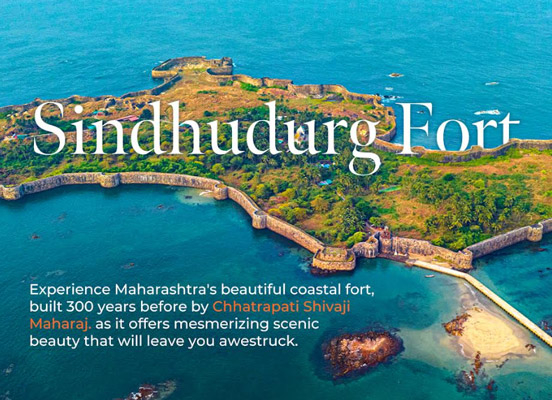
The Maratha Military Landscapes, a network of 12 forts representing the fortification and military system put in place by the Maratha rulers, have been added to the Unesco World Heritage List. This is India’s 44th entry on the coveted list. The forts, built between the 17th and 19th centuries, are Salher, Shivneri, Lohgad, Khanderi, Raigad, Rajgad, Pratapgad, Suvarnadurg, Panhala, Vijaydurg and Sindhudurg in Maharashtra and Gingee Fort in Tamil Nadu.
“Every Indian is elated with this recognition…. I call upon everyone to go visit these forts and learn about the rich history of the Maratha Empire,” Prime Minister Narendra Modi posted on X. The decision was taken at the 47th session of UNESCO's World Heritage Committee in Paris.
In December last year, the Indian nomination for the UNESCO tag had received a “deferral recommendation” from the International Council on Monuments and Sites (ICOMOS). The UNESCO advisory body had observed that India’s proposal for inclusion did not demonstrate that it had the “potential to meet the requirements for Outstanding Universal Value”.
On July 8, Greece, in collaboration with South Korea, Kazakhstan, Kenya and Senegal, moved an amendment to ICOMOS’s draft decision that had called for deferring the nomination and proposed a two-phased nomination instead.
The amendment, which was in favour of including India’s entry in the heritage list, said that the nomination fulfilled two required criteria. “The serial nomination of the Maratha Military Defence System of India demonstrates the successful application of military architecture dovetailed with planning, design, technological development, and military and governance strategies,” the amendment stated.
“The 12 fort components are tangible expressions of enduring ideas of self-rule (Swarajya) and cultural resilience associated with the Marathas. These forts are central to intergenerational identity transmission, where communities actively engage to commemorate courage, sacrifice, and leadership models of the Maratha period,” it added.
The amendment was accepted, and the Maratha forts were “inscribed” on the list. India had earlier this month gifted to all Unesco members a statue of Chhatrapati Shivaji standing next to a cannon with a sword in hand.
The Indian delegation, led by Permanent Representative Vishal V. Sharma, was present at the UNESCO session in Paris.