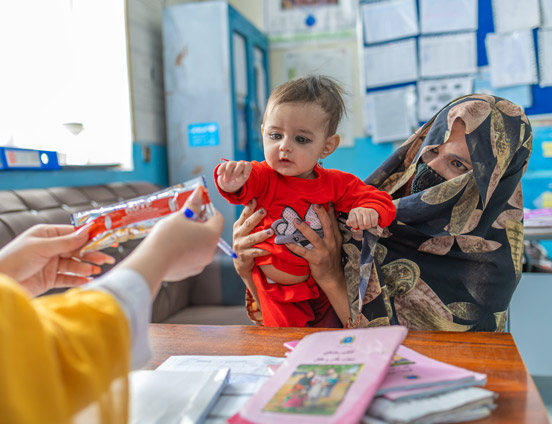
Some 3.7 million children under five in Afghanistan are at heightened risk of malnutrition due to food insecurity, poor diets and inadequate access to basic services as the peak season for life-threatening wasting looms.
The warning comes in a new report, Too Little, Too Late: The Diet Crisis Facing Young Children in Afghanistan, by the UN Children’s Fund (UNICEF), which said that child food and nutrition insecurity is among the main drivers of undernutrition in the country.
Children suffering from the condition are too thin for their height, and their weak immune systems leave them vulnerable to developmental delays, disease and death. Recent data shows it’s worsened across 26 out of 34 provinces compared with 2025, indicating an early and deepening crisis.
“Young children in Afghanistan are being pushed closer to malnutrition before the peak season has even begun,” said Dr Tajudeen Oyewale, UNICEF Representative in the country.
The new analysis shows that children in severely food-insecure households are up to six times more likely to suffer from wasting during peak malnutrition periods. In addition to poor child diets and rising food insecurity, worsening malnutrition is also linked to disease outbreaks, low immunization coverage, inadequate water, sanitation and hygiene services, and growing funding and supply gaps – all of which are weakening children’s health and increasing their vulnerability to wasting.