February 21, 1952, remains a glorious yet painful day in the history of Bangladesh (then East Pakistan). When the Pakistani government declared Urdu as the sole state language, the people of East Bengal rose in strong protest, as Bengali was the mother tongue of the vast majority.
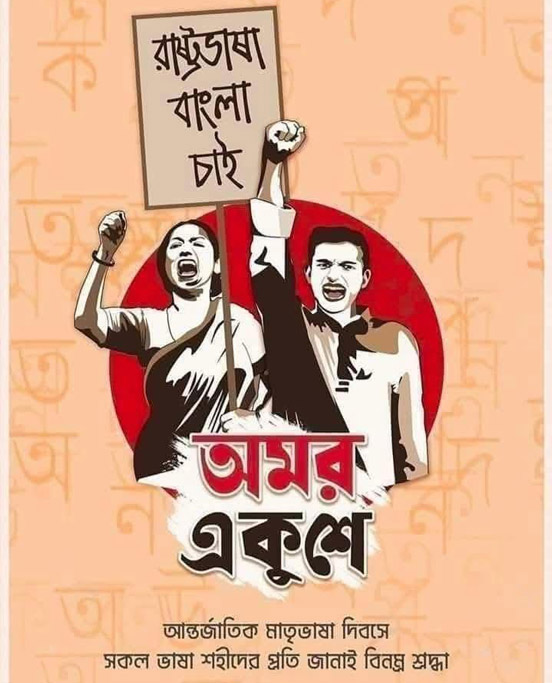
(Graphic courtesy: Mizan Rehman)
Students from various educational institutions, including Dhaka University, led a powerful movement demanding that Bengali be recognized as a state language. On February 21, defying Section 144, they brought out a peaceful procession. The police opened fire on the unarmed demonstrators. Salam, Barkat, Rafiq, Jabbar, and many others were martyred that day. Their ultimate sacrifice gave new momentum to the Language Movement, and in 1956, Bengali was finally recognized as one of the state languages.
Significance of the Bengali Language
The Bengali language is not merely a means of communication; it is the bearer of our identity, culture, and heritage.
February 21 teaches us that language is our soul; language is freedom. This language, earned through the blood of martyrs, is our pride and honor. It is our moral responsibility to practice Bengali with care, use it with respect, and preserve its dignity for future generations.
“আমার ভাইয়ের রক্তে রাঙানো একুশে ফেব্রুয়ারি, আমি কি ভুলিতে পারি?” (Can I ever forget the 21st of February, stained with my brothers’ blood?). This sentiment will live in our hearts forever.
- Mizan Rahman, New York
(The views expressed are not necessarily of The South Asian Times)