By Ayesha Rafiq
Pakistan's Khyber Pakhtunkhwa province does not require big numbers. It requires an economic plan that focuses on livelihoods.
Spreadsheets are not used to measure economic governance. It is gauged by individuals' ability to live an honorable life in the face of growth, stasis, and calamities. The response in Khyber Pakhtunkhwa (KPK) is becoming increasingly disturbing today. With a small positive real GDP growth of 2.68 per cent in FY2025, KPK's economic machinery was seemingly frozen and incapable of supporting enough livelihoods, taking up accumulating unemployment, and cushioning its most vulnerable people against shocks. Any increase where it was found did not translate into strength.
The lack of any real economic momentum at the provincial level has been conspicuous. Small national growth has already not been enough to relieve unemployment pressure in the entire country of Pakistan, but KPK is in an even weaker situation. The province entered FY2025 with inherent structural flaws, including a lack of industrial growth, overreliance on agriculture, and endemic governance gaps. The response was more about not addressing these vulnerabilities through proactive economic planning. What ensues is an economy that is stumbling in the dark, and unemployment is increasing silently but surely.
This failure has been more evident in the new merged districts. These regions, which had long been promised integration, opportunity, and uplift, are still on the fringes. The 97 per cent majority of households in this area live on agriculture and livestock. It is not just an economic statistic. It is a warning. This reliance renders the communities extremely susceptible to climatic shocks, market crashes, and policy oversights.
However, support systems such as crop insurance, veterinary services, modern farming inputs, and market access are either poor or non-existent.
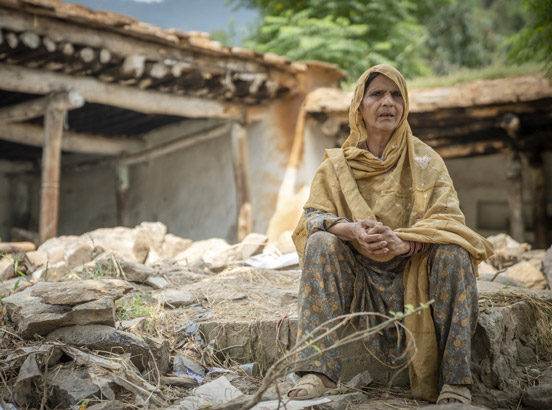
The economic support has not been delivered in line with the state's promise of transition. The weak point became disastrous in 2025 when floods devastated much of KPK. Farmland of more than 3,200 acres had been destroyed, and 6,206 animals killed. These figures represent missing incomes, broken food chains, and families pushed closer to poverty. In agrarian societies, the killing of cattle is not considered a short-term loss. It is a loss of years, with built-up insecurity as part of it. This is because crops can be replanted, but a herd can only be rebuilt after decades, provided there is support.
Such massive disasters require strong leadership. They need immediate relief, after which, managed recovery and long-term resilience planning should be provided. But even with the extent of the destruction, no obvious chief minister took control of economic stabilization or recovery initiatives. There was no roadmap, no mobilization of provincial resources on a national scale, and no lasting assurance to the populace that lives would be reinstated. This silence was not administrative. It was political. And it further strengthened an increasing sense of abandonment.
Failure to have leaders during a crisis is not only economically disastrous. It erodes trust. When farmers watch their lands being flooded and their cattle drowned, and the state is ready to do nothing about it or does it too late, trust in the government is destroyed. This disappointment eventually becomes a form of disengagement, and new reforms will become even more challenging to make.
The issue with this moment is that the difficult problems that KPK faces are not random. Climate-induced disasters are increasingly being witnessed. Pressures in the employment sector are mounting. The dependency on agriculture is also evident. But the policy still operates reactively and in a disjointed manner. Economic governance cannot afford to be episodic, as it only comes out in speeches or budget papers. It has to be ongoing, observable, and grounded in people's lived realities.
KPK does not require big numbers. It requires an economic plan that focuses on livelihoods. This implies a focused outlay on rural economies, diversification beyond subsistence farming, resilient infrastructure that withstands calamities, and direct post-crisis recovery kits that realistically reach the affected. It also needs political ownership at the top level, as without leaders, the best policies are simply ‘paper promises.’
The natural disaster was the 2025 flood. The economic stilt which ensued was not. The inertia and negligence that created such a failure were also human-orchestrated. Unless KPK's leadership considers economic governance a priority, the province is likely to make crisis a way of life. To millions of people whose livelihoods rely on the land and its labor, that is too great a price to pay.
Growth is meaningless when the economy fails to safeguard livelihoods during periods of greater danger. The statistics of KPK are a sad tale to tell today, but the silence of leadership is an even more deafening one.
---------------------------------------------
.jpg)
[Ayesha Rafiq is a distinguished policy analyst and a top-ranking graduate in Peace and Conflict Studies from the National Defence University, Islamabad.]
The views expressed are personal and not necessarily those of The South Asian Times.